
Skip to content

Arable and grass fields

Fields of bright green grass dominate Devon’s countryside. There is huge potential to increase their wildlife value without impacting on food production and maintaining farm incomes.

Arable fields can support rare plants as well as providing seeds, earthworms, beetles and ants which feed our farmland birds.and bats.

Good soil health is critical for both sustainable food production and for wildlife.

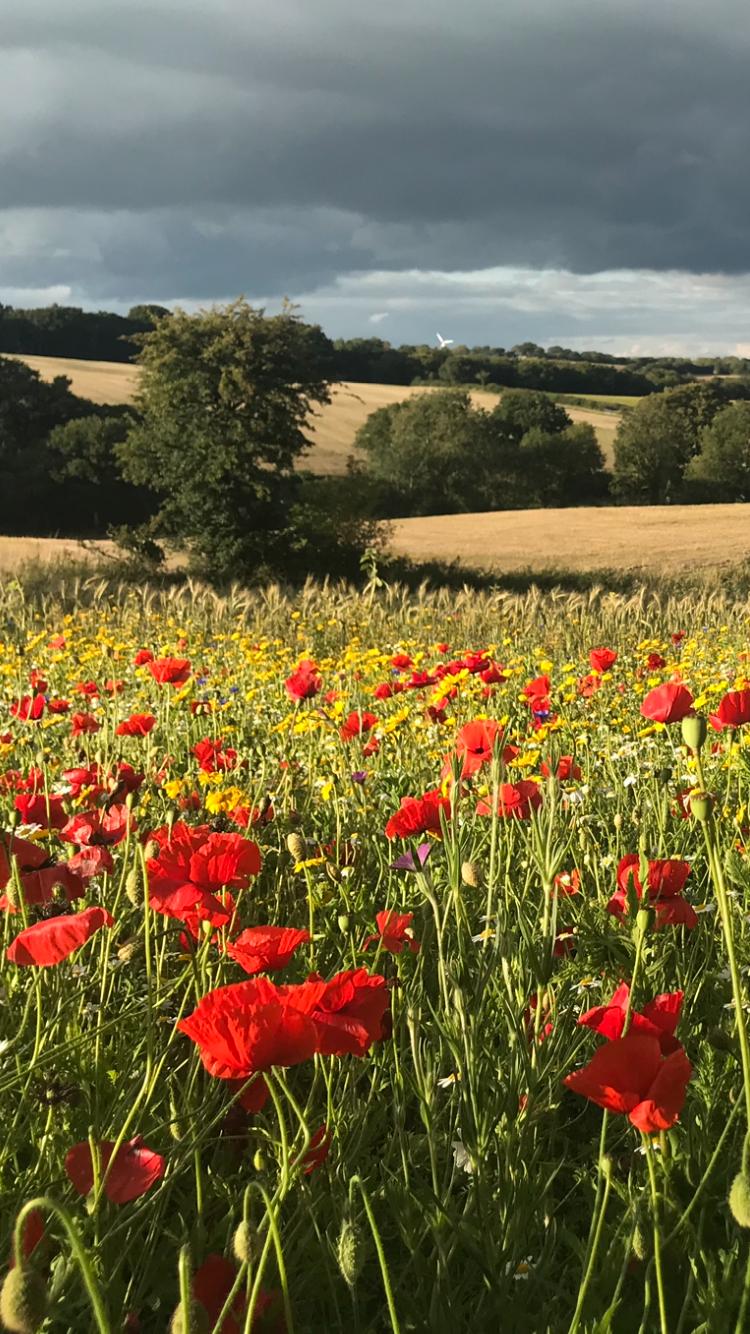
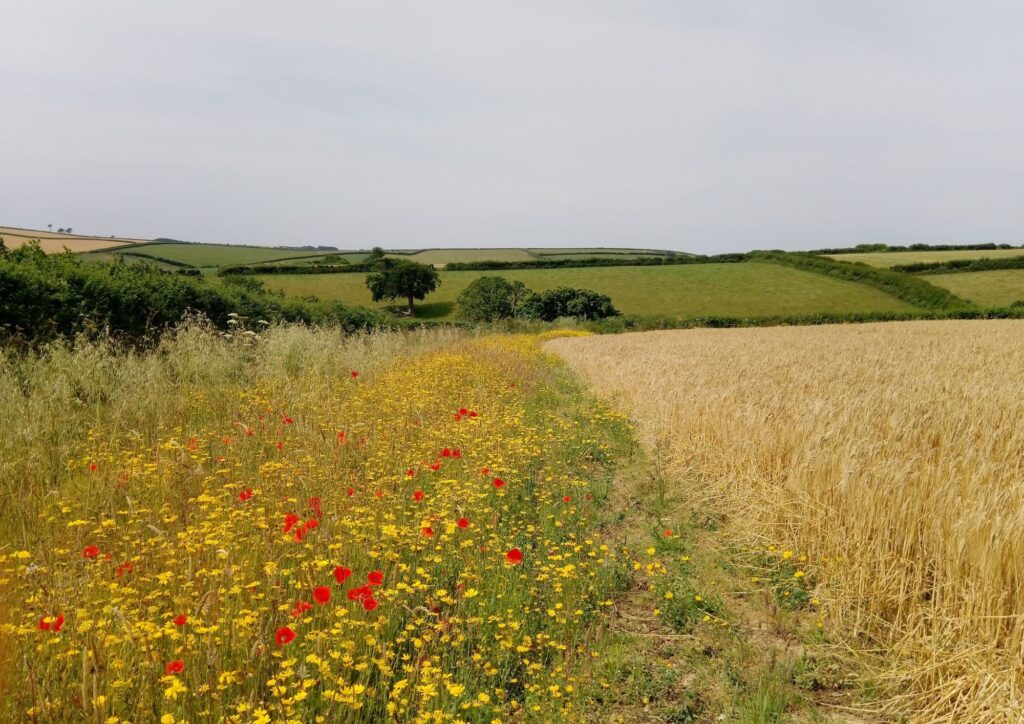
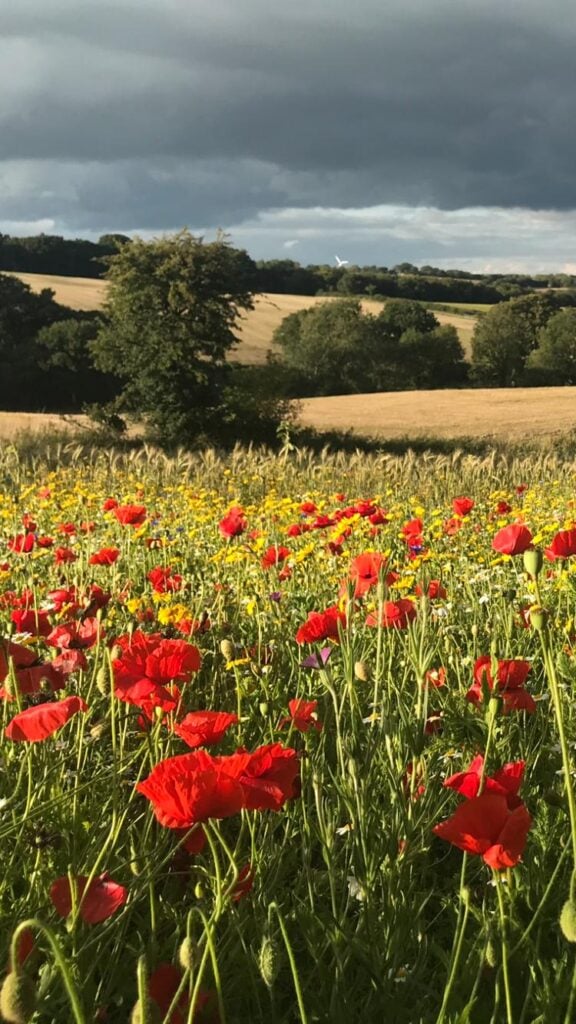
Arable field with a wildflower margin around the outside.

Cultivated margin on sandy soil, Hannah Gibbons

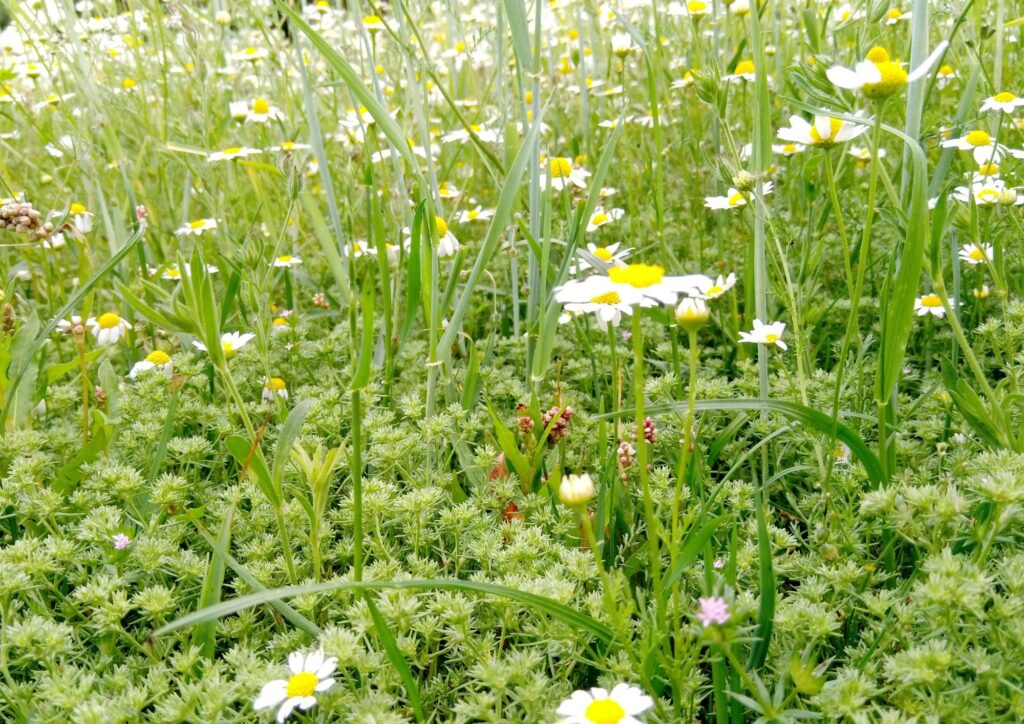
Rich patch of plants, including white flowers and smaller green leafy plants.

Annual knawel, Hannah Gibbons

Snapshot

What wildlife-rich looks like:

Healthy soils contain rich communities of organisms and compaction and loss of soil through run-off are rare.

Grass fields contain a range of grasses and other plants including legumes, so they stay green for longer during droughts, require less fertilizer and support pollinators and birds.

Arable fields and wide flowery and tussocky margins are rich with invertebrates (ladybirds, carabid beetles, lacewings, hoverflies and spiders) which predate on crop pests and provide food for other wildlife. Rare arable plants thrive in fields managed at low intensity.

Thick hedges, scrubby corners and in-field trees provide food and shelter for wildlife and stock.
Devon Special Species include:

Birds: farmland birds, especially Cirl Bunting, Linnet, Yellowhammer, Skylark and Woodlark.

Bats: especially Greater Horseshoe, Lesser Horseshoe, Grey Long-eared and Barbastelle (will feed along insect rich field margins and in fields with insects).

Plants: Arable plants include Cornflower, Mousetail, Prickly Poppy, Small-flowered Catchfly, Narrow-fruited Cornsalad and Broad-fruited Cornsalad.

UK significance:

UK priority habitat: Arable field margins that are managed for wildlife (see Key pressures and opportunities below).

Statutory irreplaceable habitat: No

Wider benefits: Food, water quality, flood control, pollinators, carbon capture, health and wellbeing.

1. About

Grass fields managed for commercial livestock production are found across Devon’s lowland landscapes. They are the county’s dominant land use and are typically composed of only a few species of grasses supporting little wildlife. Arable land is largely concentrated in the south and east of Devon on more fertile and free draining soil.

There have been huge changes in agriculture across Devon, particularly in the post-war drive to increase food production. Changes such as increased use of fertilisers, herbicides, insecticides, clean crop seeds and new grassland seed mixes, and the introduction of silage, larger machinery and autumn sowing of crops have all led to an increase in crop, livestock and dairy yields. Unfortunately, these changes have also led to huge declines in plants and insects, and the birds and bats they support.

Formerly widespread farmland birds such as Corn Bunting, Turtle Dove, Grey Partridge and Lapwing have virtually disappeared in Devon, while others, including Yellowhammer and Skylark, have become scarce.

The flora of most arable fields in Devon is now species-poor, with just a few species such as Chickweed, Scentless Mayweed and Fat-hen present. However, rare arable plants do persist in places, notably around Dartmouth and Kingsbridge where species such as Small-flowered Catchfly and Cornflower can still be found.  

But this situation can be reversed, as has been shown by the dramatic recovery of the Cirl Bunting from very low numbers in the 1980s due to positive action taken by south Devon farmers. Research and experience shows that land can be farmed profitably and productively while supporting a rich variety of wildlife.  New ways of managing soil and crops help, while public support payments play a vital role.

Sustainable agricultural businesses depend on healthy soils and wildlife. For instance insects such as ground beetles act as natural pest controllers; bees, flies, moths and other insects are critical pollinators. See sections below for more information.

Key pressures and opportunities

While the volume of biocides (herbicides, insecticides, fungicides etc) applied to farmland has decreased and targeting has improved, the compounds used have become considerably more effective, both in intensity and spectrum of activity. 

On grassland, the main pesticides used are wormers (nematicides) applied direct to livestock either through ingestion or as pour-ons.  Some of these (e.g. ivermectins) are known to highly persistent in the environment, killing invertebrates inhabiting dung for example.  Treatments used to control blowflies and face flies may also be having widespread adverse impacts but research on this is currently lacking and a precautionary approach should be taken.

Rising costs, the continued loss of products that protect plants and animals and rising levels of resistance mean that the options for pesticides are shrinking. Integrated Pest Management is a coordinated farm strategy that includes the use of insects as a natural pest control. See Find out more below for more information.

The heavy application of fertilizers, whether artificial or manures, has severe environmental impacts.  These include raising the nutrient status of field margins and hedge bases so they become dominated by nettles and goosegrass and contamination of waterways, as well as damaging soil health and functioning.  They also result in air pollution, not only through increasing atmospheric nitrogen, known to be causing significant damage to many wildlife habitats, but also through ammonia release damaging communities of lichens (see the Air quality page).

Integrated Farm Management, organic farming and other ‘regenerative’ practices such as mob grazing and the use of herbal leys, aim to improve soil health and benefit biodiversity.  The popularity of such nature-friendly approaches is increasing among farmers.

Over much of the UK, minimum tillage ‘min-till’ or even no-till have been introduced, reducing soil disturbance. Depending on soil type and depth of cultivation, this decreases fossil fuel use and labour costs, increases carbon storage and nutrient and water retention, and generally improves soil health and biodiversity.  However, it can also increase the abundance of perennial and annual grass weeds at the expense of other arable plants. Where soils are already compacted minimum tillage will not on its own restore soil health and without other soil restoration measures can lead to further deterioration and therefore reduced carbon storage and increased soil run-off. See Rocks and soils.

There’s also growing appreciation of how flower-rich grasslands produce high-quality meat and dairy, improving human health and increasing farm income.

Maize is now widely grown on livestock farms for silage. However, the necessary cultivation of soil and high level of fertilizer and pesticide use often leads to loss of soil, severe water pollution and general environmental contamination.  It is also often accompanied by the loss of field margins, through ploughing and herbicide use right up to the edges.

There is increasing interest in planting trees within both arable and grass fields, both to increase overall productivity and the health of the environment, including wildlife.  Such planting is currently being promoted through agri-environment schemes. See Trees outside woodlands for useful links.

There is generally a lack of recognition of the importance of arable fields for rare plants and farmland birds. In some cases wildlife has declined due to intensification of arable (see About). However arable fields supporting rare plants and birds have also been lost due to inappropriate agri-environment options and/or converted to grassland due to a misconception that this is better for wildlife.

In comparison with other habitats, the wildlife value of arable land is poorly understood. This is partly because it covers so much land, making it difficult to survey. However, it’s also because crop types, agricultural inputs and the timing of operations vary between years, creating very different conditions. Rare arable plants can be dormant as seed in the soil for many years, only appearing when conditions such as weather and crop management are right. 

There are no currently accepted standard botanical survey or condition assessment methods for arable habitats, and no national register of biodiverse arable sites. These are significant obstacles to the conservation of arable biodiversity.

Arable field margins (as a UK priority habitat) are poorly defined – see more details and suggestions in Find out more.

Arable and grass fields are fundamental elements of the agricultural landscape and of great value for food production and economically. Any changes to their management must be evaluated within this context. Implementing actions for sustainable farming and nature (such as Integrated Pest Management) can lead to cost savings, especially in the long term. Nevertheless, many actions for nature and public goods such as natural flood management, need to be supported by public payments, usually through agri-environment schemes but sometimes private (green) finance. Others are done by farmers for the sheer enjoyment of helping and seeing wildlife.

2. What we need to do and where

Priority

Manage arable and grass fields, and their margins, to improve soil health and increase wildlife, benefiting Devon Special Species and in ways that achieve wider benefits such as carbon capture, water quality and flood control.  

See Find out more below for links to relevant national and local targets, detailed guidance and sources of funding and advice.

Actions

Actions should be based on an understanding of existing and potential wildlife value (such as rare arable plants and birds) and include:

Actions for both arable and grass fields

  • Improve soil health by minimising disturbance and chemicals and feeding the soil, see Rocks and soils.
  • Reduce and target the use of fertilisers and biocides by adopting Integrated Farm Management (IFM) and Integrated Pest Management (IPM) approaches.
  • Instate field margins at least 2m wide around all fields, preferably wider, and manage them sympathetically for wildlife. These should be kept free of fertilizers and biocides.
  • Increase tree cover through agroforestry systems, and by allowing hedge trees to grow, to provide shelter for stock, improve water and soil health and provide wildlife habitat. See Trees outside woodlands.
  • Reduce large fields to 8ha (20 acres) or less by planting new hedges – this will bring much wildlife back into farmland and increase pollination and crop pest control services.
  • Where possible reduce the intensity of management over a field, or part of a field, to increase the diversity of species, structure of the vegetation and allowing natural processes to develop.
  • Enter land with existing or potential wildlife value into agri-environment schemes under appropriate options.

Additional actions for arable

  • Create and manage cultivated field margins or plots for arable plants. Cultivate in the spring or autumn so that rare arable plants can grow from the seedbank. Leave until 31 August without applying fertilisers or pesticides (other than spot-treating injurious weeds if needed).
  • Create vegetated buffer strips (minimum 4m) to provide habitat (including for insects which control agricultural pests) and help protect wildlife habitats such as hedgerows, watercourses, ponds and woodlands. Divide large fields (over 15ha) with vegetated buffers to act as beetle banks.
  • Establish and maintain pollen and nectar flower mixes for invertebrates and seed mixes to provide food for birds during the winter (known as ‘bumblebird’ mixes). Ensure that this does not impact on rare arable plants.
  • Where possible grow spring cereals with weedy winter stubbles. Allow a green cover to regenerate naturally on winter stubbles and leave this in the ground for as long as possible to benefit farmland birds and prevent soil erosion.
  • Avoid the cultivation of maize for silage or bio-digesters unless this can be done in a way that does not have adverse impacts on soil health or the wider environment.
  • Leave bare areas in and around crops in the spring and summer for nesting Skylarks and Woodlarks.

Additional actions for grass fields

  • Sow legume and herb-rich mixes to improve the wildlife and grazing value of grass leys. Sensitively introduce legume and herb-rich mixes to species-poor permanent grasslands. Take care not to damage fields that already contain a range of plants. 
  • Mow for silage or hay as late as possible.
  • Apply well-rotted farmyard manure rather than slurry or artificial fertilizers where possible.
  • Avoid rolling fields where nesting birds like Skylarks are present.

Survey and awareness

  • Increase understanding of soil health, including of the biodiversity that it contains (see Rocks and soil and Soil organisms pages).
  • Increase understanding of the ways to boost the wildlife of grass fields, especially of ryegrass monocultures.
  • Increase awareness and understanding of the wildlife value of arable habitats among farmers and conservation professionals. 
  • Increase surveys and monitoring of arable wildlife, particularly arable plants.

See Find out more below for further information.

Other relevant actions

Where to focus action

Wildlife will benefit from these actions being implemented across Devon. However, actions are prioritised to the following High Opportunity Areas (in bold). See Mapping for the LNRS Viewer and information on how areas have been mapped.

  • Cirl Bunting breeding areas
  • Woodlark zone
  • South Devon coastal arable plants (the South Devon coast is a stronghold for arable plants)

3. Inspiration

Case studies

Stantyway Farm

Sam and Nell Walker run Stantyway Farm, a mixed organic arable and cattle enterprise situated on the Jurassic Coast of east Devon. When they took on the tenancy in 2017, the farm was the easternmost breeding site of Cirl Buntings in the UK. While producing beef, wheat, beans, oats, and various minority crops such as quinoa, they have developed a dynamic farming system that supports a thriving wildlife population. Cirl Bunting numbers have increased fivefold, Skylarks and insects flourish in the weedy stubbles, and other red-listed and Devon Priority species – including Linnet, House Sparrow, Barn Owl, Song Thrush, Swift, and House Martin – are regularly observed. Rare bats have also been recorded hunting across the fields, all within a productive business that integrates nature and food production.

With support from government schemes, the Walkers host educational visits for schoolchildren and have welcomed the Kingfisher Awards in partnership with FWAG South West, helping to introduce the next generation to the realities of food production and environmental conservation.

The Apricot Centre

The Apricot Centre in Devon is a thriving regenerative farm and wellbeing hub dedicated to transforming agriculture through education and apprenticeships, consultancy, and best-practice demonstration. Since 2015, the centre has collected data on biodiversity, soil health, crop yields, and financial sustainability – proving that farms can be productive, climate-resilient, and ecologically rich. With records ranging from bird and insect counts to soil and economic metrics, the centre showcases how a bare field can evolve into a flourishing ecosystem.

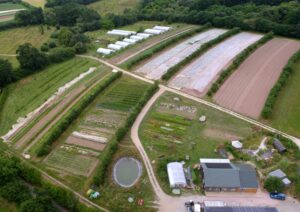
Green fields showing a regenerative farm from a birds-eye view. Some of the crop fields are covered in netting, there is a farm building in the lower right corner, and polytunnels in the upper left corner.

Luppitt community lab

Farming in Protected Landscapes funding supported the creation of a community lab in Luppitt. Through open evenings, training, and ongoing support, the lab enables local farmers to analyse faecal egg counts in livestock manure, so to treat worm burdens only when necessary.  This prevents overuse of anthelmintics, protecting soil, water, dung beetle populations, and reducing risk of worm resistance. The lab promotes sustainable livestock management, peer learning, and long-term nature recovery.

If you’re doing something to help nature thrive, please share it on the Devon Nature Recovery Delivery Map to inspire others to take action.

Where to visit

Always follow the Countryside Code and keep to footpaths and sites that are managed for public access. 

Footpaths near Kingsbridge and Dartmouth offer good opportunities to see arable plants and farmland birds, in particular Cirl Buntings.

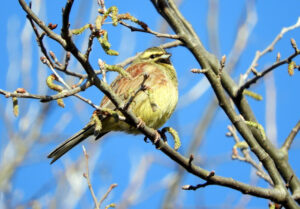
Male cirl bunting, a green-yellow colour - perched on a branch with a blue sky behind

For information on visiting these and other sites that are open to the public please see the Explore Devon website.

4. Find out more

A review of Devon Farm Advice was carried out by Ash Future in 2022 for the Devon Local Nature Partnership and Climate Partnership. This has a list of recommendations which are set out in the LNRS.

Links to sources of more detailed advice relating to the actions above:

The Agricultural and Horticultural Development Board has information on Integrated pest management (IPM) hub | AHDB

Integrated Farm Management | LEAF (Linking Environment and Farming)

FWAG

LandApp

Soil Association Exchange

Agri-environment funding and options / guidance: https://www.gov.uk/guidance/funding-for-farmers    Capital grant finder – GOV.UK 

Hurford C, Storkey J, Swan E, Wilson PJ (2024).  Reversing declines in arable biodiversity: challenges and opportunities.  British Wildlife.

Wilson PJ & King M (2003).  Arable Plants – a field guide.  Wild Guides.

Arable Field Margins are a Priority Habitat in Section 41 of the NERC Act 2006.  They are however poorly defined, and as described can include any area of land under arable cultivation managed with the intention of benefitting biodiversity.  The extent of this area is vast and no biodiversity criteria are specified.  The definition excludes land which although not managed specifically for wildlife, is of very high ecological value. 

This definition should therefore be changed, and a more explanatory name used.  The following criteria may be more appropriate and could be considered in Devon:

  1. Land that is regularly (but not necessarily annually) cultivated as part of an arable rotation.
  2. Can include field margins, parts of fields or whole fields
  3. Permanent perennial margins and field boundaries are excluded
  4. Land having an assemblage of arable plants scoring ≥5 on the Plantlife IAPA system
  5. Land containing a population of a single plant species scoring ≥7 on the Plantlife IAPA system
  6. Land forming part of the range of a population of a farmland bird of conservation concern
  7. Land forming part of the range of a population of another farmland species of conservation concern

  • Stantyway Farm, Sam Walker
  • The Apricot Centre, Rachel Phillips
  • Luppitt community lab, David Crabb
  • Cirl bunting, Matt Knott

Draft