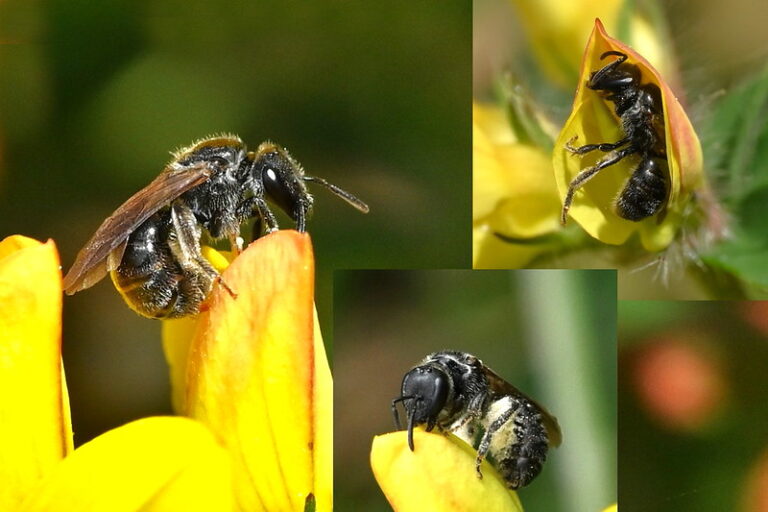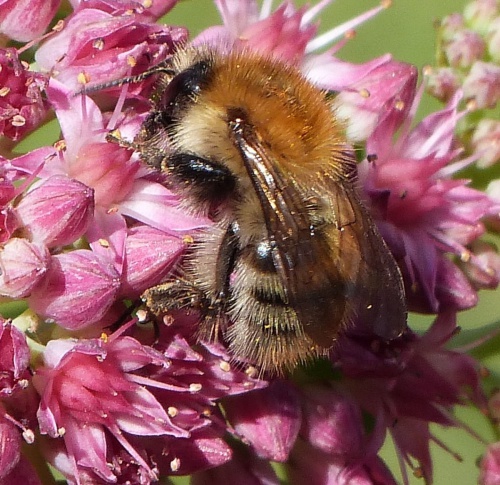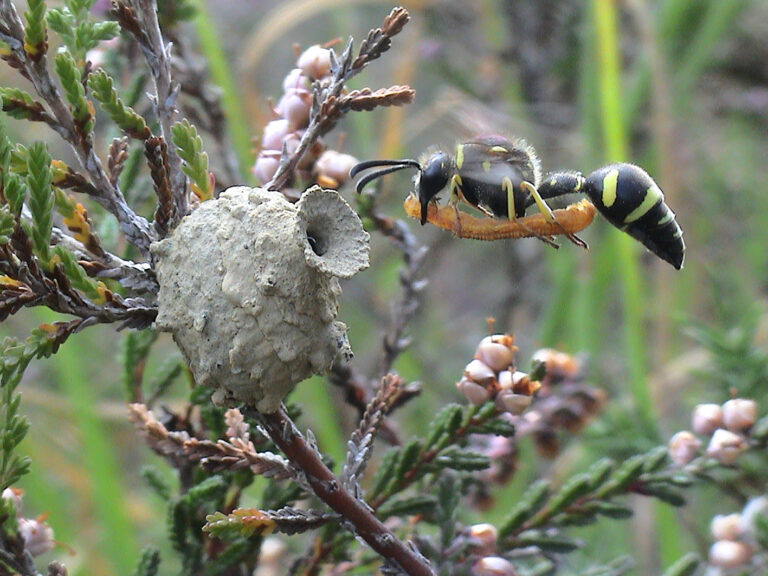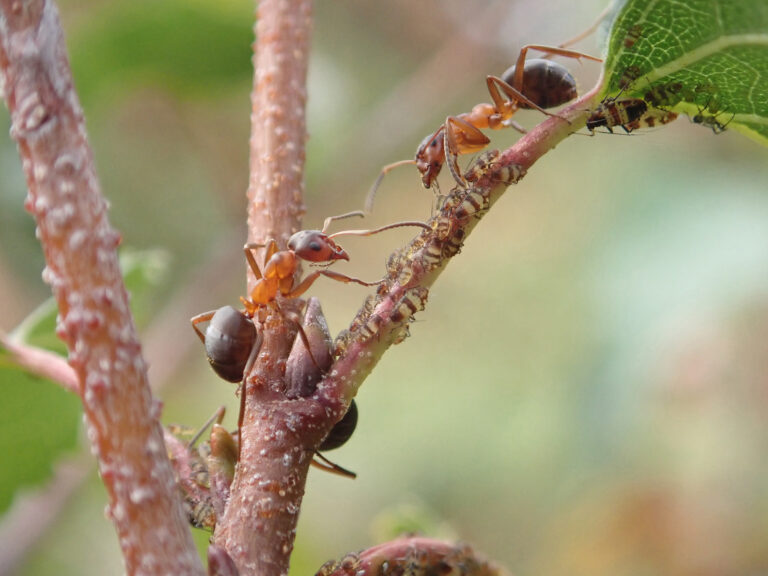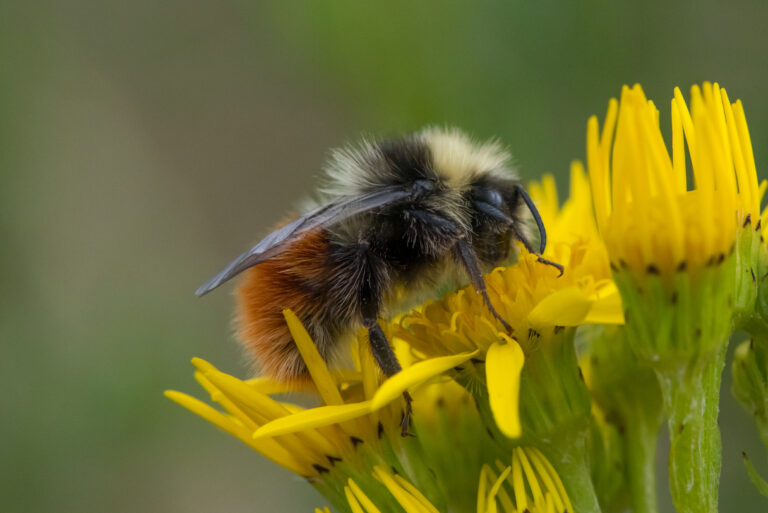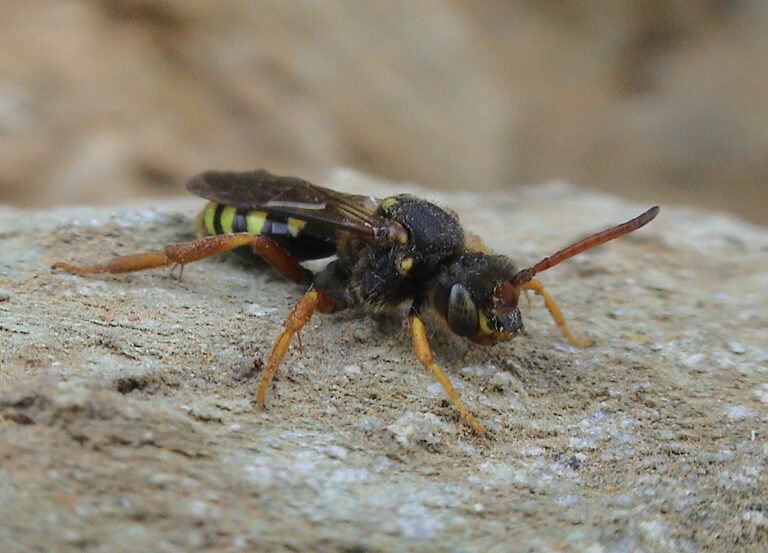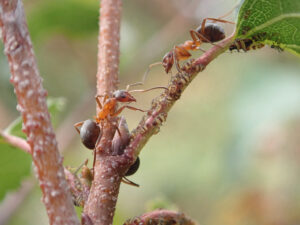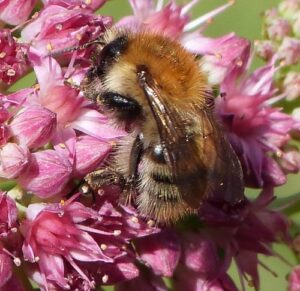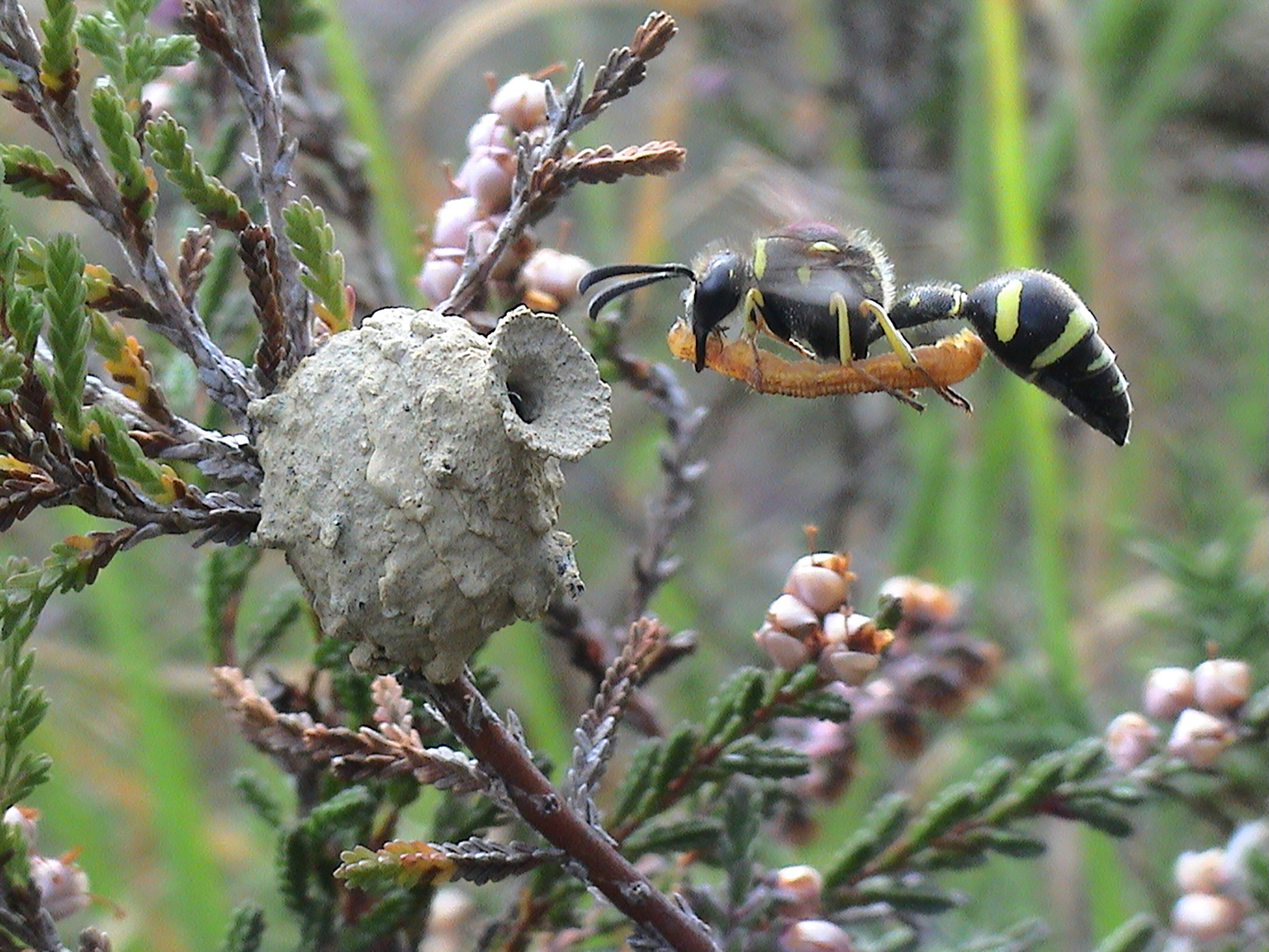

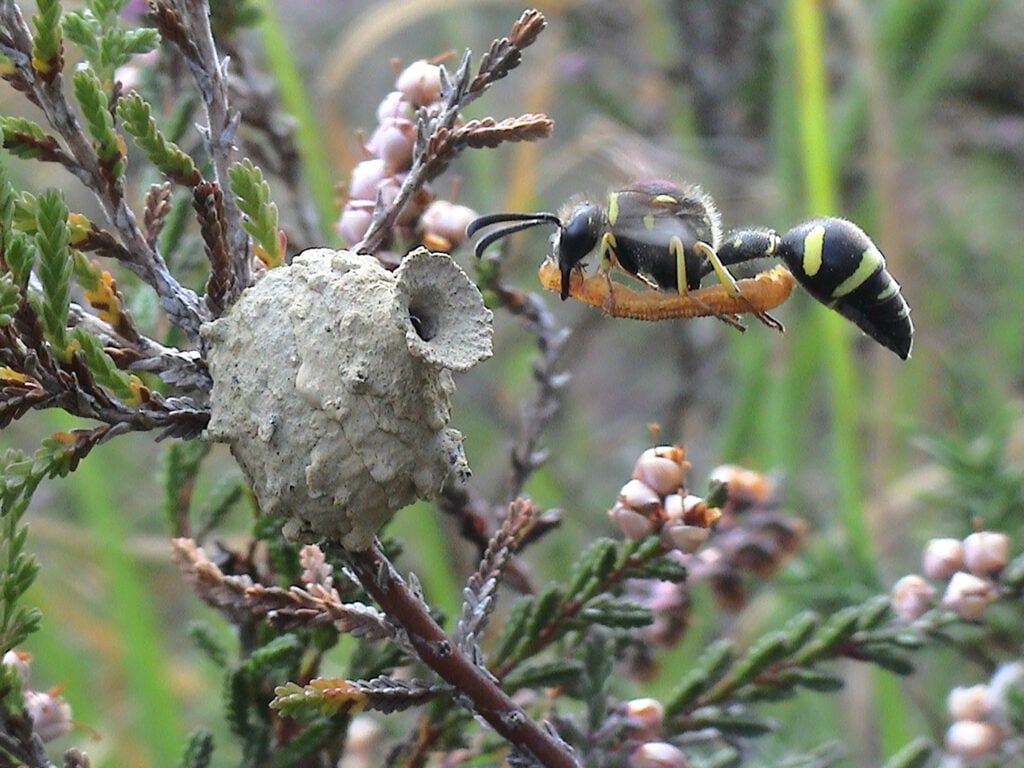
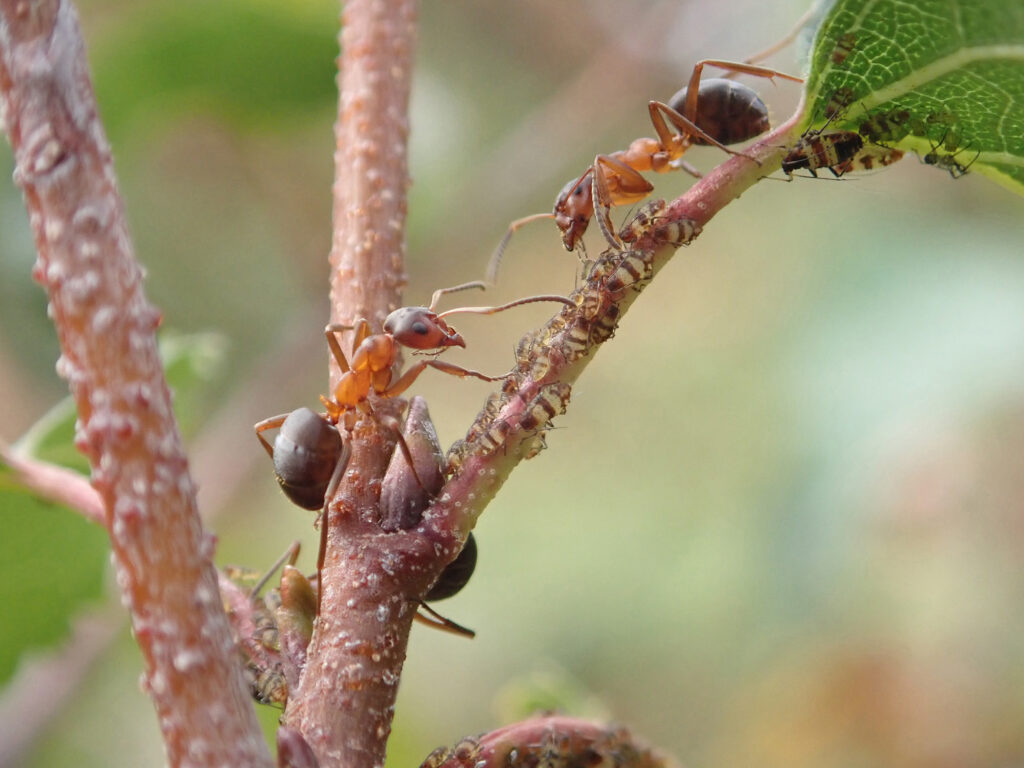
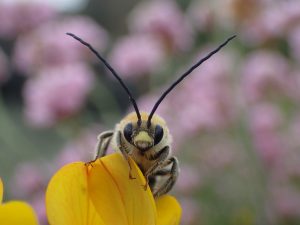
Bees, ants and wasps are grouped together here as they’re closely related. They all typically have two pairs of wings, a narrow ‘waist’ and females have a modified ovipositor (egg-laying tube) which can deliver a sting. In ants, only queens and males have wings and only for a short time as they leave the nest to find a mate and set up a new colony.
Bees, ants and wasps are among the most beneficial insects to humans. Bees and some species of wasp are vital pollinators. Wasps and ants are important pest controllers and recyclers as they prey on other insects and scavenge dead invertebrateAn animal that doesn't have a backbone, such as insects, spiders, worms, crabs and slugs. material as a source of protein for their eggs and larvae. Ants improve soil heath by redistributing organic matter and seeds as they forage and tunnel.
Bees, ants and wasps are found in a wide range of habitats across Devon as different species have adapted to live in different conditions. However, all three groups generally need:
Nesting and hibernation sites: Bumblebees, honeybees, ants and some species of wasp live in colonies and exhibit complex social behaviour. Colonies contain queens that lay eggs, sterile female workers that look after the colony and male drones that mate with the queen. While most people are more familiar with social bee and wasp species, solitary bees and wasps (which build individual nests and work alone) make up the majority of species. They all need a wide range of sheltered places in which to nest in summer and overwinter. Bumblebees nest underground or in the ‘thatch’ layer of dense tall grasses. Solitary bees and solitary wasps nest in holes in wood, hollow stems, walls or tunnels they dig into loose soil. Ants nest in soil, old tree stumps, twigs, under stones and in the nests of other ants. Social wasps make their nests from wood they’ve chewed, building nests in trees, lofts, sheds and underground.
There are also distinct groups of bees and wasps that are ‘cuckoo’ species and lay their eggs in the nests of other bee and wasp species, including social species where they take over the nests of the original queens. These cuckoo species are highly adapted to and wholly dependent on a few, or even a single, host species, without which they cannot exist. Unsurprisingly, some cuckoo species are very rare and some are endangered, so conserving the host species is a priority to prevent the cuckoo species from going extinct.
Food: Bees mainly feed on nectar and pollen. Different flower sizes, structures, colours and flowering times attract different species at different times of year, starting in spring when the queens emerge from hibernation and lasting until late autumn or early winter. Ants and wasps are predators and scavengers and feed on a wide range of other invertebrates.
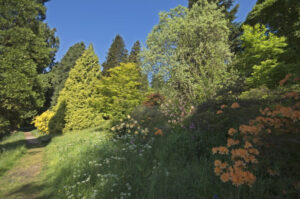
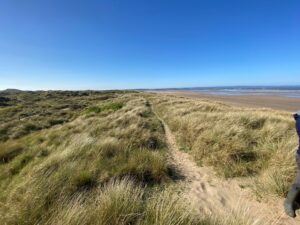
Connected habitat mosaics: Bees, ants and wasps depend on a network of diverse habitats that provide a variety of food sources, allow them to travel between patches of flowers and colonise new areas.
Species
There are around 270 species of bee in the UK and over 130 of these are found in Devon. There are around 50 species of ant in the UK of which more than 30 have been recorded in Devon. There are around 9,000 species of wasp in the UK. However, the number of species in Devon isn’t known.
Eight ants, 13 wasps and 31 bees are listed as Devon Species of Conservation Concern. Of these one ant, one wasp and eight bees are listed as Devon Special SpeciesDevon Species of Conservation Concern that have been 'shortlisted' as needing particular action or attention. as they need particular action or attention.
Sawflies, gall wasps and parasitoid wasps: Bees, ants and wasps are in the scientific order of insects known as Hymenoptera. This order also includes sawflies, gall wasps and parasitoid wasps. These are not included in the LNRS as information on their distribution and status is too limited and there are no recording schemes for them (although a sawfly recording scheme is being developed).