
Skip to content

Wildlife-rich grassland

Devon’s wildlife rich grasslands are hugely varied due to our geology and soils.

The Torbay limestone grasslands have a unique plant community and support rare species such as Honewort.

In the summer our wildlife-rich meadows are full of flowers and buzzing with insects.

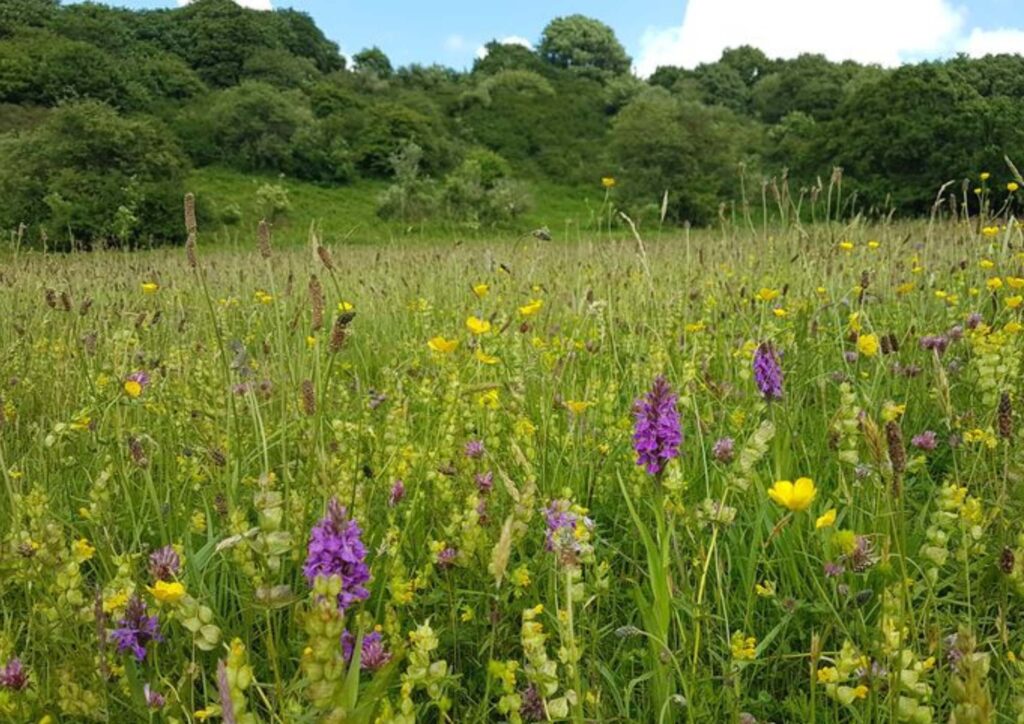
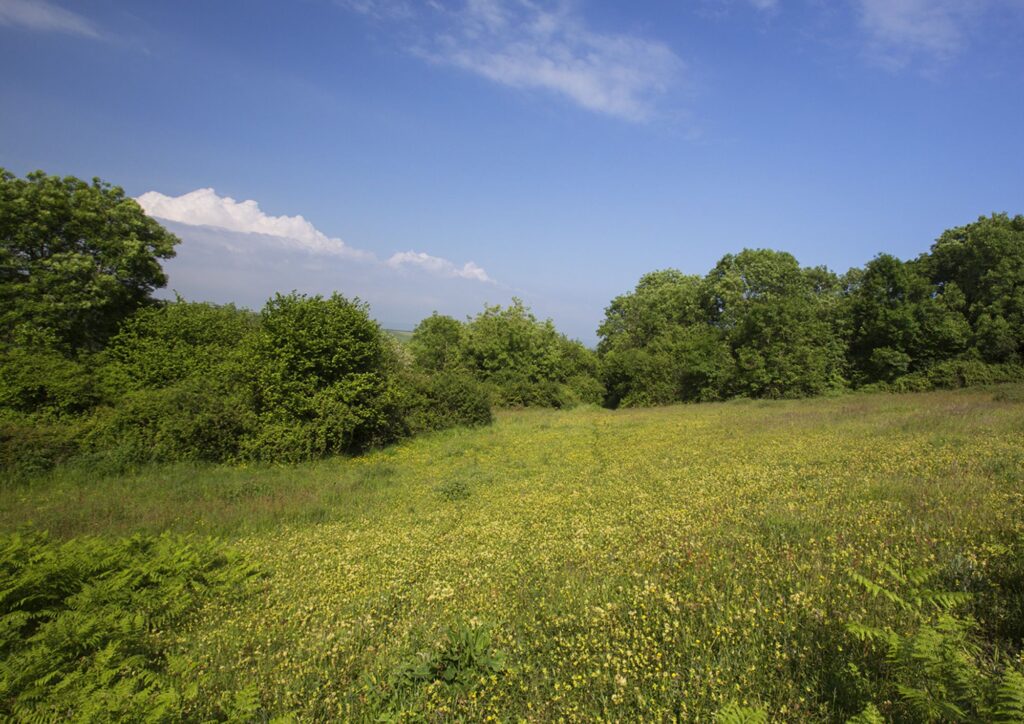
A wildflower meadow

Torrington common, Mike Waller

Grassland with lots of small yellow flowers. There are trees lining the field.

Calcareous grassland in Beer, Matt Maran

Snapshot

What wildlife-rich looks like:

Networks of species-rich grasslands provide essential pollen, nectar and seeds and support rare plants. Old grass tussocks and long grass provide essential shelter and food for small mammals, ground-nesting birds and invertebrates. Bare ground in shorter swards provides basking and nesting sites for invertebrates such as bees. Wildlife-rich grasslands are found in mosaics with trees, hedges, patches of scrub, watercourses and ponds. In the summer they’re full of colour and the sounds of birds and buzzing insects.  
Devon Special Species include:

Mammals: Harvest Mouse. Greater Horseshoe, Lesser Horseshoe, Serotine and Barbastelle bats.

Birds: Farmland birds, especially Skylark, Kestrel and House Martin. Choughs on coastal grasslands.

Invertebrates: Torbay limestone moths, coastal grassland species such as the Six-banded Nomad Bee, rare carder bees, Variable Meadow Fly, Devon Red-legged Robber Fly and oil beetles. 

Plants: Deptford Pink, Greater Butterfly-orchid, Frog Orchid, Green-winged Orchid. Coastal grassland plants.

Bryophytes of Torbay limestone grassland and maritime grassland lichens

UK significance:

UK Priority Habitats: Lowland Meadow, Lowland Dry Acid Grassland, Lowland Calcareous Grassland, Maritime Cliff and Slope.

Statutory irreplaceable habitat: No grasslands are currently listed as statutory irreplaceable habitats. However, some species-rich grasslands are likely to have existed on the same site for thousands of years. Plants, fungi and soils will have developed intricate relationships and these grasslands could be considered as ancient irreplaceable habitats.

Benefits include: Carbon storage, flood prevention, animal welfare, pollinators, landscapes and tourism.

1. About

Wildlife-rich grasslands, like other grazed habitats, have evolved with our farming systems over thousands of years. They’re largely made up of grasses and non-woody plants that can be eaten by livestock. They all depend on grazing or cutting, which prevents them reverting to scrub and woodland but allows plants to set seed. Animal grazing also helps to create a wealth of microhabitats for plants and animals. 

While most are part of the farmed landscape, smaller grasslands are also found in sunny, open areas in woodlands where they’re grazed by livestock or wild animals such as deer. Wildlife-rich grasslands are also found in urban areas, such as along road verges and railway lines and in our parks and gardens.  

The complex plant communities found in these grasslands vary hugely depending on physical factors such as soil pH, soil depth, soil nutrients, rainfall and management. Soil pH is used to divide grasslands into three main types: neutral, acid and calcareous. These are described below but can all grade into each other. Grasslands will also grade into other habitats such as rush pastures and mires as soils get wetter, and shrubby heaths as soils become more acidic and grazing pressure is reduced. Mosaics of these habitats can be very important.

Most of Devon’s green fields and urban grasslands are primarily managed for agriculture or amenity and aren’t wildlife-rich. The majority of wildlife-rich grasslands were lost due to the intensification of agriculture after World War Two, housing and other urban land uses (see Key pressures and opportunities below). Those that remain are often small and fragmented, and largely confined to steep slopes that are not easy to develop or worth improving for farming. However, there’s a growing understanding of the many benefits of wildlife-rich grasslands, such as carbon storage, animal health, flood prevention, landscape and tourism. As a result, the restoration and creation of wildlife-rich grasslands is becoming increasingly popular in both rural and urban areas. 

Wet, acidic, species-rich rush pastures are discussed in Heath, moor and mire mosaics. Coastal grazing marshes are discussed in Coastal wildbelt.

Neutral grasslands occur across Devon on free-draining soils that have a pH of around 5.5 – 6.5. They include:

Lowland Meadow (UK Priority Habitat)

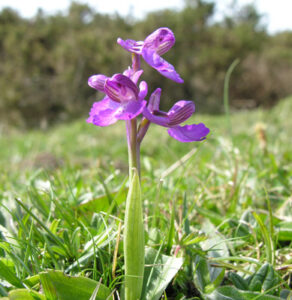
Lowland Meadow is the most widespread species-rich grassland remaining across Devon. Small areas are often found on steep slopes that are difficult to improve for farming. They’re often found in wildlife-rich mosaics with wetlands, scrub and woodlands. Characteristic grasses include Crested Dog’s Tail and Sweet Vernal Grass. Flowers include Bird’s-foot-trefoil, Black Knapweed, Meadow Buttercup and Yellow Rattle. Green-winged Orchids still survive in a handful of meadows in south and east Devon.

Devon’s Lowland Meadows can be divided into three types.

  • On the slightly acid soils that occur over most of Devon, typical species include Heath Grass, Pignut and Betony. Where soils are wetter these grade into species-rich rush pastures (see Heath, moor and mire mosaics). On free-draining acid soils, such as the east Devon greensands, they grade into Lowland Dry Acid Grassland (see below).   
  • On deeper less acidic soils, which may have been farmed slightly more intensively in the past, there are fewer species but those that do thrive often include Meadow Vetchling, Yellow Rattle and Rough Hawkbit.
  • On more calcareous soils over chalk and limestone, typical species include Ladies Bedstraw and Salad Burnet. These grasslands can grade into Lowland Calcareous Grassland (see below). Fields of this grassland type near Plymouth are important for the nationally rare Field Eryngo.

Rough, tussocky, permanent grasslands

Where grasslands are unmanaged, or only very lightly managed, species such as False Oat-grass and Cock’s-foot dominate, with rushes in wetter areas. Grasslands become tussocky and many flowering species are unable to survive. While not rich in plant species, these grasslands are important for small mammals and insects, which in turn provide a critical food source for bats and birds such as Barn Owls. They’re widespread in Devon, found on areas of less intensively managed farmland (steep slopes, wetter areas) as well as along verges, paths, rivers, railway lines and field margins.  

More information on these plant communities are given in the LNRS Habitat Classification Table and the Lowland Meadows LNRS paper. See Find out more below.

These grasslands are generally found on more acidic (pH less than 5.5) free-draining soils. It is an underappreciated grassland type, both in Devon and nationally, and frequently misidentified as Lowland Meadow. Characteristic grasses include Common Bent and Sweet Vernal Grass, and flowers include Common Cat’s-ear, Mouse-eared Hawkweed and Heath Speedwell. The main areas where they are found are:

  • The south-western and south-eastern edges of Dartmoor (around Roborough Down, Burrator reservoir and in the Teign Valley) on acidic, mineral-rich rocks. The downs around the south-west edge of Dartmoor have rare plants such as Heath Dog-violet, Lesser Butterfly-orchid and Vigurs’ Eyebright. Rare plants in the Teign Valley include Slender Bird’s-foot-trefoil, Greater Broomrape, Hoary Cinquefoil, Clustered Clover and Suffocated Clover
  • The small hay meadows around farms in Dartmoor valleys (often a mix of neutral and acid grasslands). Dartmoor meadows support rare plants such as Lady’s-mantles, Moonwort, Frog Orchid, Great Burnet, Greater Butterfly-orchid (a characteristic species of central Dartmoor hay meadows) and the nationally-threatened English Eyebright.
  • East Devon, especially the scarp slopes (over greensand geology) where Greater Broomrape can be found and that are internationally important for waxcap fungi.
  • Small areas in coastal grasslands and sand dune vegetation

 Lowland acid grasslands can form important mosaics with bracken and scrub and support Devon Special Species such as High Brown and Pearl-bordered fritillary butterflies, whose caterpillars feed on violets in the grasslands. They’re also important for fungi, including waxcaps.
 
More details on these plant communities are given in the LNRS Habitat Classification Table and the Lowland Dry Acid Grassland LNRS paper. See Find out more below.

Calcareous grasslands are rare in Devon and occur where soils with a high pH (above 7) develop over limestone and chalk. They’re largely found in coastal areas on the east Devon chalk (between Weston Mouth and Dorset) and on the limestone around Plymouth and Torbay. There are also small areas of calcareous grasslands on the limestone around Ipplepen and on limestone outcrops in the Blackdown Hills. 

Calcareous grasslands typically have a very rich mix of plants and between the end of April and October are an abundant food source for a wide range of invertebrates. Grasses include Sheep’s Fescue, Meadow Oat-grass and Quaking Grass. Flowers include Wild Thyme, Salad Burnet, Small Scabious and Common Rock-rose. As the grasslands get nearer to the sea they develop into maritime grasslands with salt-tolerant species such as Thrift and Sea Carrot becoming more common (see Maritime grasslands below). 

Devon’s calcareous grasslands support a wealth of rare plants that are listed as Devon Special Species in a Calcareous coastal plants group. These include Nottingham Catchfly and Early Gentian (on the east Devon chalk), Pale St John’s-wort (found in all calcareous areas), Field Eryngo (on the Plymouth limestone) and a group of Torbay limestone specialists including Goldilock’s Aster, White Rock-rose and Honewort. 

Sunny, flower-rich calcareous grasslands also support rare invertebrates, many of which depend on the rare plants, bryophytes and lichens that grow there. White Spot Moth caterpillars feed on Nottingham Catchfly while the caterpillars of the rare moth, Coleophora linosyridella, feed on Goldilocks Aster. Calcareous grasslands in Torbay and the east Devon coast are important feeding habitats for Greater Horseshoe, Lesser Horseshoe and Bechstein’s bats, which roost in the limestone and chalk caves at Berry Head and Beer.    

More details on these plant communities are given in the LNRS Habitat Classification Table and the Calcareous grassland LNRS paper. See Find out more below.

Coastal grasslands are found on or near sea cliffs and slopes where species that tolerate salt spray such as Thrift, Sea Carrot, Common Sea-lavender and Sea Plantain can survive. The mix of plants present depends on their exposure to salt spray, with more sheltered areas developing more species-rich grasslands. As salt spray reduces, coastal grasslands grade into the other grasslands discussed above.   

Sunny, warm, flower-rich coastal grasslands are particularly important for invertebrates. Species such as moths and bees rely on foodplants in the grasslands as well as on other habitats nearby, such as bare soil in the cliffs, which they use as nesting sites. The mosaic of flowers, grasses, scrub, bare soil and cliffs is known as Maritime Cliff and Slope and is discussed on the Coastal wildbelt page.   

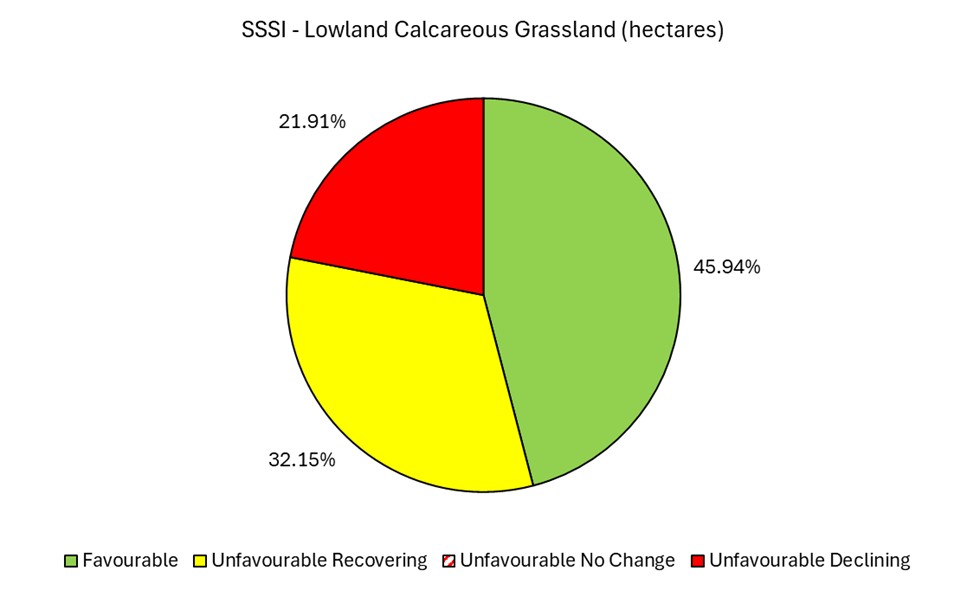
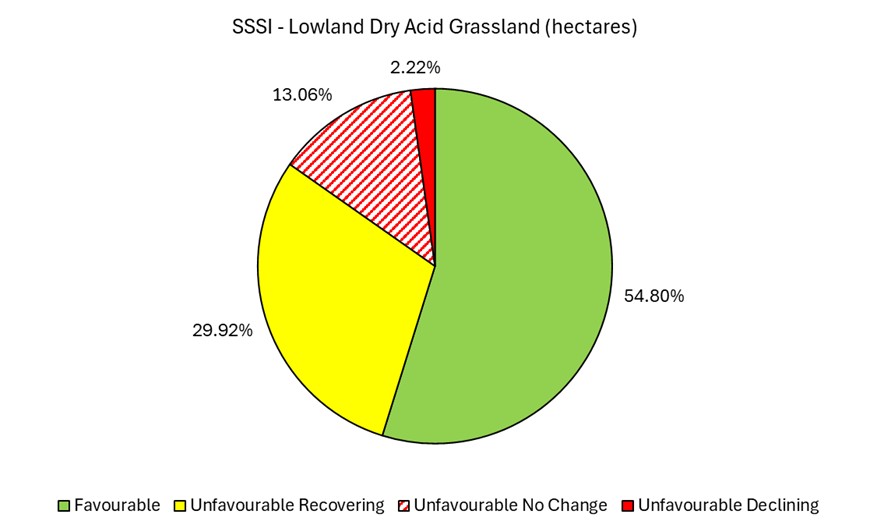
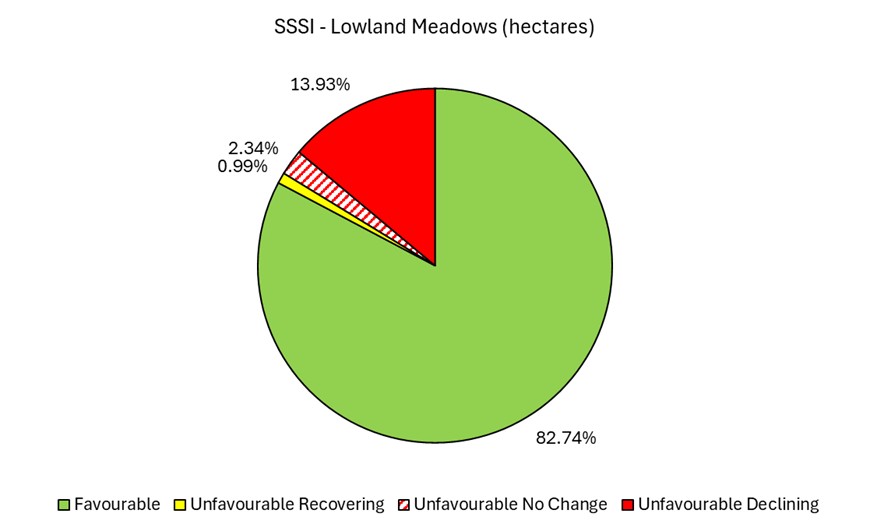
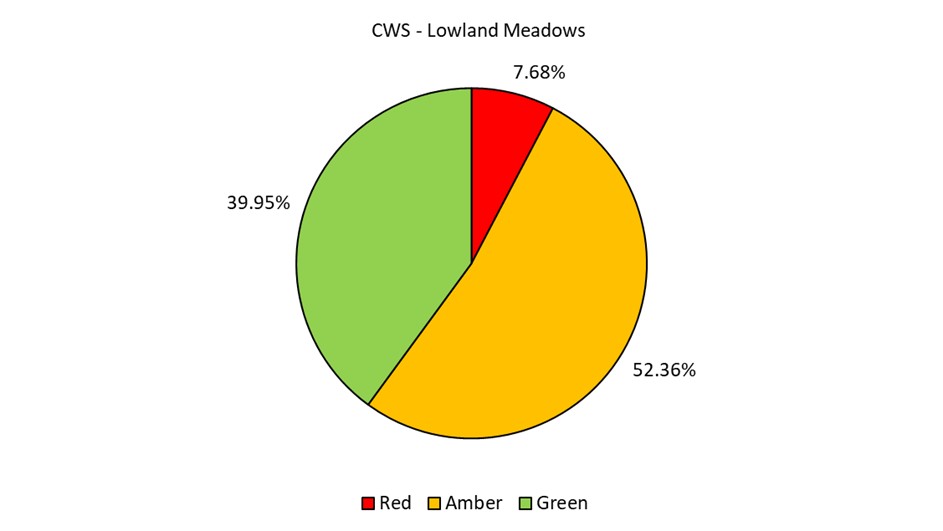
Health warning on the data used below: Due to the size of Devon, and lack of funding for monitoring, some SSSIs and CWS haven’t been monitored for 10 + years and their condition may have changed. See Natural England’s Designated Sites view for details on individual SSSIs.

See the Devon LNRS Targets and monitoring page for more details including SSSI and CWS monitoring. See the Viewer for a map showing SSSI condition (Other Useful Layers>SSSI Condition Assessments).

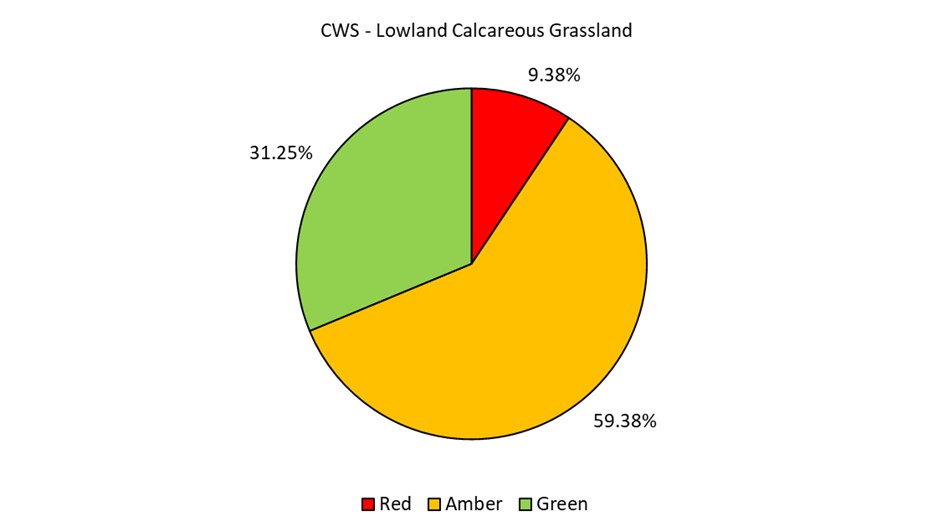
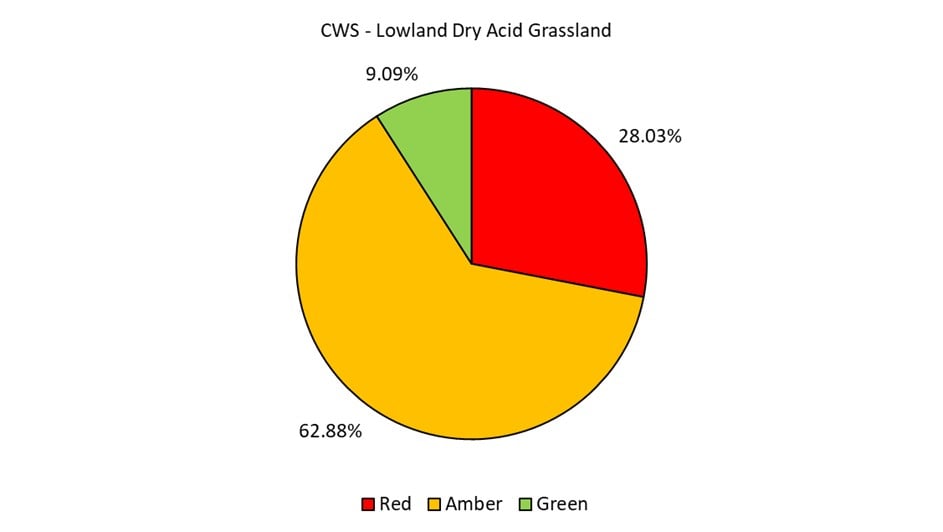
For County Wildlife Sites: Green (ok), Amber (ok but could do better) Red (in need of urgent attention).

Lowland calcareous grassland

SSSI: 32 hectares. 46% is assessed as being in favourable condition.

A pie chart showing the condition of Lowland Calcareous Grassland in SSSIs in Devon (data explained in text).

CWS: 36 sites contain lowland calcareous grassland, covering 78 hectares. 25 have been monitored between 2009 and 2023 with 46% of habitat being assessed as green.

A pie chart showing the condition of Lowland Calcareous Grassland in CWS in Devon (data explained in text).

Lowland acid grassland

SSSI: 932 hectares of SSSI sites contain lowland acid grassland (assumed to include lowland dry acid grassland and also Purple Moor-grass and rush pasture). 55% of this habitat is in favourable condition.

A pie chart showing the condition of Lowland Dry Acid Grassland in SSSIs in Devon (data explained in text).

CWS: 132 sites contain lowland dry acid grassland, covering 524 hectares. 86 have been monitored between 2010 and 2024 with 9% being assessed as green.

A pie chart showing the condition of Lowland Dry Acid Grassland in CWS in Devon (data explained in text).

Neutral grassland (broad habitat type) – includes lowland meadows and some floodplain and coastal grazing marsh

SSSIs: 645 hectares of SSSI sites contain neutral grassland (assumed to be largely lowland meadow but also some floodplain and coastal grazing marsh). 83% of habitat is in favourable condition.

A pie chart showing the condition of Lowland Meadows in SSSIs in Devon (data explained in text).

CWS: 510 sites contain lowland meadows, covering 1,400 hectares. 338 have been monitored with 40% of habitat being assessed as green.

A pie chart showing the condition of Lowland Meadows in CWS in Devon (data explained in text).

Visit the Coastal wildbelt page to learn more about the condition of grasslands mapped as maritime cliffs and slope habitat.

Key pressures and opportunities

Many wildlife-rich grasslands are being abandoned where grazing isn’t economically viable. Some are losing their wildlife value due to changes in cutting regimes or how grazing is managed. In urban areas such as Torbay, it can be hard to find graziers and sites often suffer from nutrient enrichment caused by dogs fouling. Increasingly intensive stock farming, in particular dairy farming, remains a threat. However, there is growing appreciation of how species-rich grasslands help to produce high-quality and highly nutritious meat and dairy. 

The post-war drive to increase agricultural production led to a significant loss of wildlife-rich grasslands due to the increased use of artificial fertilisers and slurry, regular ploughing and reseeding, increased cutting for silage production and greater use of herbicides. This completely changed both the species found in grasslands and the soils that support them. Agricultural improvement is still a threat to some species-rich grasslands across Devon, so it’s critical that those who manage these grasslands are given financial support to protect and care for them.

There’s huge interest among community groups, individuals and greenspace managers in creating wildlife-rich grasslands for their wildlife and recreational value. However, there’s not enough easily obtainable advice, local seed or graziers to help them.

Organisations such as the National Trust, Dartmoor National Park Authority, Devon Wildlife Trust and private businesses such as Goren Farm are harvesting and drying seed from meadows to create and enhance species-rich grasslands. However, there’s not enough locally sourced seed to meet demand and many new grasslands (particularly in development schemes) are created using standard mixes from national companies.

One of the main limiting factors for restoring and creating species-rich grassland is the high concentration of phosphate in the soil.

Many wildlife-rich grasslands occur on steep slopes, which are also areas preferred for tree planting. 

Grasslands are being protected and created to help store water and reduce diffuse pollution. Examples of projects include Connecting the Culm and Triple Axe.

Development remains a threat to wildlife-rich grasslands, especially those that are misidentified or not classed as Priority Habitats. There are opportunities to create more grasslands through Biodiversity Net Gain, the restoration of quarries (such as the huge clay quarries in the Bovey Basin) and along road and rail corridors. However, current proposals to change wildlife and planning legislation are a huge threat.

Climate change is likely to pose the biggest threat to grasslands on thin, free-draining soils that are susceptible to drought, such as Torbay limestone grasslands.

Species-rich grasslands on relatively deep soils are much more able to store carbon than species-poor grasslands. This is likely to be due to the presence of deep-rooted perennials such as Black Knapweed and Red Clover.

2. What we need to do and where

Priority

Better (wildlife-rich), bigger and more wildlife-rich grasslands that are connected to a network of habitats across the county, benefiting Devon Special Species and achieving wider benefits such as carbon capture, water resilience and health and wellbeing. 

Actions for wildlife-rich grassland

See Find out more below for links to detailed guidance and sources of funding and advice.

Use habitat and species surveys, and knowledge of past management, to inform all land management decisions.

Manage and restore existing wildlife-rich grasslands.

  • Lightly graze (with appropriate livestock and at appropriate levels for the site), or cut, to prevent the grassland developing into scrub and woodland while allowing plants to grow and seed.
  • Only use farmyard manure to fertilise, and only fertilise if needed. 
  • Minimise the use of, and target applications of, pesticides and avermectins to reduce their impact on invertebrates.
  • Manage adjacent land to reduce impacts from, for example, lighting and pesticide drift. 

Expand or create wildlife-rich grasslands.

  • Extend existing sites and create new wildlife-rich grasslands as part of a mosaic of wildlife-rich habitats that includes, for example, hedges, scattered scrub, ponds and watercourses.  
  • Where possible, create grasslands adjacent to, or close to, existing sites to aid seed transfer, grazing and movement of wildlife. 
  • Focus effort on land with the greatest potential for restoration, particularly on sites with low phosphate levels, ideally 0-1.
  • Use locally-sourced seed that’s appropriate to the soil type.  

Improve local seed supplies

Coordinate seed harvesting to ensure more seeds from Devon wildlife-rich grasslands are used when restoring and creating grasslands in the county.

Advice and awareness

Develop a joined-up land management network and advisory service (farming, forestry and green spaces) that:

  • Shares learning from farmers, foresters, other land managers, ecological monitoring and research.
  • Promotes best practice in managing and restoration of grasslands, including in woodland mosaics and as recreational green spaces.
  • Links graziers and local seed suppliers with land managers.
  • Promotes research into the benefits of species-rich grasslands for livestock (Rothamsted, Duchy?).
  • Builds on existing networks such as farmer clusters and facilitation groups, Landscape Recovery Project, Moor Meadows and the Blackdowns’ Rough Grazing Network.
  • Promotes available funding.
  • Works with Defra to develop flexible agri-environment schemes that lead to nature restoration and viable farm businesses.

Survey, monitoring and data

  • Increase monitoring and survey of wildlife-rich grasslands, including SSSIs and CWS.
  • Develop a funded business model for Devon Biodiversity Records Centre (DBRC) to ensure a more joined-up and accessible system for wildlife data in Devon that is fully embedded into national systems. This requires significant changes at both national and local levels. 

Where to focus action

Wildlife will benefit from these actions being carried out across Devon. However, actions are prioritised to the following High Opportunity Areas. See Mapping for the LNRS Viewer and information how areas have been mapped.

  • Wildlife-rich grasslands (existing)
  • Special verges (existing)
  • Wildlife-rich grassland expansion areas
  • Wildlife-rich grassland opportunity areas (steep slopes). These are fields most likely to have soils that haven’t been agriculturally improved.
  • Exmoor grassland opportunity network
  • East Devon chalk opportunity area
  • Torbay limestone opportunity area
  • South West Dartmoor Downs (layer in the heaths, mires group)
  • Wood pasture and parkland, Orchards (layers in the woody group)
  • Coastal Wildbelt (layer in the coast group)
  • Watercourse corridors (layer in the freshwater group)

Species Opportunity Areas:

  • Greater Horseshoe Bat and Grey Long-eared Bat sustenance zones.

Mapping health warning: The map of existing wildlife-rich grassland will have errors and omissions. To change or add grasslands to this map please contact Natural England.

Nature everywhere

It’s important to take EVERY opportunity to create and manage grasslands for wildlife across Devon. This includes farms, parks and green spaces, quarries, golf courses, holiday parks, road verges, railway corridors, gardens and more.

3. Inspiration

Case studies

Moor Meadows 

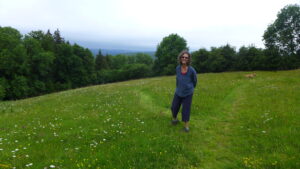
Moor Meadows is a community movement of meadow-makers dedicated to conserving, restoring, and creating wildflower meadows across Devon. From small garden patches to many acres of farmland, each meadow adds to a living landscape that supports wildlife across the region.

Our meadow-makers are a wonderfully diverse group – from farmers passionate about nature-friendly farming, to landowners managing many acres as a haven for wildlife, to gardeners turning orchards and lawns into wildflower-rich spaces.

Be inspired by their stories here: Me & My Meadow

A lady stands in a green wildlife rich meadow

The North Devon Grasslands Project

Ranger teams have trained and resourced themselves to harvest their own wildflower seed from local species-rich grasslands and specifically designed wildflower seed donor sites. 

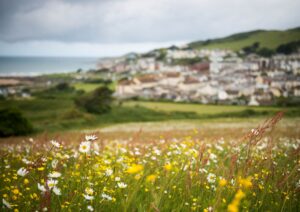
This is a landscape-scale conservation initiative led by the National Trust to restore species-rich grasslands across 70 miles of countryside, including sites like Woolacombe and Arlington Court. These habitats, once widespread, have declined dramatically, and the project aims to reverse that loss by reintroducing wildflower meadows, improving soil health and supporting pollinators and rare plants. Through sustainable grazing, community engagement, and habitat connectivity, the project enhances biodiversity and builds climate resilience in one of Devon’s most ecologically valuable regions.

Wildflowers in the foreground of the photo in focus, with a blurred background of a coastal hill and houses.

Goren Farm wildflower seed harvesting

Goren Farm received funding through the Farming in Protected Landscapes programme to support local wildflower seed production. The funding enabled the farm to buy a brush harvester and seed cleaning equipment, helping to meet rising demand for native seed. The project supports meadow restoration, enhances biodiversity, and encourages collaboration among landowners in the Blackdown Hills National Landscape.

Langaford Farm Trust

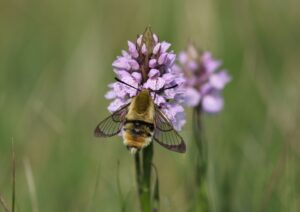
Founded in 2001, Langaford Farm Trust manages a 40-hectare site on Dartmoor to promote biodiversity, conservation, and limited educational visits. The land includes 8 hectares of Rhos pasture supporting Marsh Fritillary butterflies and Narrow-bordered Bee Hawk-moths, 12 hectares of species-rich meadows, 2 hectares of ponds, and small areas of deciduous woodland.

Wetlands are maintained through winter clearance of invasive species and summer pony grazing, while meadows – likely untouched by plough since 1948 – have flourished with Yellow Rattle seeding and careful grazing. These varied habitats support a range of species.

From 2021–2025, management was funded by Farming in Protected Landscapes, and the Trust now seeks Higher Tier Stewardship to continue its conservation work.

A bee hawk-moth on a pink orchid flower.

If you’re doing something to help nature thrive, please share it on the Devon Nature Recovery Delivery Map to inspire others to take action.

Where to visit

Always follow the Countryside Code and keep to footpaths and sites that are managed for public access. 

There are lots of opportunities to visit beautiful flower-rich grasslands across Devon. These include Devon Wildlife Trust reserves such as Teigngrace near Newton Abbot where Lowland Meadow has been restored on former clay workings. 

Other sites include: Goren Farm in the Blackdown Hills, Berry Head NNR limestone grasslands in Torbay, Roborough Common acid grasslands on the south-west edge of Dartmoor, the chalk grassland on the east Devon coast and Billacombe Green SSSI in Plymouth. 

Green winged orchid - Peter Llewyn, UK Wildflowers

For information on visiting these and other sites that are open to the public please see the Explore Devon website.

4. Find out more

Plantlife has lots of resources to support successful meadow restoration

Moor Meadows provide advice and networking opportunities throughout Devon

Goren Farm manages a large area of lowland meadow to produce seed and green hay for habitat restoration and creation. 

Grassland creation / management – FEP Manual 2010 Beta manual for CS

Funding to create, manage and restore lowland meadows is available through the Countryside Stewardship scheme.

The majority of road verges in Devon are managed by Devon County Council. Read about their Life on the Verge initiative

Plantlife has information on road verge management.

LNRS Habitats Classification Table

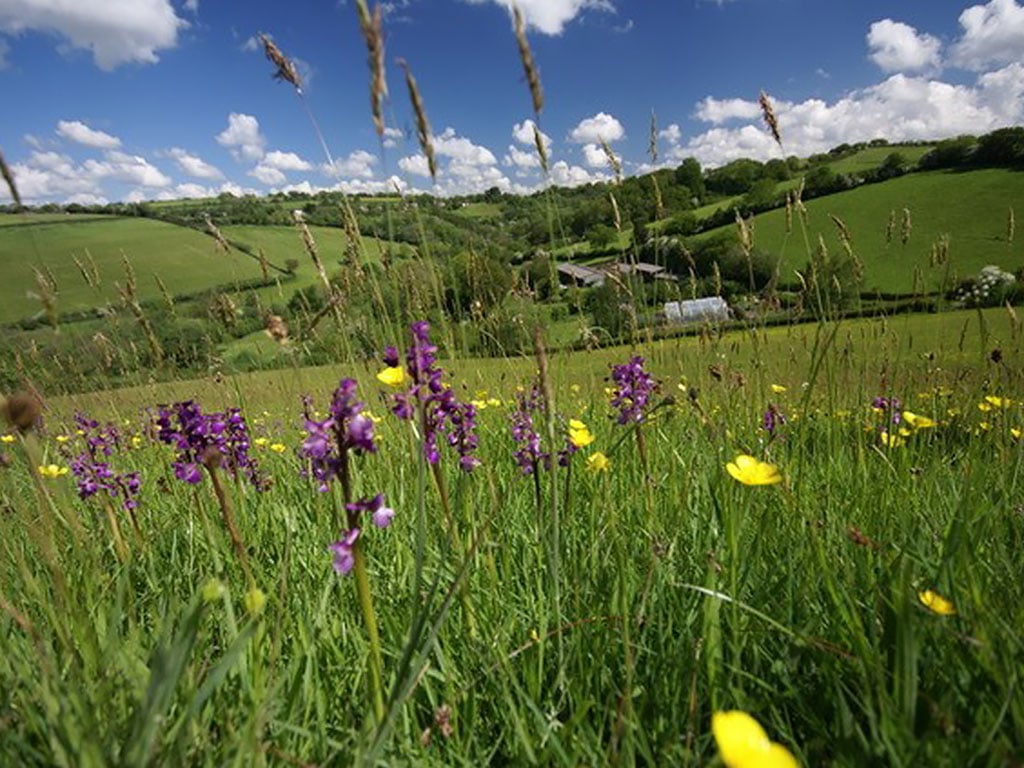
  • Meadow – Donna Cox, Moor Meadows
  • North Devon grasslands – Joshua Day
  • Green-winged Orchid – Peter Llewellyn
  • Narrow-bordered Bee Hawk-moth, Megan Lowe

Draft