
Skip to content

Wood pasture and parkland

Wood pastures are what remains of old wooded commons or medieval hunting forests.

Ancient trees found in wood pasture and parkland provide valuable habitat for rare and specialist species. 

Fragments of old parkland habitats can be found in our towns and cities.

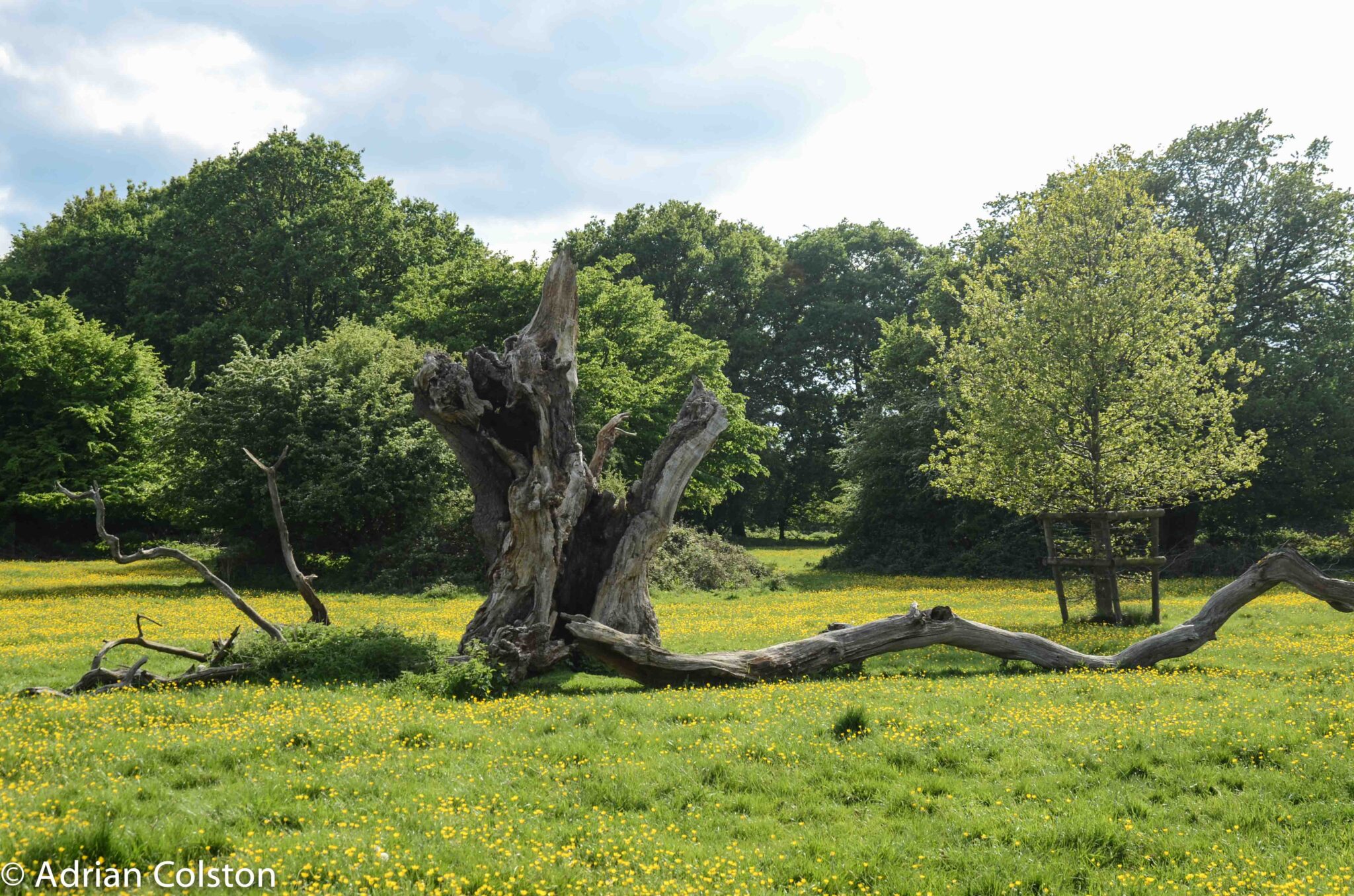
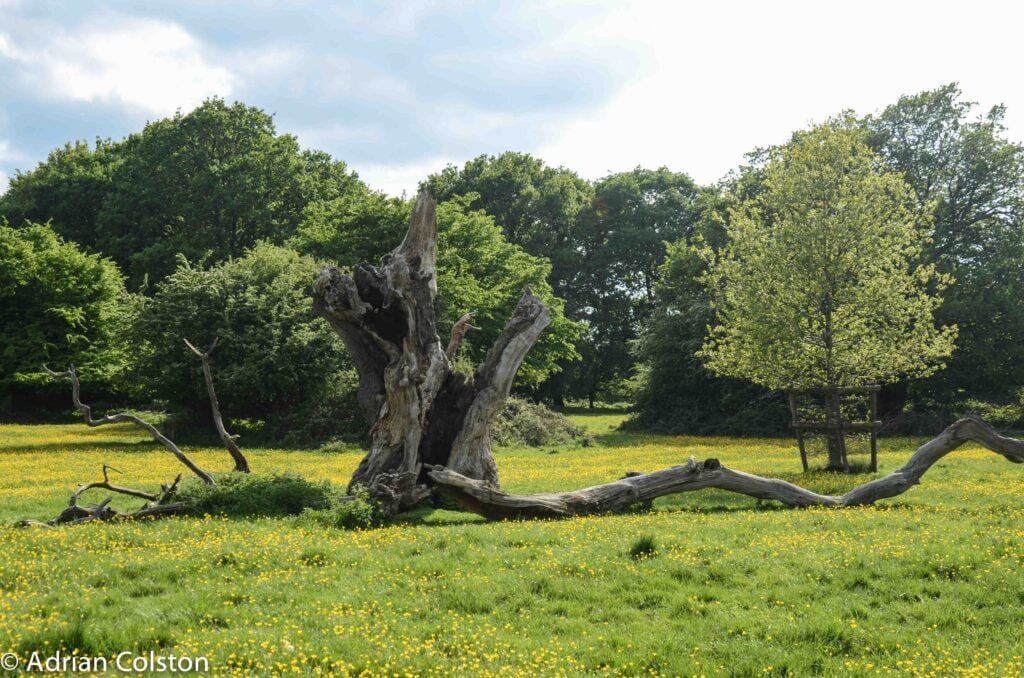
Parkland, Adrian Colston

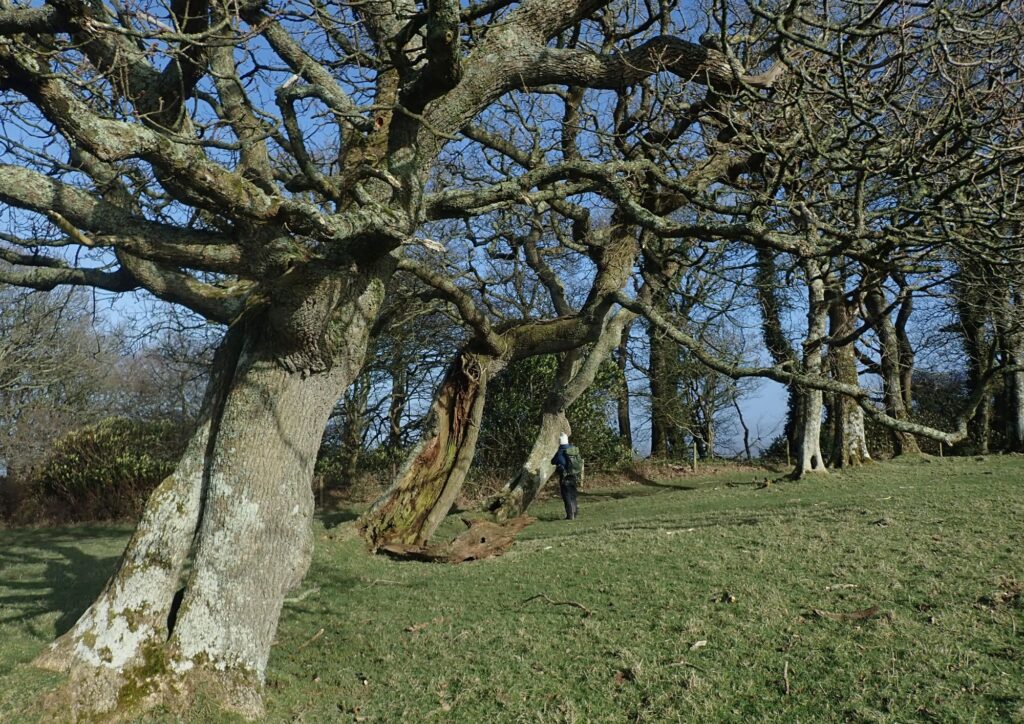
Large old trees lining the side of a field / parkland

Parkland trees – Clovelly Court, Nicola Bacciu

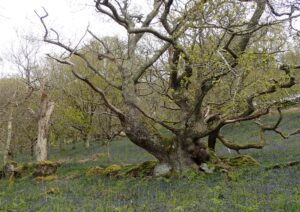
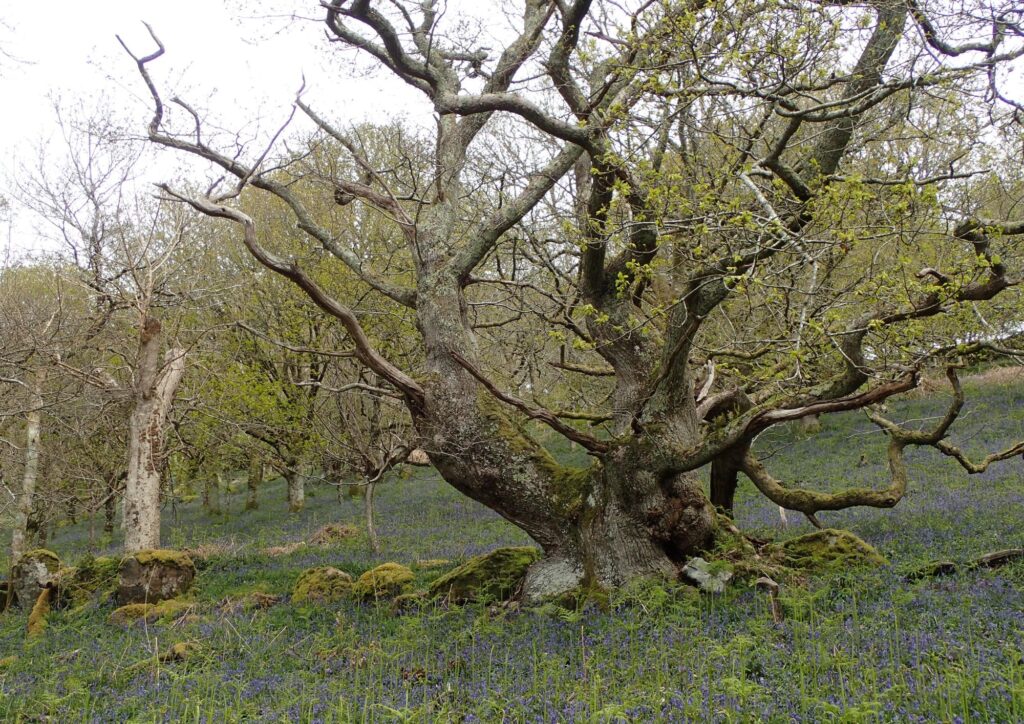
Ancient tree in a grassy field, very few leaves on the tree and twisting branches

Lapsed oak pollard, Whiddon Deer park, Nicola Bacciu

Snapshot for wood pasture and parkland

What wildlife-rich looks like:

Scattered ancient and veteran trees with dead and decaying wood, hollows and cracks supporting a wealth of wildlife including fungi, lichens, invertebrates, roosting bats and nesting birds. Younger trees are growing and will become future veteran trees. There is a mosaic of habitats including wildlife-rich grasslands full of insects and flowers, patches of scrub, ponds and bushy hedges.
Devon Special Species include:

Birds: Lesser Spotted Woodpecker, Pied Flycatcher, Wood Warbler, Spotted Flycatcher (and all other insects eaters).

Bats: Greater Horseshoe, Lesser Horseshoe, Serotine, Grey Long-eared, Barbastelle, Bechstein’s

Insects: Blue Ground Beetle, veteran tree flies

Lichens and fungi: Deadwood lichens, veteran tree lichens.

UK significance:

UK priority habitat: Yes

Statutory irreplaceable habitat: Ancient and veteran trees. Ancient wood pastures and parkland on the ancient woodland inventory.

Veteran trees are rare in Europe and so many of the lichens living on these trees are of international importance.

Wider benefits: Carbon capture, flood control, water quality, health and wellbeing, pollinators.

1. About

Wood pasture and parkland is an open, grassy habitat, usually grazed and defined by scattered ancient and veteran trees. Some wood pastures are old medieval hunting forests that evolved from woodlands into more open landscapes through deer grazing. Others are old wooded commons. Many are no longer sufficiently grazed and have reverted to closed canopy woodland. Examples of wood pasture in Devon include the upper slopes of Dendles Wood on Dartmoor and areas within Whiddon Deer Park.  

In the 18th and 19th centuries, parkland landscapes, including deer parks, were designed and created around prominent country houses. Examples include National Trust properties such as Killerton, Saltram, Arlington and Knightshayes. Some of our urban public parklands such as Devonport in Plymouth and Phear Park in Exmouth are remnants of country estates.

The old trees in these landscapes were often pollarded, a form of management where the crown (the upper parts of the tree) was felled above the browsing height of grazing stock. Pollarding produces timber and fodder

Ancient and veteran trees have developed features such as decaying and dead wood, holes, flaking bark, cavities and hollow trunks. These features provide habitat for rare and specialist wildlife, particularly rare lichens, mosses, fungi, birds and bats. The list of Devon Species of Conservation Concern and the Ancient trees, veteran trees and deadwood page have more information. See Actions below for relevant Devon Special Species

Wood pastures and parklands that have been in existence since at least 1600 are mapped on the Ancient Woodland Inventory.

Area

The 2007 Devon inventory of wood pasture and parkland (see link in Find out more) estimated that there are 4,063 ha in Devon. This includes 162 parkland sites and 47 wood pastures. Many of these sites are Registered Parks and Gardens. 

Condition

Health warning on the data used below: Due to the size of Devon, and lack of funding for monitoring, some SSSIs and CWS haven’t been monitored for 10 + years and their condition may have changed.

See the Devon LNRS Targets and monitoring page for more details including SSSI and CWS monitoring. See the Viewer for a map showing SSSI condition (Other Useful Layers>SSSI Condition Assessments).

There is no available condition assessment data for SSSIs as this habitat is included in the data provided for broadleaved, mixed and yew woodlands. SSSIs designated for wood pasture and parkland include Arlington, Dunsland Park, Ugbrooke Park and Whiddon Deer Park. See Natural England’s Designated Sites view for details on individual SSSIs.

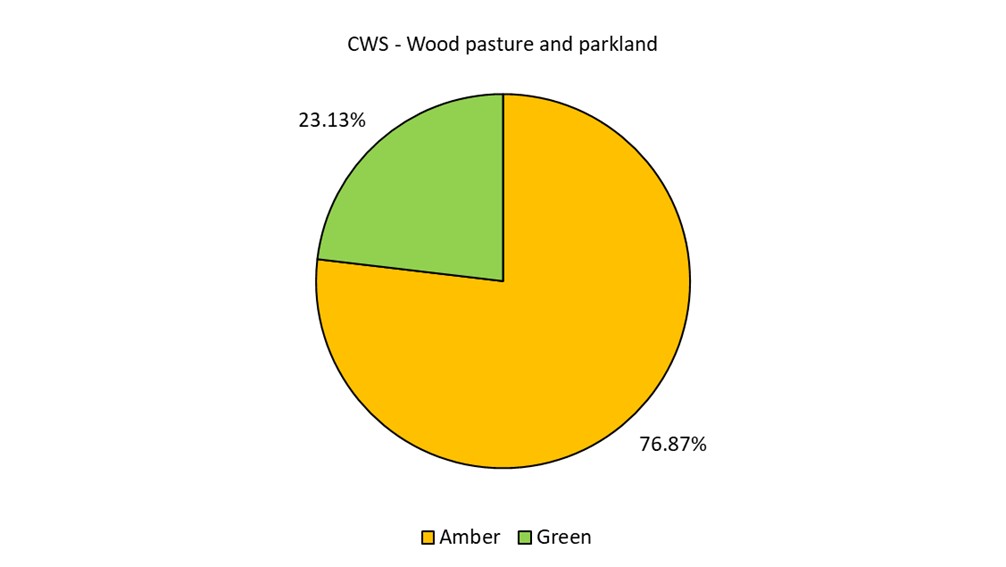
County Wildlife Sites: 1,444 hectares of wood pasture and parkland is found in 30 CWS. Six sites have been monitored between 2011 and 2022 and 23% of the area was assessed as green.

For County Wildlife Sites: Green (ok), Amber (ok but could do better) Red (in need of urgent attention).

A pie chart showing the condition of wood pasture and parkland in CWS in Devon (data explained in text).

Key pressures and opportunities

The biggest pressure identified in the 2007 Devon parkland and wood pasture inventory was root damage to trees. A key cause of this damage is compacted soil due to vehicles, people and livestock (especially where feeders are placed too close to trees). Compacted soil affects roots and their mycorrhiza fungi. Other causes of root damage are drought, standing water, physical damage through re-seeding and disruption to mycorrhizal fungi from applying fertilisers.

Scrub (holly, blackthorn, hawthorn and bramble etc.) needs to be discouraged from growing between the edge of the canopy and the trunk as it will complete for nutrients with the tree and shade epiphytic interest on the trunk. If allowed to develop grazers will not be able to access the area and ivy will start to grow on the trunk and into the canopy, again shading out epiphytic interest and increasing the risk of losing the veteran tree to wind damage during the winter. Scrub established in more open situations is not a problem and of huge value to wildlife.

Ancient and some veteran trees may be near the end of their life. There are often too few replacement trees, particularly in parklands. Dead and decaying wood on the trees and that has fallen to the ground is a critical habitat for wildlife but is often removed.

Many parkland grasslands have been reseeded and are not species rich. Overgrazing and compacted soil is also a problem (see above). 

Research by Cranfield University has shown that grazed wood pasture is 5% more effective at absorbing and storing carbon than the same area of separate woodland and grassland. Slow-growing, long-lived trees such as oak that grow in the open, store more carbon than faster-growing and short-lived species.

Wood pastures and parklands are important historical landscapes and a valuable visual, recreational and educational resource. Some are open to the public, providing income for their owners.

Some farmers in Devon are starting to plant trees in grasslands (known as silvo-pasture) to create wood pastures of the future. Dung from livestock enriches the soil, while the trees provide shelter and fodder and increase soil health. 

Ash dieback is a significant threat across Devon. Other current diseases include acute oak decline and sweet chestnut blight. 

Funding for management of wood pasture and parkland is available through ELM (see Find out more below).

2. What we need to do and where

Priority

Better (wildlife-rich), bigger and more wood pastures and parklands that are connected to a network of habitats across the county, benefiting Devon Special Species and achieving wider benefits such as carbon capture, water resilience and health and wellbeing. 

See Find out more for links to more detailed information including management advice. 

Actions for wood pasture and parkland

Manage wood pasture and parkland sites for wildlife.

Develop and implement a management plan based on Countryside Stewardship specifications, see Find out more below. Management plans should be informed by habitat and species surveys and past and current management.

  • Leave standing and fallen, dead and decaying wood and collapsed trees and branches. 
  • Protect the root zone from soil compaction by, for example, livestock and vehicles, physical damage, fertilisers and slurry. Protect an area two and a half times the size of the canopy. 
  • Allow trees to naturally regenerate or plant new trees. The aim should be to achieve diversity in tree spacing, with combinations of trees that are sufficiently closely spaced to provide shelter while not unduly affecting one another’s growth form. Open-grown oak and beech trees can have a canopy radius of 30 metres.
  • Graze at low stock levels to prevent soil compaction, damage to trees and to maintain or develop a species-rich grassland. 
  • Increase the botanical value of grasslands by seeding where needed, using a local seed mix. 
  • Allow scrub to develop and cover 10-20% of the site but not within the extent of the canopy of veteran and ancient trees where it could impact on rare lichens, fungi and mosses growing on the trees. 
  • Implement rigorous biosecurity measures. 
  • Provide specific microhabitat requirements for rare species that occur or could be present. See Other relevant actions below.
  • Manage adjacent land to reduce impacts from pesticide and fertiliser drift and from light pollution. 

Expand and create wood pasture and parklands

Develop plans based on Countryside Stewardship specifications, see Find out more.

  • Create new wood pasture with sufficient space for the trees to grow with partly or entirely open crowns. Plant drought-tolerant species and species with similar mycorrhizal fungi to existing species. Use local seed sources to create species-rich grasslands.
  • Convert existing secondary woodland to wood pasture through grazing and thinning.  
  • Restore ancient wood pasture through grazing and thinning. 

Survey, research and awareness

  • Increase surveys and monitoring. In particular, complete the Ancient Tree Inventory and monitor County Wildlife Sites. 
  • Identify and publicise demonstration sites and case studies that are examples of best practice. 

Other relevant actions

More detailed actions for Devon Special Species are set out on other LNRS pages. Follow the links below:

Where to focus action

Wildlife will benefit from these actions being carried out across Devon. However, actions are prioritised to the following High Opportunity Areas. See Mapping for the LNRS Viewer and information on how areas have been mapped.

  • Wood pasture and parkland (existing)
  • Woody expansion/buffer zones around wood pasture and parkland sites. (Warning: this layer includes scattered small areas which are not continuous with woodlands. These will be removed after the public consultation when the map is reviewed)   

3. Inspiration

Case studies

Bringing together specialists

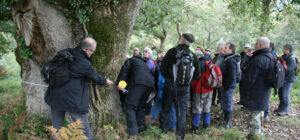
The Devon Ancient Tree Forum (ATF Devon) brings together specialists, enthusiasts and ancient tree owners to share best practice and visit sites across Devon. 

Whiddon Park 

Whiddon Park in Devon is a historic deer park and a good example of wood-pasture and parkland habitats. It’s enclosed by impressive granite walls and covers nearly 300 acres at the entrance to the Teign Gorge. The landscape is a mosaic of open grassland and scattered veteran and ancient trees which provide vital niches for fungi, lichens, invertebrates and birds. This combination of pasture and trees reflects centuries of traditional management, where grazing animals maintained open conditions while the trees matured.

Ancient tree in a grassy field, very few leaves on the tree and twisting branches

If you’re doing something to help nature thrive, please share it on the Devon Nature Recovery Delivery Map to inspire others to take action.

Where to visit

Always follow the Countryside Code and keep to footpaths and sites that are managed for public access. 

Accessible sites

Parklands with public access include National Trust properties at Killerton, Saltram, Arlington and Knightshayes (entry charges may apply), the Dartington Estate near Totnes and urban parks such as Devonport in Plymouth and Phear Park in Exmouth.

For information on visiting these and other sites that are open to the public please see the Explore Devon website.

4. Find out more

The Devon Tree and Woodland Strategy (2024) can be found on the Devon Local Nature Partnership website.

An inventory of Devon’s wood pastures and veteran trees was produced in 2007.

Find out about the Devon Ancient Tree Forum (ATF Devon). 

The Trees outside woodlands page has more information on veteran and ancient trees. 

Natural England Summary of Evidence: Wood-Pasture and Parkland (PDF) 

JNCC Priority Habitat Description: Wood-Pasture and Parkland (PDF) 

The People’s Trust for Endangered Species has information on the UK Wood Pasture & Parkland Network 

The Soil Association has information about agroforestry

The UK Forestry Standard is the government’s approach to sustainable forest management. It has information on how to manage ancient trees. 

The government’s website, GOV.UK, has information on the: 

  • Ancient tree forum image – Lapsed oak pollard, Whiddon Deer park, Nicola Bacciu

Draft