
Skip to content

Intertidal invertebrates

Over half of Devon’s wildlife lives in the sea.

Intertidal invertebrates are some of the oldest forms of life on Earth.

A single mussel can filter over 200 litres of seawater per day.

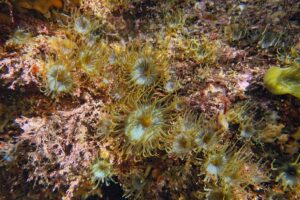
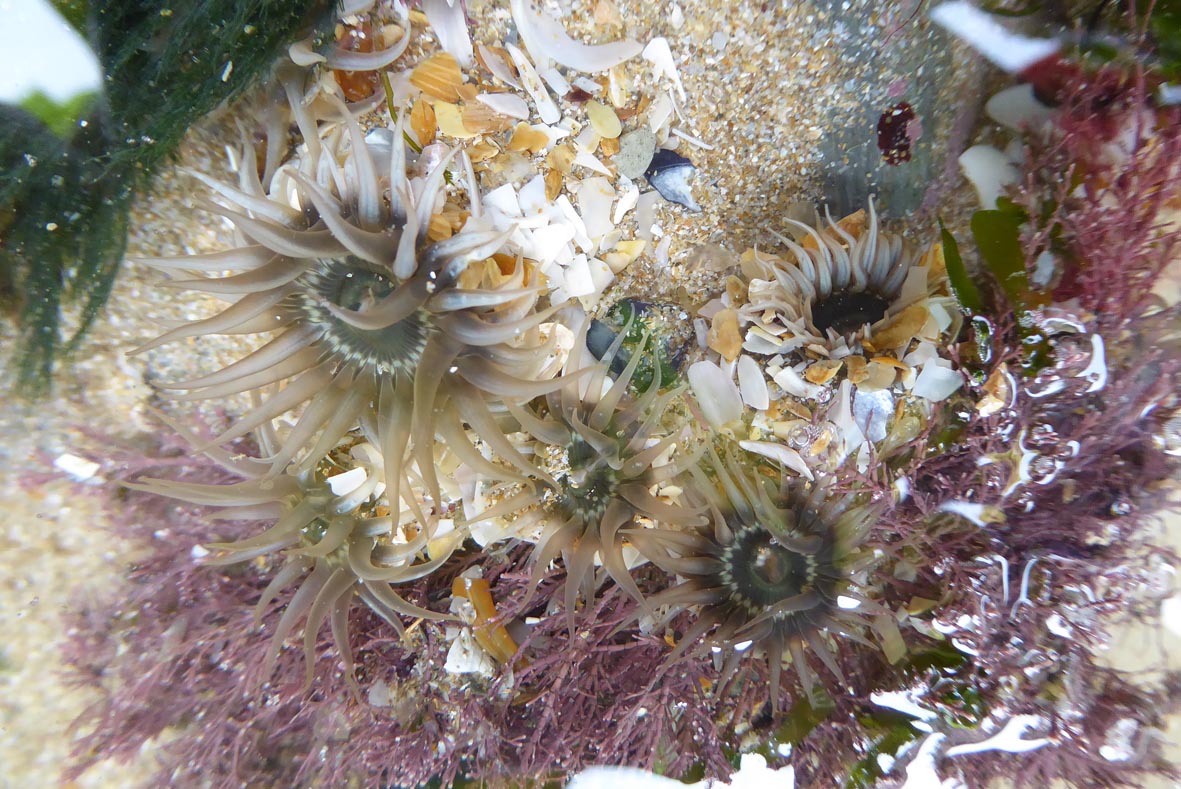
Glaucous pimplet - Keith Hiscock

Glaucous pimplet, Keith Hiscock

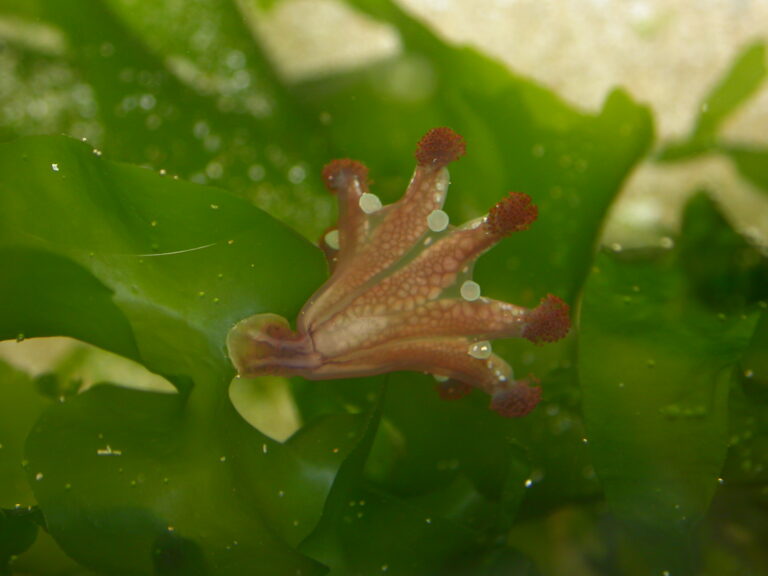
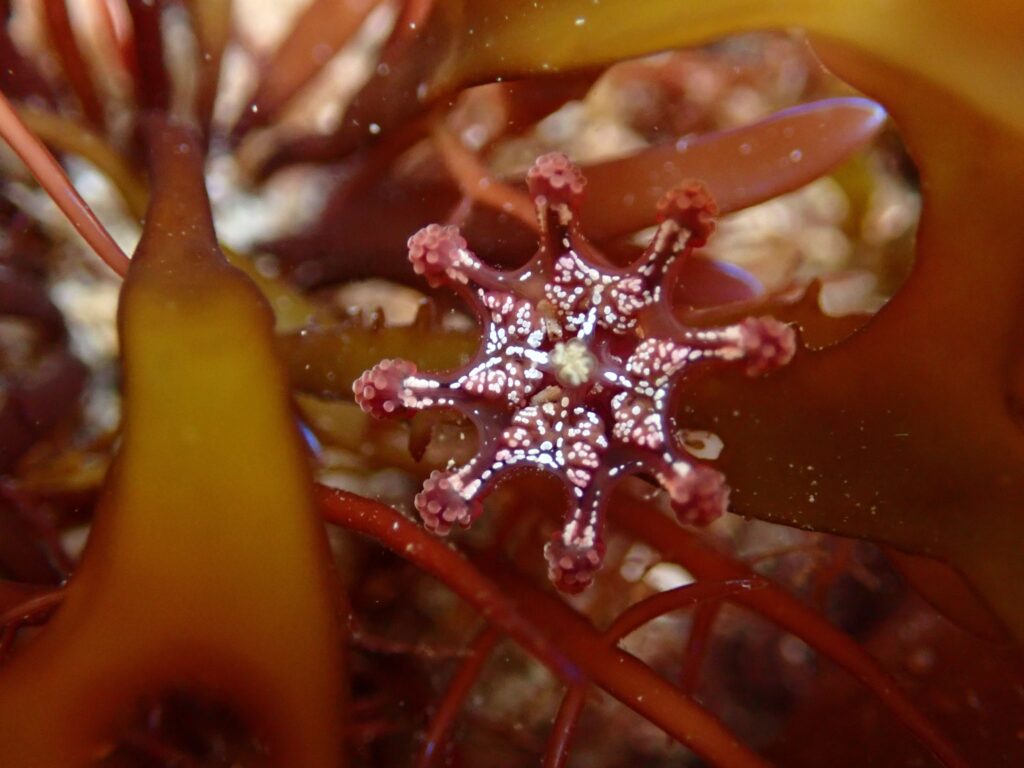
St. John's jellyfish, Eleanor Goodall

St. John’s jellyfish, Eleanor Goodall

1. About

Intertidal invertebrates are the soft-bodied and shelled animals that thrive along our estuaries and coastlines. This diverse group includes familiar species like crabs, starfish and sea anemones as well as lesser-known creatures that hide in rock pools and that can be found scattered along Devon’s sandy shores.

Bright orange sponges cling to the undersides of rocks, while translucent, globular sea squirts glow from shadowy crevices. Delicate and charismatic sea slugs glide through seaweed, grazing on whatever they can find. Shells appear in every shape and size, from tiny hydrobia that are just a few millimetres long and are vital for wintering birds, to dense beds of mussels and oysters that form rich habitats teeming with marine life.

Important habitats for these species include: 
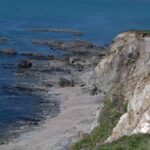
Rocky shores provide a mosaic of microhabitats for intertidal invertebrates. Crevices, overhangs and shaded rock pools offer shelter from drying out and predators. Barnacles, limpets, chitons and sea slugs are commonly found clinging to rocks or grazing on algae, while sponges and tube worms anchor themselves in more protected spots.
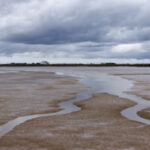
Though seemingly barren, sandy shores host burrowing invertebrates such as lugworms, razor clams and sand hoppers. These species play a vital role in sediment turnover and nutrient cycling. The shifting substrate also supports mobile scavengers and filter feeders that emerge when the tide changes.
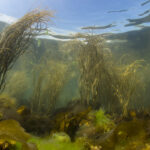
In sheltered estuarine zones, dense growths of seagrass and seaweed provide excellent cover and feeding grounds. For example, unlike their free-swimming relatives, stalked jellyfish have a stalk they use to attach themselves to seaweed or seagrass.

The LNRS has identified 15 intertidal invertebrates as Devon Species of Conservation Concern: five molluscs, two worms (annelids) and eight species of cnidaria (sounds like nih-DARE-ee-uh). Cnidarians are a surprisingly diverse group, with around 12,000 known species; three times more than mammals. They include familiar creatures like jellyfish, corals and sea anemones as well as lesser-known species such as hydroids.
Key pressures and opportunities

Building sea defences, harbours and housing near the coast can reduce habitat, especially in intertidal zones. It disrupts the natural structures, reducing the availability of crevices, pools and sediment types that intertidal invertebrates rely on. 

Run-off from the land can have serious impacts on coastal ecosystems. Sediment is especially harmful, as it can smother species, particularly those with delicate structures such as gills. Run-off often carries excess nutrients, leading to eutrophication and harmful algal blooms, and can degrade water quality. Other pressures include sewage discharge, marine litter and chemical pollutants from industry, all of which pose risks to intertidal and marine life.

Climate change is affecting our coastal and intertidal environments in several ways.

Rising sea temperatures and ocean acidification are changing species’ distributions and disrupting reproductive cycles. For example, cnidarians such as corals and sea anemones may experience stress or bleaching. Coastal erosion is accelerating, removing or smothering important habitats. At the same time, more frequent storms and heavier rainfall are increasing storm overflows and surface run-off. This causes higher levels of nutrients and pollutants to enter our rivers, estuaries and intertidal areas, further reducing water quality.

Rockpooling, trampling and boating can physically damage fragile habitats. Even well-meaning visitors can unintentionally dislodge sea anemones from their footing.

Foraging has become increasingly popular, but its ecological impacts are not fully understood. Some controls and codes of conduct exist in certain areas, such as the closure of public mussel beds in the Exe and Teign to protect stocks, but this is not applied consistently across the whole coast.

Invasive species, such as Sargassum muticum, are often introduced through ballast water or aquaculture. Once established, they can smother the areas where they grow, blocking light, preventing nutrients from reaching native invertebrates and disrupting the delicate balance of intertidal ecosystems. Find out more on the Invasive non-native species page.

2. What we need to do and where

Priority

Increase the abundance and distribution of all intertidal invertebrates, particularly those identified as Devon Special Species.  

See Find out more below for links to more detailed information on this group including management advice and records. 

Devon Special Species

Glaucous pimplet - Keith Hiscock

Sea anemones and corals

Sea anemones and corals belong to a fascinating group of animals called cnidarians. Despite looking like plants they are animals, related to jellyfish. These creatures are found along Devon’s rocky shores and in its underwater habitats, where they play an important role in marine ecosystems.

Anemones and corals are soft-bodied animals with a simple structure. They have a central mouth surrounded by tentacles armed with stinging cells called nematocysts, which help them catch food and defend themselves. Most are attached to rocks or other surfaces and rely on currents or their tentacles to capture tiny prey like plankton. Some UK corals are soft-bodied and some secrete a calcium carbonate skeleton that forms a protective base and helps anchor them to the seabed.

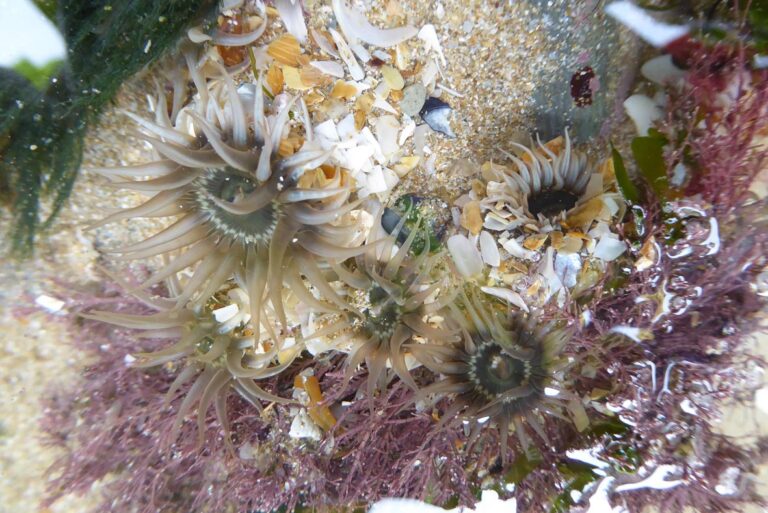
Sea anemones are often described as “flowers of the sea” because of their bright colours and petal-like tentacles. In Devon, you might spot the Snakelocks Anemone, which has long green tentacles tipped with purple. These anemones thrive in sunny rock pools and shallow waters, where they stay attached to rocks or seaweed. They’re solitary animals, feeding by stunning small fish and invertebrates with their stinging tentacles before drawing them into their central mouth.

Glaucous pimplet - Keith Hiscock

Glaucous Pimplet

Anthopleura thallia

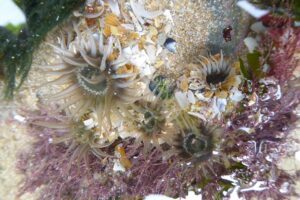
The Glaucous Pimplet is a small but distinctive species of sea anemone found on wave-exposed rocky shores on the north coast of Devon, such as Lee Bay, Croyde and Westward Ho! Devon hosts one of the highest populations of this species in the UK, so is a key region for its conservation and study. 

It’s typically found in shallow rock pools, crevices and areas among dense mussel beds, often partially buried under gravel or sediment. Its trumpet-shaped body is dotted with sticky bumps, also known as verrucae, that trap sand and bits of debris, helping it blend into its surroundings. 

It can be green, brown or greyish with up to 100 retractable tentacles that are a similar colour or subtly patterned. Its tentacles are arranged in whorls around its mouth and have small outgrowths called acrorhagi that are armed with stinging cells the sea anemone uses to defend itself. Although not widely distributed, it can be locally abundant and is thought to reproduce asexually, forming groups of genetically identical individuals. 

As the Glaucous Pimplet can be found in mussel beds it’s vulnerable to trampling and accidental removal. It’s also highly sensitive to fine sediments, which can clog its feeding structures and reduce the availability of oxygen. Any decline in mussel populations, whether from harvesting or environmental stress, can further threaten the pimplet by reducing its habitat.

Trumpet anemone - Keith Hiscock

Trumpet Anemone

Aiptasia couchii

The Trumpet Anemone is a rare species in the UK, mainly recorded along the south-west coast and parts of North Wales. In Devon’s intertidal zone it tends to live in shaded crevices and rock pools, often under stones or among algal holdfasts in clean, sheltered waters. When fully extended, its slender column can reach up to 12 cm, surrounded at the mouth by long whip-like striking tentacles. The main body is usually translucent brown with pale streaks, giving the anemone a distinctive look.

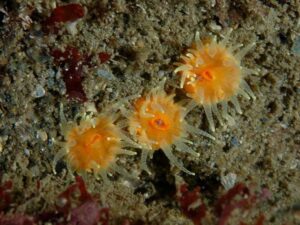
Scarlet and Gold Star Coral - Keith Hiscock

Scarlet-and-gold Star Coral

Balanophyllia regia

The Scarlet-and-gold Star Coral is a rare, solitary, stony coral found in the south-west of the UK. It attaches to rocks in crevices and caves, preferring sheltered spots from the lower shore down to around 25 m deep. Its low, fragile skeleton is usually less than 15 mm across, and the polyp is a vivid yellow or orange, sometimes with a scarlet disc. Around the mouth, up to 48 short, tapering tentacles form a striking crown, giving this coral its jewel-like appearance.

Stalked jellyfish

Stalked jellyfish are a rare and unusual type of jellyfish that live in shallow coastal waters. Unlike their free-floating relatives, they use a stalk to attach themselves to seaweed, seagrass, or rocks. They’re small (usually under 5 cm), often beautifully patterned, and can be hard to spot due to their camouflage and preference for sheltered habitats like rockpools and estuarine lagoons.

There are ten species recorded in the UK, with four more commonly found in Devon. Each species has a central bell-shaped body with eight arms, each ending in clusters of tentacles. These tentacles are often tipped with stinging cells the jellyfish use to catch tiny prey such as plankton. Their presence is a strong indicator of clean, undisturbed intertidal habitats.

Spotted Kaleidoscope Jellyfish

Haliclystus octoradiatus

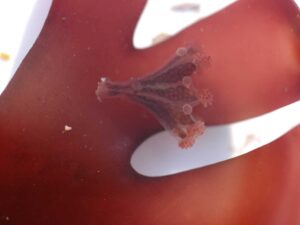
This species is named for its vivid appearance: a bell-shaped body patterned with greens, browns or oranges, and distinctive white spots on its tentacles. It’s typically found in rockpools, estuarine lagoons and seagrass beds in Devon.

Kaleidoscope jellyfish, Keith Hiscock

Kaleidoscope Jellyfish

Haliclystus auricula

This species closely resembles the Spotted Kaleidoscope Jellyfish, although it’s sleeker and has no spots. It has distinctive small lobes between its arms and is usually brightly-colored in shades of green, brown or red.

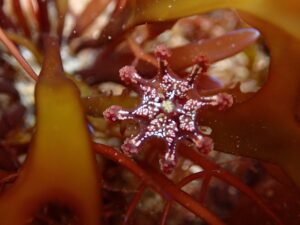
St. John's jellyfish, Eleanor Goodall

St John’s Jellyfish

Calvadosia cruxmelitensis

This jellyfish has a short stalk and is often found attached to red seaweeds on sheltered rocky shores. Its tentacles are arranged in a cross-like pattern.

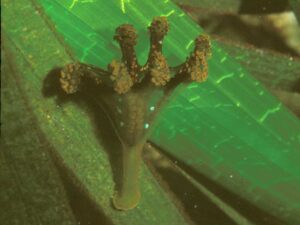
Calvadosia campanulata - Keith Hiscock

A stalked jellyfish

Calvadosia campanulata

This species has a smooth, bell-shaped body without the cross-shaped tentacle of St John’s Jellyfish. It’s less vividly coloured than other species, but still plays a role in indicating healthy intertidal ecosystems.

Image needed

Tentacled Lagoon Worm

Alkmaria romijni

The Tentacled Lagoon Worm belongs to a family of bristle worms that includes ragworms, tube worms and fan worms. These species share key features, including segmented bodies with bristles and feeding tentacles.

This particular worm is very small, just 3 to 5 mm long, and barely visible to the human eye. It lives in shallow mudflats in brackish water or lagoons, either on the surface or partially buried in sediment, within tubes that it builds by gluing fine sediment particles together with mucus.

The Tentacled Lagoon Worm has a distinctive life cycle. Unlike most bristle worms, which typically have a planktonic larval stage (where larvae are released into the water column to grow and develop), this species does not disperse in that way. Instead, its larvae develop inside the mother and stay in her tube for around 12 days before emerging onto the surface of the mud. They feed by using the tentacles around their mouths to gather detritus from the surrounding sediment.

Because the larvae do not enter the water column, they are unable to disperse over long distances. This limited mobility makes the species particularly vulnerable to habitat degradation and changes in local environmental conditions.

Tentacled Lagoon Worms are protected under UK conservation legislation (Schedule 5 of the Wildlife and Countryside Act 1981) due to their rarity and vulnerability. Their specialised habitat is easily disturbed by activities such as dredging, pollution or changes in salinity. Because they do not disperse far, populations cannot easily recover if habitats are lost or degraded.

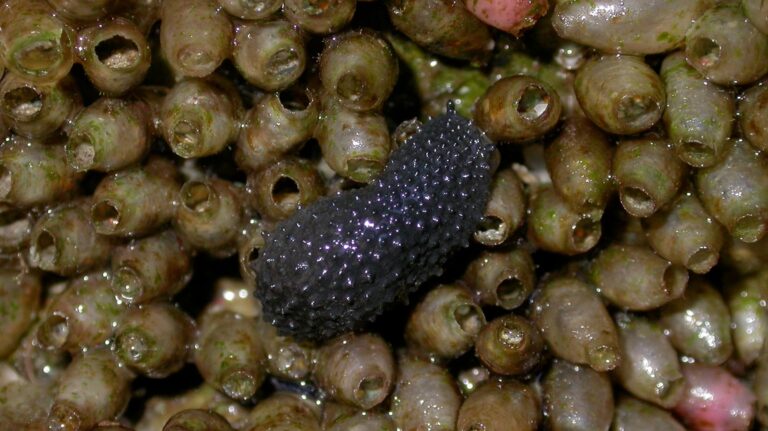
Celtic sea-slug traversing empty dog whelk egg cases (August 2002) - Peter Barfield

Intertidal molluscs

Spiny Cockle, Celtic Sea Slug and Native Oyster are listed as Devon Special Species. For more information on intertidal molluscs see the Molluscs page.

Actions for all intertidal invertebrates

Habitat management and creation

Intertidal invertebrates are found across Devon’s coastlines and will benefit from the actions set out on the  Coastal wildbelt page. Anyone who is managing or restoring habitat with rare species should be aware of their needs.

Reduce impacts to sensitive habitats 

  • Identify and map habitats where sensitive intertidal invertebrates, such as the Glaucous Pimplet, are known to occur, particularly wave-exposed rocky shores with gravelly rock pools. Include these habitats in local marine conservation designations and shoreline management plans.
  • Use field surveys and modelling to understand how sediment affects intertidal invertebrates.
  • Promote land management practices that limit erosion, such as buffer strips, catchment-sensitive farming and sustainable drainage systems (SuDS).
  • Work with local authorities, developers, and landowners to ensure coastal infrastructure and planning decisions support sediment control and habitat protection.
  • Use signage, codes of conduct and public education to promote responsible rockpooling and coastal recreation in areas with vulnerable species. 
  • Collaborate with local tourism operators to reduce trampling and disturbance in sensitive intertidal zones.

Research and monitoring 

  • Fund targeted research to understand reef resilience in relation to known threats such as climate change, sedimentation and physical disturbance. Specify the reef types of interest (for example intertidal biogenic reefs, subtidal rocky reefs) and identify priority questions, such as tolerance to temperature changes or recovery after storm damage.
  • Explore pilot restoration projects in degraded areas, using natural or artificial substrates, where evidence suggests ecological benefit and feasibility.

3. Inspiration

Case studies

Wembury Marine Centre (Devon Wildlife Trust)

Wembury Marine Centre runs guided rock pool safaris and educational activities that help people identify and understand the importance of intertidal species like sea anemones and stalked jellyfish. The centre builds community support for marine conservation and encourages responsible shoreline behaviour.

If you’re doing something to help nature thrive, please share it on the Devon Nature Recovery Delivery Map to inspire others to take action.

Where to visit

Always follow the Countryside Code and keep to footpaths and sites that are managed for public access.

Wembury 

This rocky shoreline along Devon’s stunning south coast is one of the best places in the UK to discover the hidden wonders of marine life. At low tide the rock pools come alive with colourful sea anemones, darting shrimp, feathery worms and even the occasional starfish or sea urchin. 

Lee Bay, Ilfracombe

Lee Bay’s peaceful setting and rich biodiversity make it an ideal spot for rockpooling, nature walks and discovering the fascinating invertebrates that live here.

For information on visiting these and other sites that are open to the public please see the Explore Devon website.    

4. Find out more

Rocky shores – Veronica White

Mudflats and sandy shores – Justin Mears – National Trust Images

Seagrass and seaweed beds – Thongweed, Wembury, Paul Naylor (marinephoto.co.uk)

Glaucous Pimplet – Keith Hiscock

Trumpet Anemone – Keith Hiscock

Scarlet-and-gold Star Coral – Keith Hiscock

Stalked jellyfish – Rob Jutsum, Coastwise North Devon

Spotted Kaleidoscope Jellyfish – Rob Jutsum, Coastwise North Devon

Kaleidoscope Jellyfish – Keith Hiscock

St John’s Jellyfish – Eleanor Goodall

A stalked jellyfish (Calvadosia campanulata) – Keith Hiscock

Intertidal molluscs – Celtic Sea Slug – Peter Barfield

All intertidal invertebrates found on the Devon Species of Conservation Concern list:

BOLD if it’s a Devon Special Species, * for Devon Special Group.

  • *A stalked jellyfish, Calvadosia campanulata
  • *Glaucous Pimplet, Anthropleura thallia
  • *Kaleidoscope Jellyfish, Haliclystus auricula
  • *Scarlet-and-gold Star Coral, Balanophyllia regia
  • Sea Fir, Hartlaubella gelatinosa
  • *Spotted Kaleidoscope Jellyfish, Haliclystus octoradiatus
  • *St John’s Jellyfish, Calvadosia cruxmelitensis
  • Honeycomb Worm, Sabellaria alveolata
  • Tentacled Lagoon Worm, Alkmaria romijni
  • Cock’s Candelabra, Candelabrum cocksii
  • *Trumpet Anemone, Aiptasia couchii

Draft