
Reptiles (lizards and snakes) and amphibians (frogs, newts and toads) are cold-blooded vertebrates which rely on their environment to control their temperature.
Reptiles largely live on dry land whereas amphibians need a moist environment. Amphibians breed in ponds and other waterbodies. Adults can also be found in damp places on land (under logs, stones and in dense vegetation). Both amphibians and reptiles are mainly carnivorous, eating insects and other small invertebrates. Snakes will also eat small mammals, birds and other reptiles and amphibians.
All six of Britain’s native terrestrial reptile species and five of its seven native amphibians (not Natterjack Toads or Northern Pool Frogs) live in Devon. They’re found in a wide range of habitats from heaths and moors to sunny coastal grasslands and our parks and gardens.
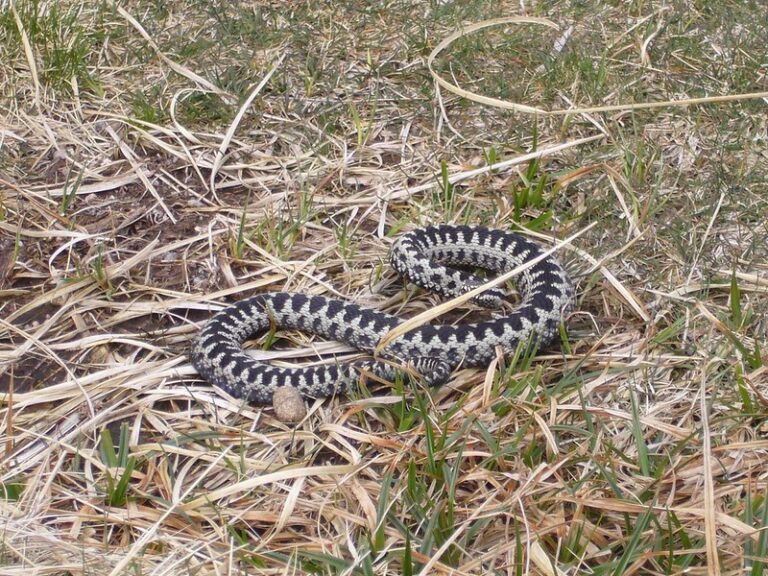
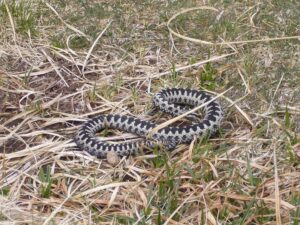
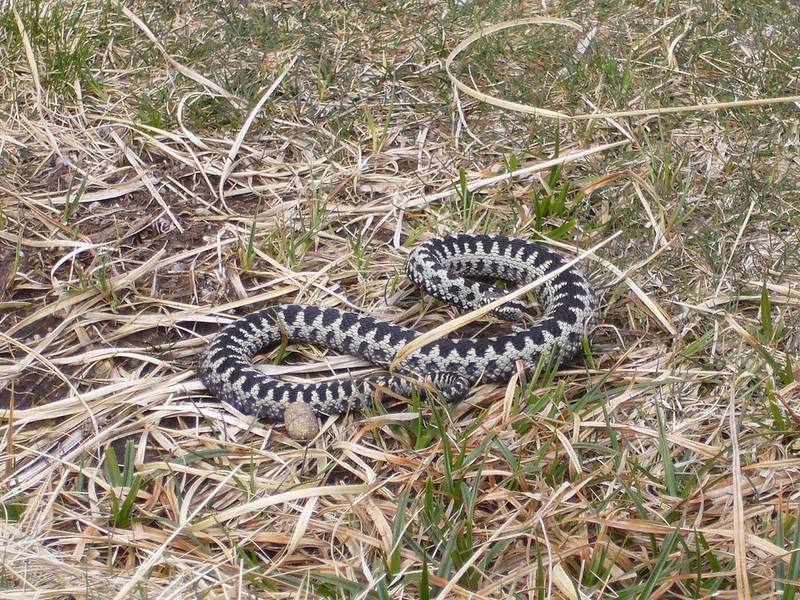
Reptiles: Adder, Grass Snake, Slow Worm, Smooth Snake, Common Lizard and Sand Lizard.
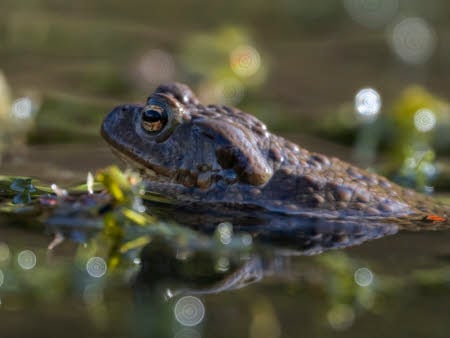
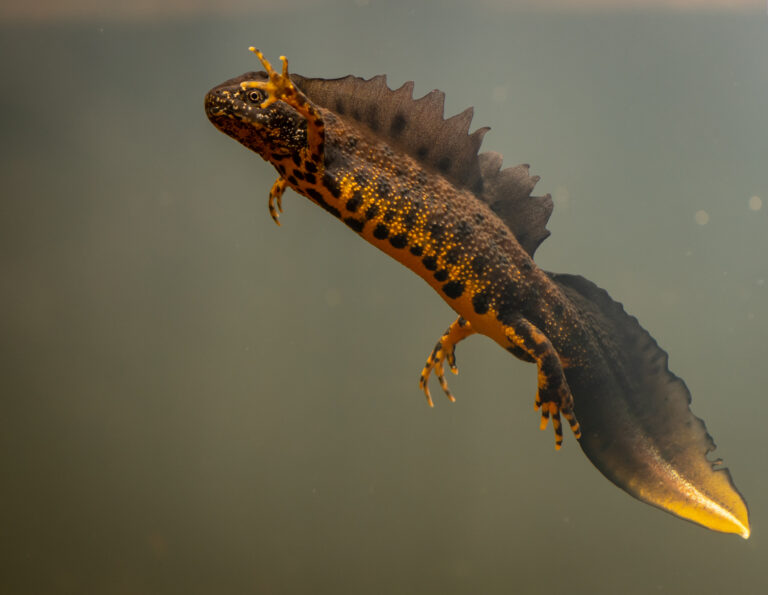
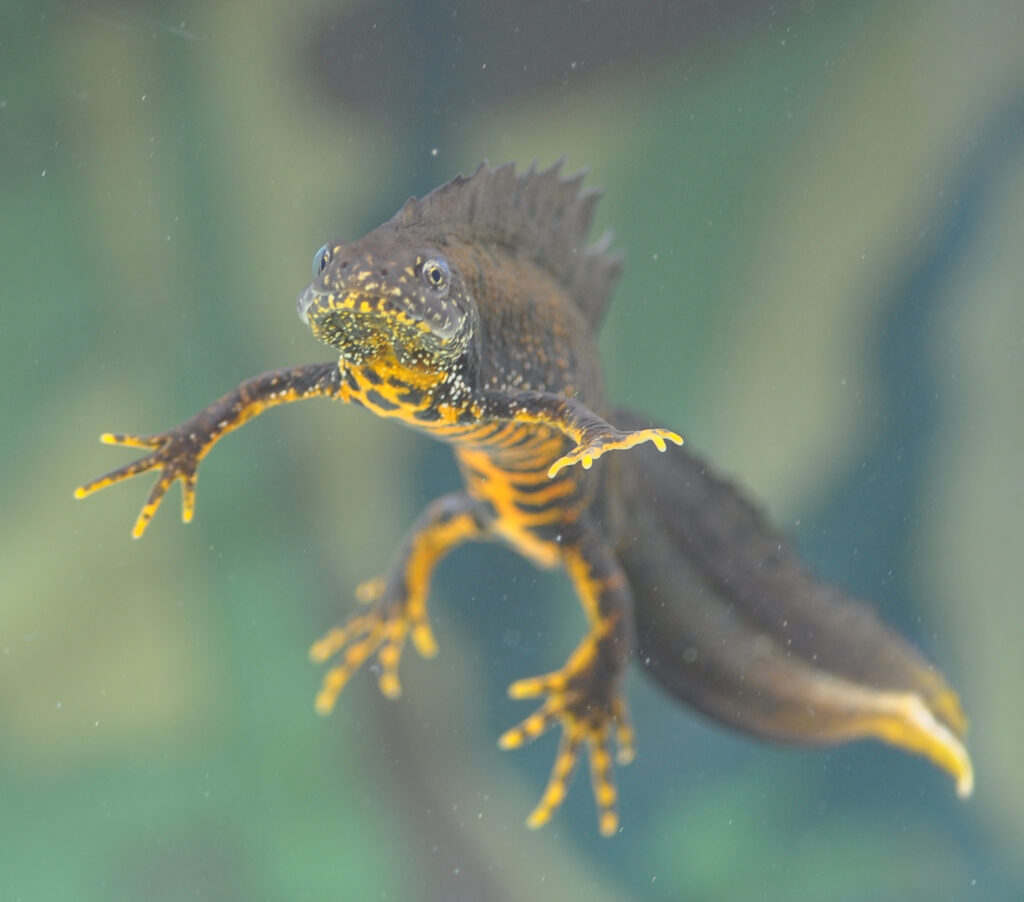
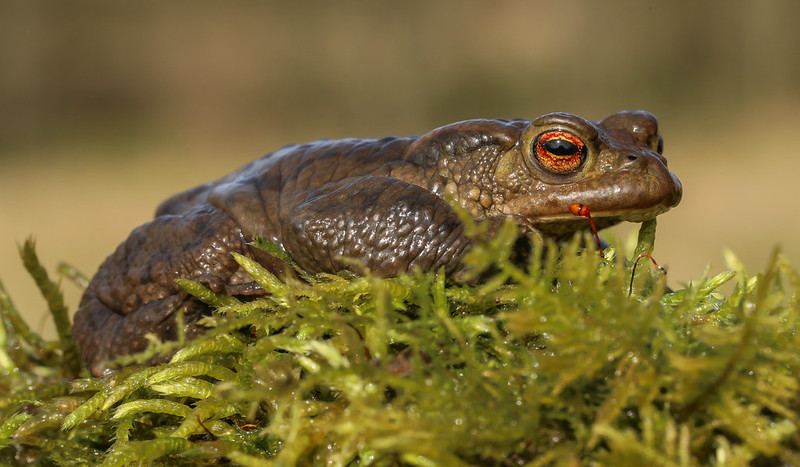
Amphibians: Common Toad, Common Frog, Great Crested Newt, Smooth Newt and Palmate Newt.
All (other than Common Frog, Smooth Newt and Palmate Newt) are listed as Devon Species of Conservation Concern and all receive some level of legal protection. Smooth Snake and Sand Lizard are threatened species. However both have been re-introduced to Devon and are very restricted in distribution. As Devon has never been a stronghold for these species and as they are managed in nature reserves that are not listed as Devon Special SpeciesDevon Species of Conservation Concern which have been 'shortlisted' as needing particular action or attention.. Common Toad and Adder are both Near ThreatenedA species likely to qualify for threatened category in the future, perhaps very quickly. and are listed as Devon Special Species along with Great Crested Newt, a European Protected Species.
As there are so few species in this group a brief overview of each Devon Species of Conservation Concern is given below. See Find out more below for links to more detailed information.
Sand Lizards and Smooth Snakes: The UK’s rarest reptiles. Neither species is thought to have ever been common in Devon compared to other parts of the country and they may never have existed naturally in the county. However, Sand Lizards have been introduced to Dawlish Warren SSSISite of Special Scientific Interest (in 1994) and Braunton Burrows SSSI (2001/2) and Smooth Snakes to the Pebblebed Heaths SSSI (2009/10). To date, all introductions have been successful with new breeding populations.
Grass Snake: Britain’s longest snake which can grow up to 150 cm in length. Found in a wide range of habitats such as woodlands, wetlands, grasslands, parks and gardens that provide food, breeding and hibernation sites. Grass Snakes are good swimmers and often hunt in the water feeding on fish and amphibians. They also eat small mammals and birds. Grass Snakes are Britain’s only egg laying snake. They lay eggs in June or July in warm decomposing vegetation such as rotting logs, leaf piles and compost heaps. They hibernate in old mammal burrows, compost heaps or deep leaf or bracken litter.
Grass Snakes are widespread across Devon but there are fewer records for west Devon, Dartmoor, and Exmoor.
Slow Worm: Slow Worms are legless lizards which are often mistaken for snakes. Unlike other British reptiles they rarely bask in the open and prefer humid, shady habitats such as tussocky grasslands, woodland edges, gardens, allotments and heaths. They feed on slow moving prey such as slugs, worms, snails and spiders and hibernate in old burrows or rotting tree stumps. Slow Worms are widespread across Devon.
Common Lizard: Found across Devon in sunny locations with good cover such as heaths, moors and coastal grasslands. Feed on worms, slugs, spiders and insects. Give birth to live young in July and August. Hibernate, often in groups, amongst rocks or dead wood.
Four of the UK’s eight non-native reptiles and amphibians are known to be present in Devon: Alpine Newt, Marbled Newt, Red-eared Slider and Wall Lizard. The Red-eared Slider is a semi-aquatic turtle.
Alpine Newt and Marbled Newt are currently recorded in two Devon ponds. The Red-eared Slider has been recorded in five locations, including Devon Wildlife Trust’s Bystock nature reserve on the Pebblebed Heaths.
Wall Lizards (native in mainland Europe) are known to have been released, or have escaped, into five locations at various times over the past 70 years. Two of these colonies lasted for around 30 years but are now thought be extinct. The other three colonies are near Newton Abbot, Higher Brixham and Newton Ferrers and seem to be thriving.
Find out more about invasive non-native species.