
Vision for a nature-rich Devon:
Devon’s rural, urban and coastal landscapes are alive with the sights and sounds of wildlife. Mosaics of high-quality habitats form a network across the county allowing species to flourish and adapt to climate change. These healthy natural systems help store carbon and provide clean water, healthy soils, reduced flooding and abundant pollinators. Wherever we go we’re close to nature, which helps us feel happier and healthier.
Start here
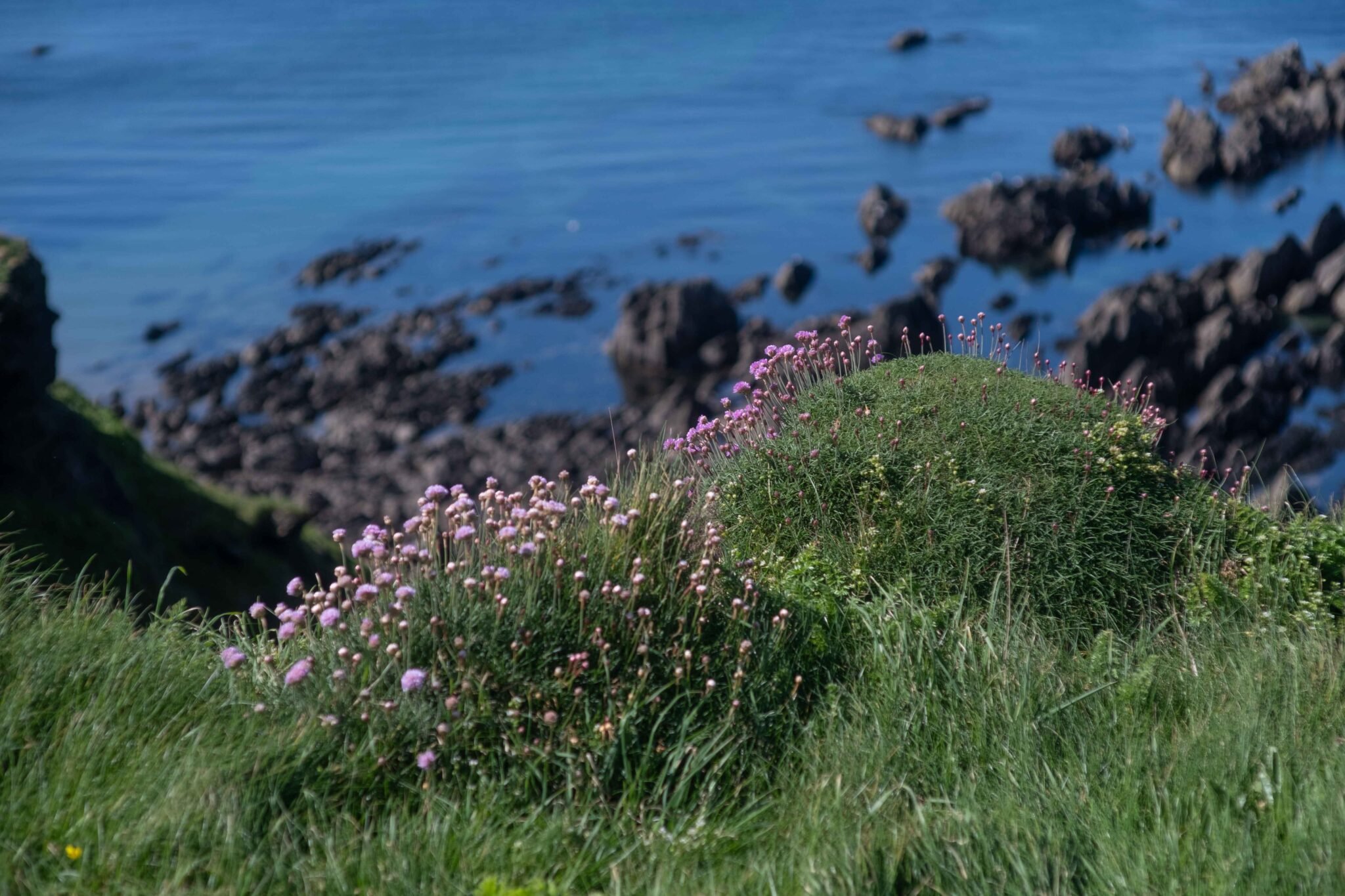
Coastal view, Veronica White
How to use this strategy
- Read this page to find out more about Local Nature Recovery Strategies, including who they’re for and next steps.
- Look at the Contents page to get a feel for the information in the strategy and where it is on the website.
- Read the Summary page for an overview of the priorities and actions in the strategy.
- Explore the LNRS Viewer (an interactive map) to see where action is most needed for habitats and species in your area and across the county. Please watch the video or read the instructions as these explain useful functions including Near Me which can be used to pull up the layers in an area of interest. The Viewer includes lots of ‘Other Useful Layers’ that include maps such as parish boundaries and soilscapes.
- Read the Habitats and Species pages to find out more about Devon’s habitats and Devon Special Species. These pages have lots of information including the priorities and actions needed to help nature recover.
- Read the Wider benefits pages to see how nature provides benefits such as improved water and air quality, flood control, carbon capture and improved health and wellbeing.
- The Appendices contain supplementary information including Defra LNRS Guidance notes, how the Devon LNRS was developed and who was involved, national targets and a paper on the Devon LNRS and the planning system.
- Useful functions include:
- Search: Use the search function (the magnifying glass icon in the orange circle) on the top right of the page to find what you’re looking for.
- Breadcrumbs: Use the breadcrumb links (under the butterfly logo on the top left of each page) to go back to previous pages. Click on the logo to go back to the home page.
- Glossary (including acronyms): Hover over words with the glossary symbol (i in a yellow circle) to find out what they mean. You can see the full glossary in the Appendices.
Local Nature Recovery Strategies (LNRS)
LNRSs are high-level statutory strategies that have been developed (largely at county level) to cover the whole of England. Defra funded development of the strategies. All LNRSs are required (by law) to identify the priorities for habitats and species in their area, the actions needed to achieve these priorities and a map that shows where actions are most needed. They’re also designed to help achieve national targets, such as increasing the area of habitats and halting the decline of species abundance.
For more information on national LNRS guidance and national targets see the Appendices.
- Part of a ‘nested suite’ of nature strategies (national to parish) that help to deliver national wildlife targets (such as halting the loss of species abundance by 2030) and inform more detailed nature strategies produced at a more local level.
- High-level strategic frameworks (not implementation plans).
- Helping to prioritise action. Guidance from NE/Defra is that the area covered by the Local Habitat Map cannot cover much more than 50% of the county.
- Voluntary to take part in and for everyone – whether you’re thinking about action for a garden, farm, woodland, landscape or whole county.
- A way to help us work together for nature across landscapes, joining up ideas and actions so they have more impact.
- Helping to target funding such as Environmental Land Management (government agri-environment funding), Biodiversity Net Gain (statutory developer contributions), Heritage Lottery Fund applications and private investment.
- Informing other strategies such as Local Plans, Land Use Frameworks and planning decisions.
- A point in time. Wildlife and landscapes are constantly changing. However, the statutory elements of the LNRS (such as the Local Habitats Map) cannot legally be updated until the first formal review. The date for this review will be set by the Secretary of State.
- Imposing new legal designations or protections.
- Restricting land use or prescribing how it should be used. For more information please see the LNRS Planning Paper.
- A delivery and monitoring plan. This is the next step. LNRSs do not include actions relating to funding, policy and legislation.
Who this strategy is for
This LNRS is for everyone. We all need to take action if we are to achieve the priorities set out in this strategy.
We can all join in with the great work that’s happening to help nature. Everyone has their part to play including farmers, foresters, other land managers, gardeners, volunteers, planners, developers, educators, community groups, funders, policymakers and voters.
Absolutely everyone can take action for wildlife. For example, you can plant a window box full of flowers, dig a pond, join a wildlife organisation, volunteer, teach, campaign, cut a hole in your fence, embrace slugs and spiders, turn outside lights off, have a compost heap… the list is endless.
Listen to Andy Gray, a Devon farmer, talking about the Devon LNRS.
Farmers and foresters manage more land in Devon than anyone else and have a critical role to play in helping to deliver the priorities in the LNRS. Devon’s heaths, moors, mires and grasslands all need managed grazing to maximise their wildlife value. Hedge corridors need managing. Arable, insect-rich grasslands and field margins can support farmland birds, bats and rare arable plants. Devon’s woodlands need managing and connecting to create the varied structure that wildlife depends on.
The LNRS can be used to:
- Provide information to support funding applications such as Environmental Land Management schemes.
- Better understand how to contribute to Devon’s wildlife priorities (use the Near me function on the Viewer).
- Find information on habitat and species management and sources of advice.
- Understand wildlife priorities across landscapes, helping collaborative working.
- Understand how and where restoring nature can most help to achieve wider priorities such as improved water quality, carbon storage and natural flood management.
- Share success stories and learning through the LNRS Delivery Map.
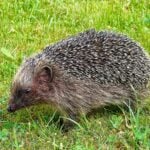
Devon’s green spaces provide critical stepping stones in our nature network. Many are already wildlife rich, home to bats, birds, small mammals and insects. Some support Devon Special Species. The Horrid Ground Weaver Spider can only be found in Plymouth parks and nowhere else on earth. The rare Bithynian Vetch is found in Exmouth and on coastal grasslands at Sandy Bay caravan park. Exeter’s road verges support Bee Orchids and Greater Horseshoe Bats fly through Buckfastleigh’s parks.
Green space managers can use the LNRS to find out about wildlife priorities in their area and what to do to for specific habitats and species. The Green spaces, gardens and buildings page gives generic advice.
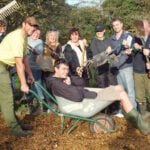
Communities across Devon are working to restore wildlife in lots of different ways. For example, people are coming together to restore orchards, create wildlife-rich meadows, survey Harvest Mice, manage churchyards for wildlife, put up Swift boxes and campaign to reduce pesticides.
Community groups can use the LNRS to find out about priorities in their area or to see how what they’re already doing is helping to achieve Devon-wide nature recovery priorities. See the Habitats and Species pages and the Connecting people and nature page, which also has a link to Wild about Devon, the Local Nature Partnership’s community action network.
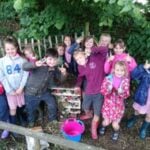
Schools, teachers and learners can use the LNRS as a resource to learn more about Devon’s wildlife and the priorities and actions needed in their area. Find out about accessible habitats to visit by following links in the Where to visit section on each habitat page. Explore the Habitats and Species pages, the Viewer and the Connecting people and nature page, which also has a link to the Network for Environmental Educators in Devon.
Planners and developers must provide statutory Biodiversity Net Gain (as well as ensuring that other wildlife legislation requirements are met) to make sure that developments leave nature in a better state. The LNRS highlights opportunities to enhance wildlife through high-quality design, rather than restricting development. Providing BNG and designing green spaces should all help to meet LNRS priorities. See the LNRS Planning Paper for more information.
Geographical area
The Devon LNRS covers the whole of Devon, including Torbay and Plymouth. By law, the strategy stops at the low tide mark. Marine nature strategies are being discussed nationally and will hopefully be developed soon.
LNRSs must take neighbouring strategies into account so that they work together across county and other boundaries to create a nature recovery network that covers the whole of England.
Other Devon nature plans
Links to other nature strategies produced for different parts of the county will be added to the Local Nature Partnership website.
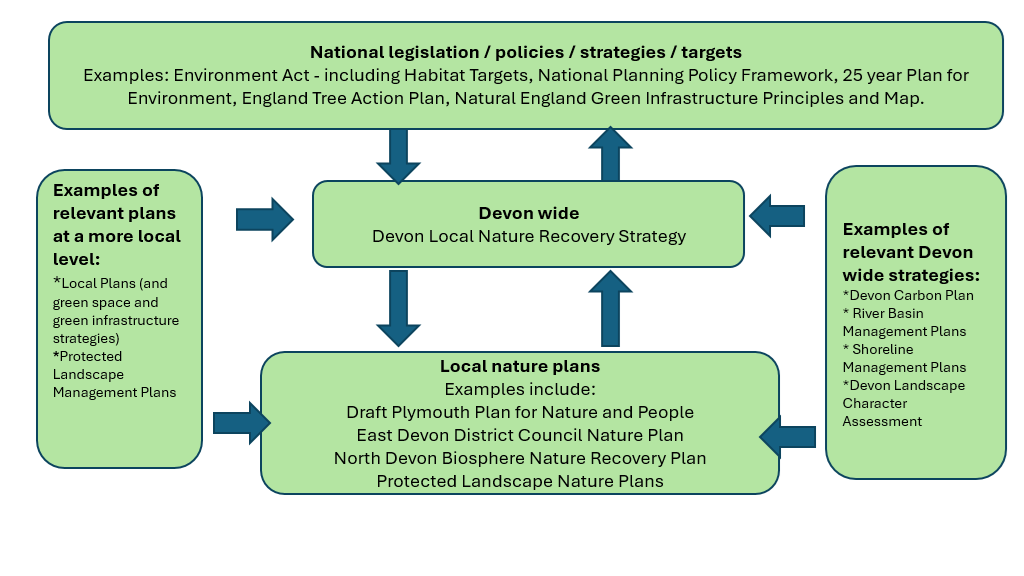
The LNRS will replace the Devon Biodiversity Action Plan (which will be archived for reference), the Strategic Nature Areas and the current lists of Devon Species of Conservation Concern and Devon Special Species.
Why we need the Devon LNRS
Devon probably has a greater diversity of habitats and species than any other county in Britain. We have two coasts, two upland areas, a network of rivers, streams and hedges, heaths and mires, wildlife-rich meadows and temperate rainforests.
Nature gives us our food, clean water and fresh air. It stores carbon, pollinates our crops and controls floods. It brings us joy, calming our minds and lifting our spirits. We can’t live without it.
However, like other counties, we’ve lost a great deal. Our wildlife and natural systems continue to decline, despite the fantastic efforts of many organisations and people. Our landscapes may look green and scenic but habitats have been lost and fragmented and many of those that remain are not as wildlife-rich as they once were or should be. Many species have declined in numbers and distribution, including some that were once widespread. You may have noticed there are fewer insects, songbirds and hedgehogs. Some species are now very rare and some have gone altogether.
Luckily, nature is resilient and given space and the right conditions it will bounce back. Otters were once on the brink of extinction in Devon but are now widespread. Numbers of Puffins are increasing on Lundy and Devon remains a stronghold for rare species such as Greater Horseshoe Bats and Hazel Dormice.
While nature is resilient, humans are creative. We know we can do things differently. With good design we can regain balance and restore wildlife-rich landscapes alongside all the other things we need such as food, energy, housing, shops, offices, hospitals, schools, roads and railways.
To speed up efforts to put things right, a clear strategy is needed to identify the key pressures we face and the actions we must take to address them. The Devon Local Nature Recovery Strategy gives an overview of Devon’s wildlife and sets out clear priorities and actions. It’s a tool to help us all do our bit to create a wildlife-rich Devon, today and for generations to come.
How it has been developed
Devon’s LNRS has been developed by a wide range of organisations and experts, led by Devon County Council under the umbrella of the Devon Local Nature Partnership. People who’ve been involved include ecologists, farmers and other land managers, educators, community groups, local authorities, Protected Landscapes, government agencies and the general public. In October and November 2025 the draft strategy went out to public consultation. See Appendices for more information.
Developing the LNRS has been a huge undertaking in terms of pulling together wildlife information from lots of experts and producing it as a website and mapping viewer. It’s been a steep learning curve, both locally and nationally for Defra. The LNRS will never be right everyone and will need to be continually improved and updated through future statutory reviews. However, we hope that it’s a useful step forward and provides a tool to help us all restore nature.
How and why the Devon LNRS is different:
- It’s more comprehensive than any previous Devon nature strategy. Never before has so much up-to-date information and knowledge been brought together to guide nature’s recovery.
- It’s produced as a website, in a way that aims to suit us all, whether we work for an organisation, manage land, are a volunteer or a concerned individual who cares about nature.
- It includes a powerful mapping facility with a new ‘Near me’ function (the Viewer).
- It’s for everyone, because we all have our part to play.
- It’s statutory. This means it’s required by law, will be reviewed by government and could influence national policy.
Delivery, monitoring and review
Delivery and monitoring: Defra has provided funding to help develop a delivery and monitoring plan for the LNRS. This will include the huge amount of work already happening across the county and provide an opportunity to identify and plug gaps.
Review: Once published, the LNRS cannot be changed until the Secretary of State announces a review. The review date and process will be shared when they’re known.
In the meantime, please share anything that should be fed into the first review or any practical things that need to be changed on the LNRS website such as broken web links. To do this email: LNRS@devon.gov.uk.
As people start to use and dig into the detail of the LNRS there will be lots of questions. A Frequently Asked Questions page will be added to Local Nature Partnership website.
To receive updates on the LNRS please sign up to the Devon Local Nature Partnership newsletter.
Share what you’re doing
To help us all work together and see the amazing range of action going on for nature across Devon, please add what you’re doing to the Devon Nature Recovery Delivery Map on the Viewer.