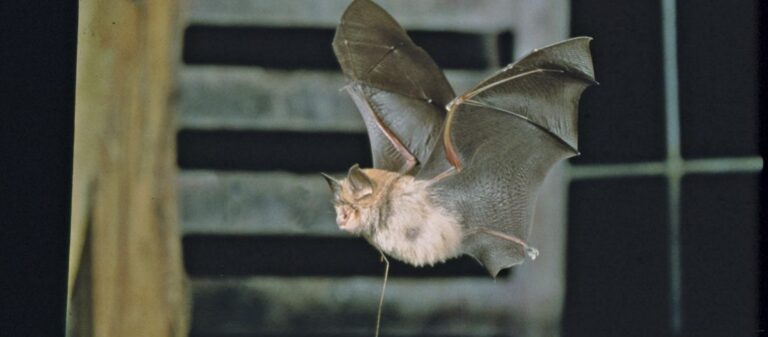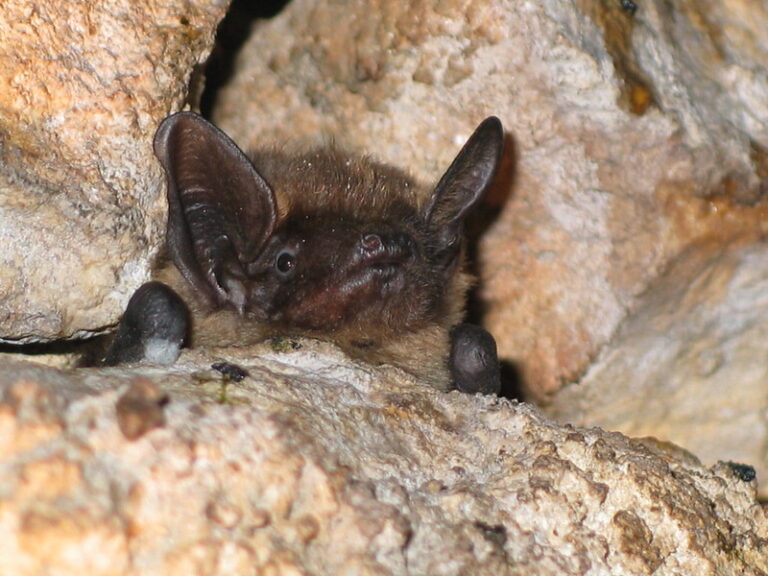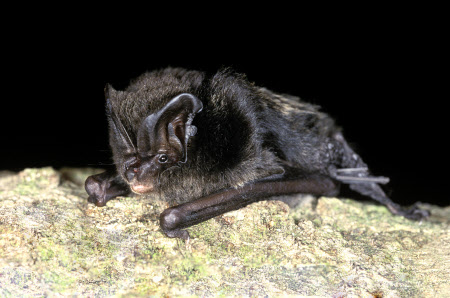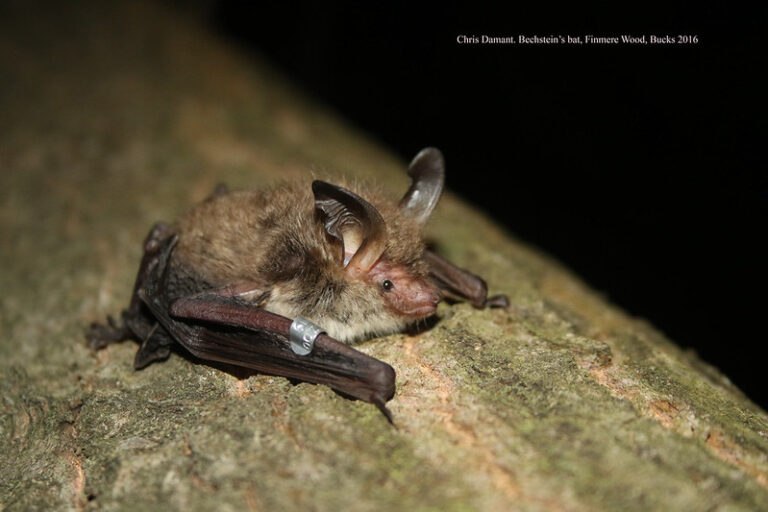

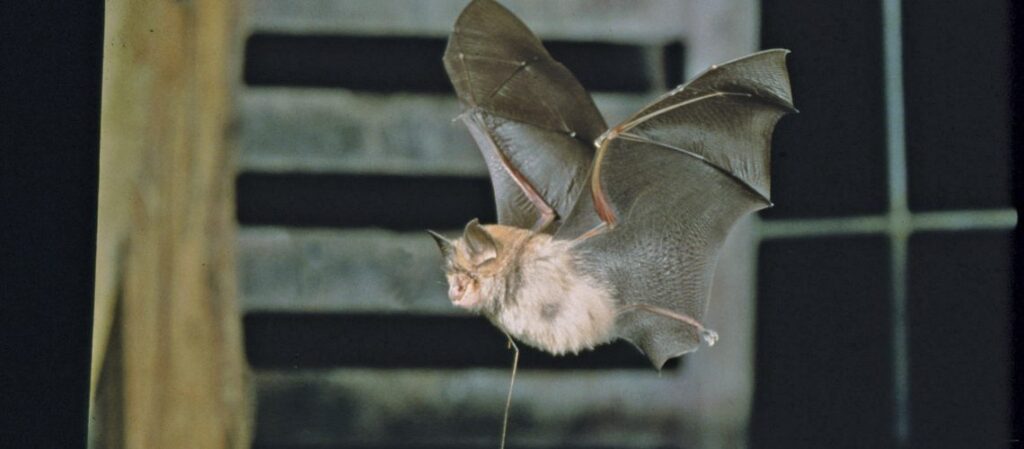
Devon’s diverse range of habitats, connected by watercourse and hedgerow corridors, provides excellent habitat for bats. 15 of the UK’s 17 breeding bat species are found here. There is currently no known evidence of Alcathoe Bat or Leisler’s Bat breeding in Devon.
All species need roosts for shelter, insect-rich habitats for feeding and dark linear features, which many bats follow when flying between roosts and feeding areas. See the drop-downs below for more information.
Seven species of bat are listed as Devon Species of Conservation Concern: Lesser Horseshoe Bat, Greater Horseshoe Bat, Bechstein’s Bat, Barbastelle, Serotine, Grey-long Eared Bat and Noctule. All, other than Noctule, are also identified as Devon Special SpeciesDevon Species of Conservation Concern that have been 'shortlisted' as needing particular action or attention. that need specific action or attention.
All British bats are are legally protected.
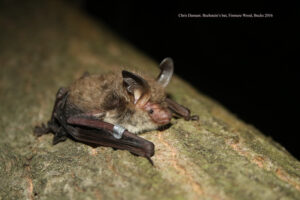
All Devon’s bats need safe, dry roosts where they can rest, feed, sleep, raise their young and hibernate. Roosts can include holes in trees and structures such as caves, mines and buildings. However, different types of roost are used by different species. For example, Bechstein’s Bats and Barbastelle largely roost in trees while Lesser and Greater Horseshoe Bats generally prefer large roof spaces and caves to trees or bat boxes. Many species don’t adapt well to new or changed roosts so it’s vitally important we look after them.
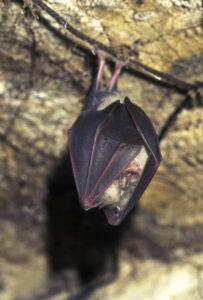
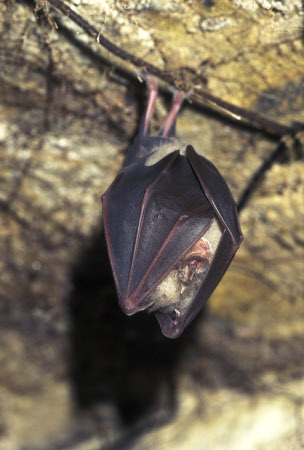
Bats use different roosts for different activities. Summer maternity roosts are the largest as females gather together to give birth and raise their young. Males and non-breeding females often roost alone in summer, although will sometimes share roost spaces, including with other bat species. Many bats tuck themselves into tiny crevices while Horseshoe Bats can be seen hanging upside down.
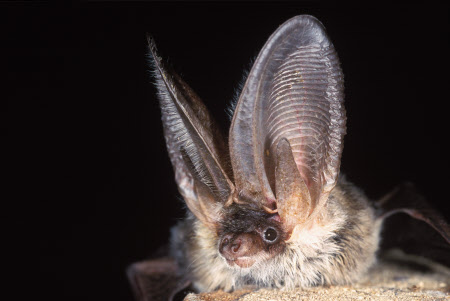
All Devon’s bats feed on flying insects and some species, such as the Brown Long-eared Bat and Bechstein’s Bat, can take spiders and other non-flying insects. Natterer’s Bats are able to pluck spiders from their webs! Bats generally feed within a few kilometers of their roosts, although some, such as Barbastelle, will travel further. All need a patchwork landscape with a range of insect-rich habitats that they can use at different times of the year. All insect-rich habitats are important (including wetlands, field margins, species-rich meadows, broadleaved woodlands, wet woodlands, hedgerows, well-vegetated watercourse corridors, parks and gardens) but again, some species prefer certain habitats. Daubenton’s Bats are generally seen feeding over water while Bechstein’s Bats largely forage in woodlands.
All bats need their roosts and feeding habitats to be connected by dark linear features such as hedges, woodland edges, rivers and streams. They use echolocation to navigate around the countryside, communicate and hunt for insects.
Most bats are sensitive to light and avoid lit areas. However, a few species, particularly Pipistrelles, Noctule and Serotine, are less light sensitive and may opportunistically feed under certain streetlamps, as insects are frequently attracted to the short-wavelength light (UV) some emit. However, this leaves them in danger of predation and peregrine falcons have been recorded hunting bats in our lit cities.