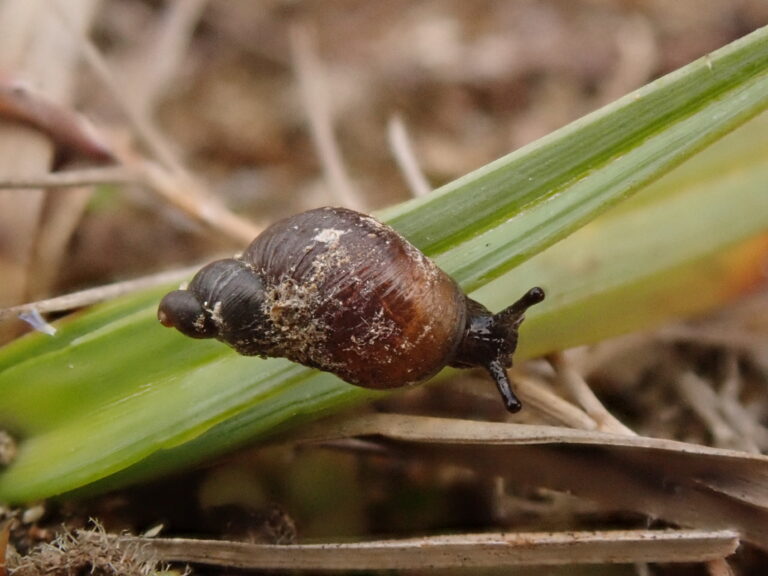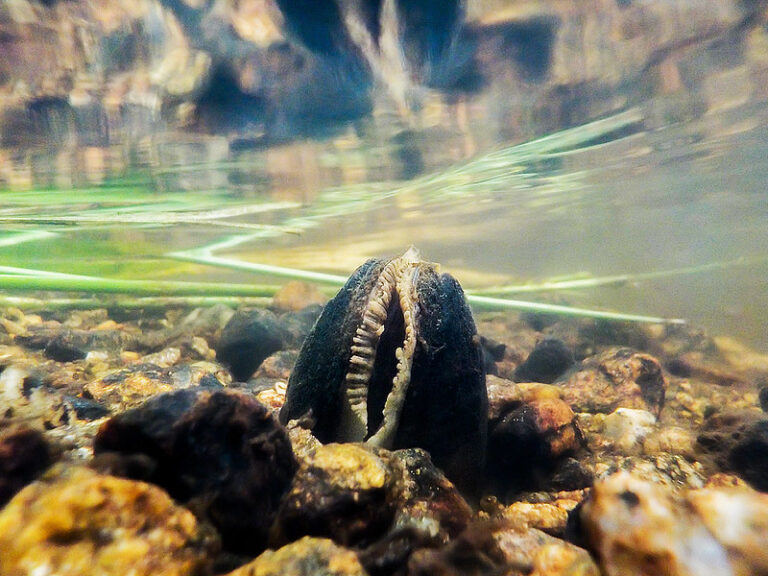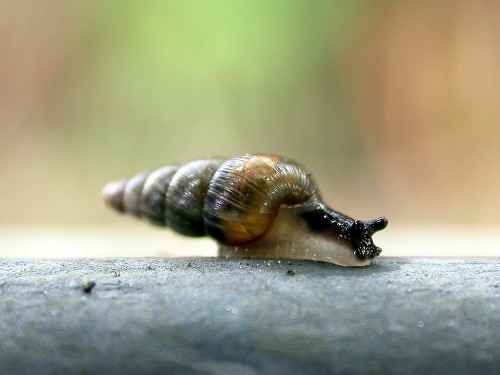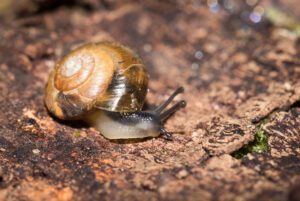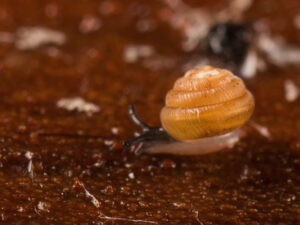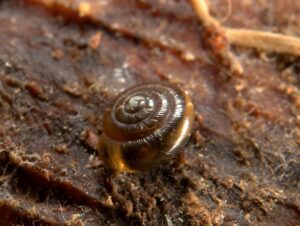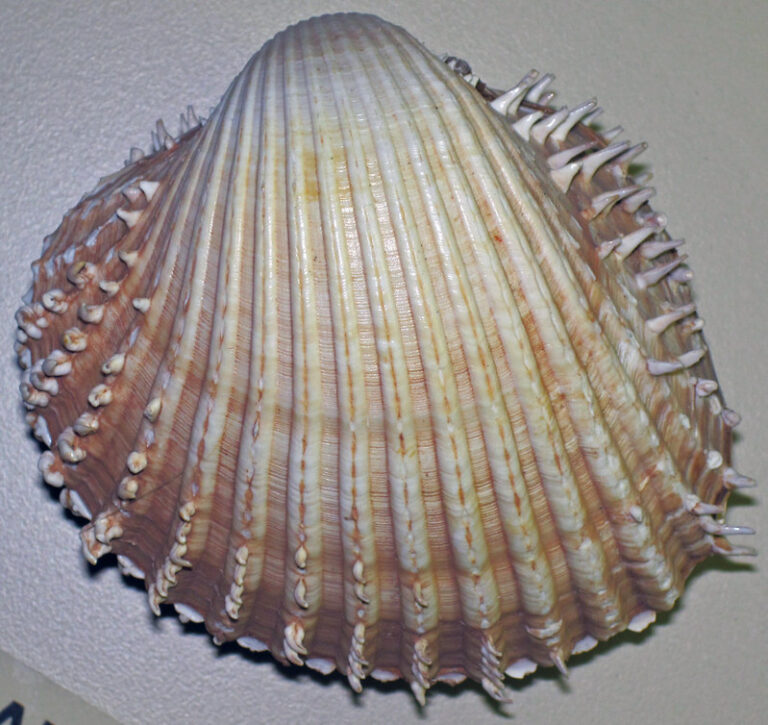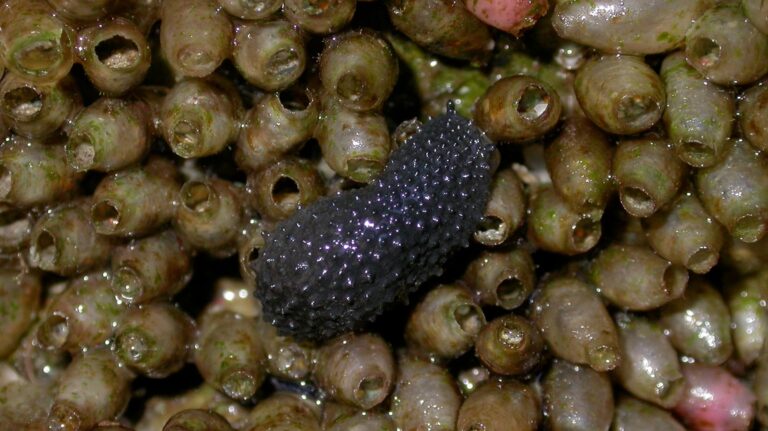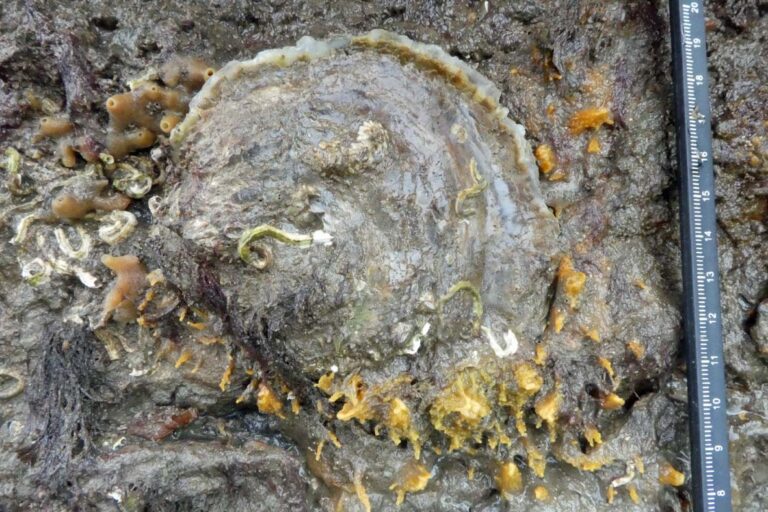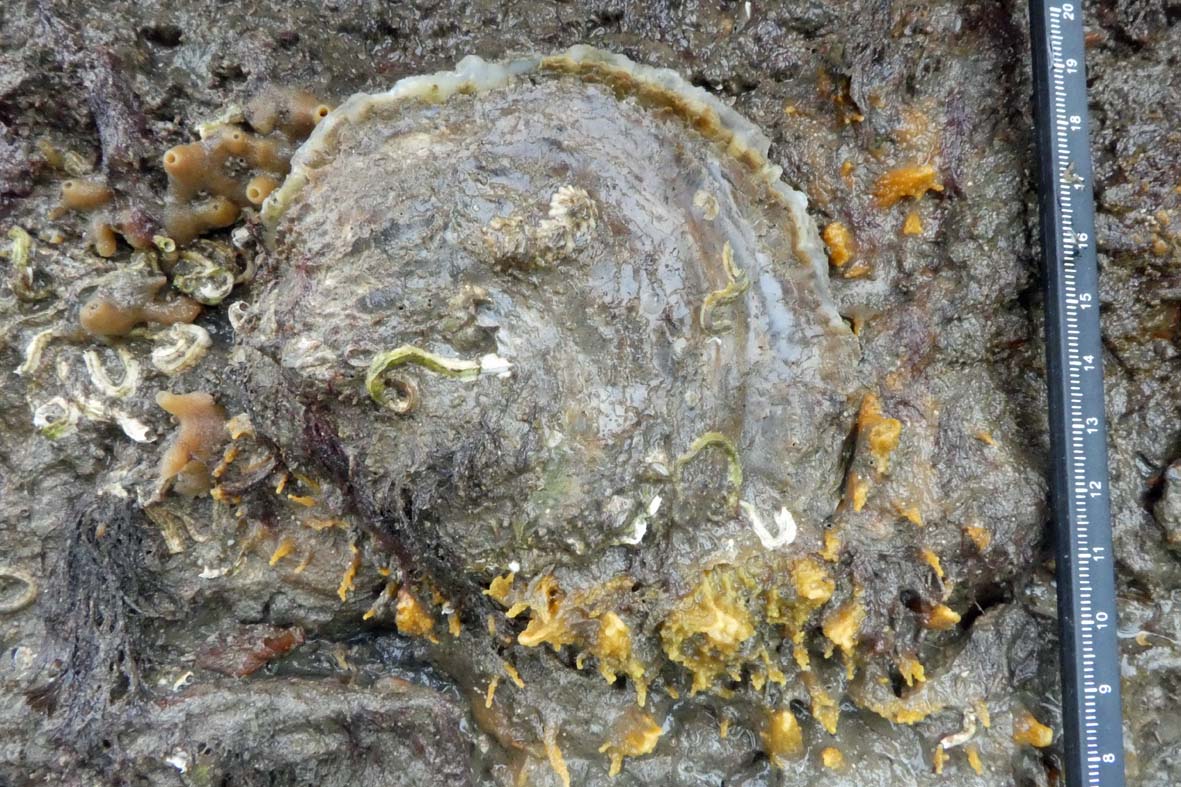

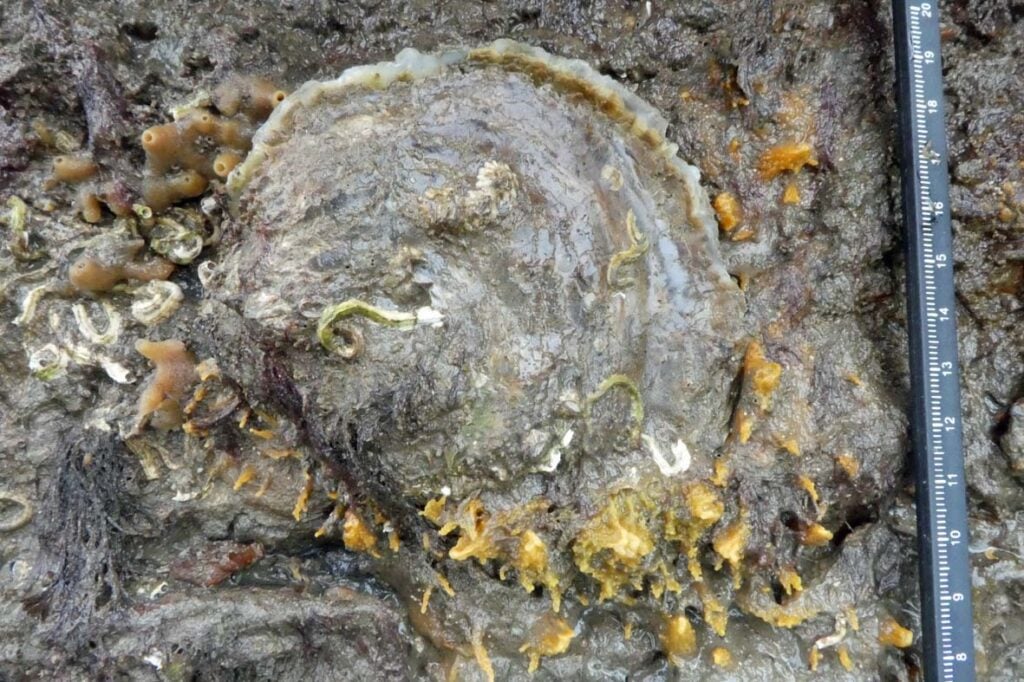
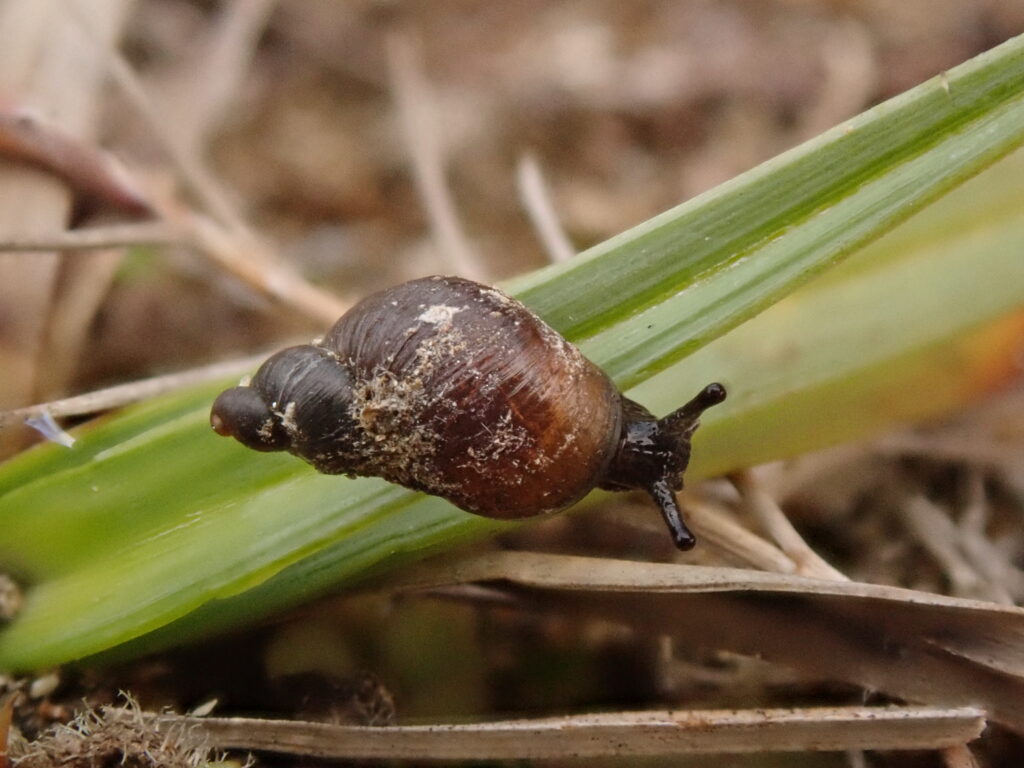
Molluscs are soft-bodied invertebrates often protected by a shell. They’re one of the world’s most diverse animal groups with around 76,000 known species that have huge variations in size, anatomy and behaviour.
Devon’s non-marine molluscs include slugs, snails and freshwater mussels. Devon’s coasts are rich in marine molluscs which include species such as limpets, whelks and topshells (known as gastropods), mussels, oysters, cockles and scallops (bivalvesAquatic molluscs defined by their soft bodies enclosed in a two-part hinged shell called valves.), cuttlefish and octopus (cephalopods).
Molluscs have a wide range of needs but some common ones include:
Moisture: They need a moist environment as their bodies can easily dry out.
Food: Slugs and snails feed on plants, decaying matter and algae. Marine molluscs vary hugely. Some, such as limpets, graze on algae and seaweed in the intertidalThe area of the shore that is covered by water at high tide and exposed to air at low tide. zone. Octopus, cuttlefish and whelks are predators and eat fish, crustaceans and other molluscs. Bivalves, such as mussels, are filter feeders and get food by drawing water into their shells and then trapping tiny particles (plankton and algae) which they absorb. Filter feeders play an important role in cleaning water.
Shelter: Some molluscs have shells for protection; others hide under rocks or in soil to prevent drying out and predation.
Devon’s wet climate, two coastlines, and variety of damp habitats support a rich mollusc population.
12 molluscs are listed as Devon Species of Conservation Concern. Devon Special SpeciesDevon Species of Conservation Concern which have been 'shortlisted' as needing particular action or attention. are discussed below.
Key pressures and opportunities
Species in this group vary hugely and so pressures and opportunities are discussed for each Devon Special Species and in the relevant habitat pages.