
Summary
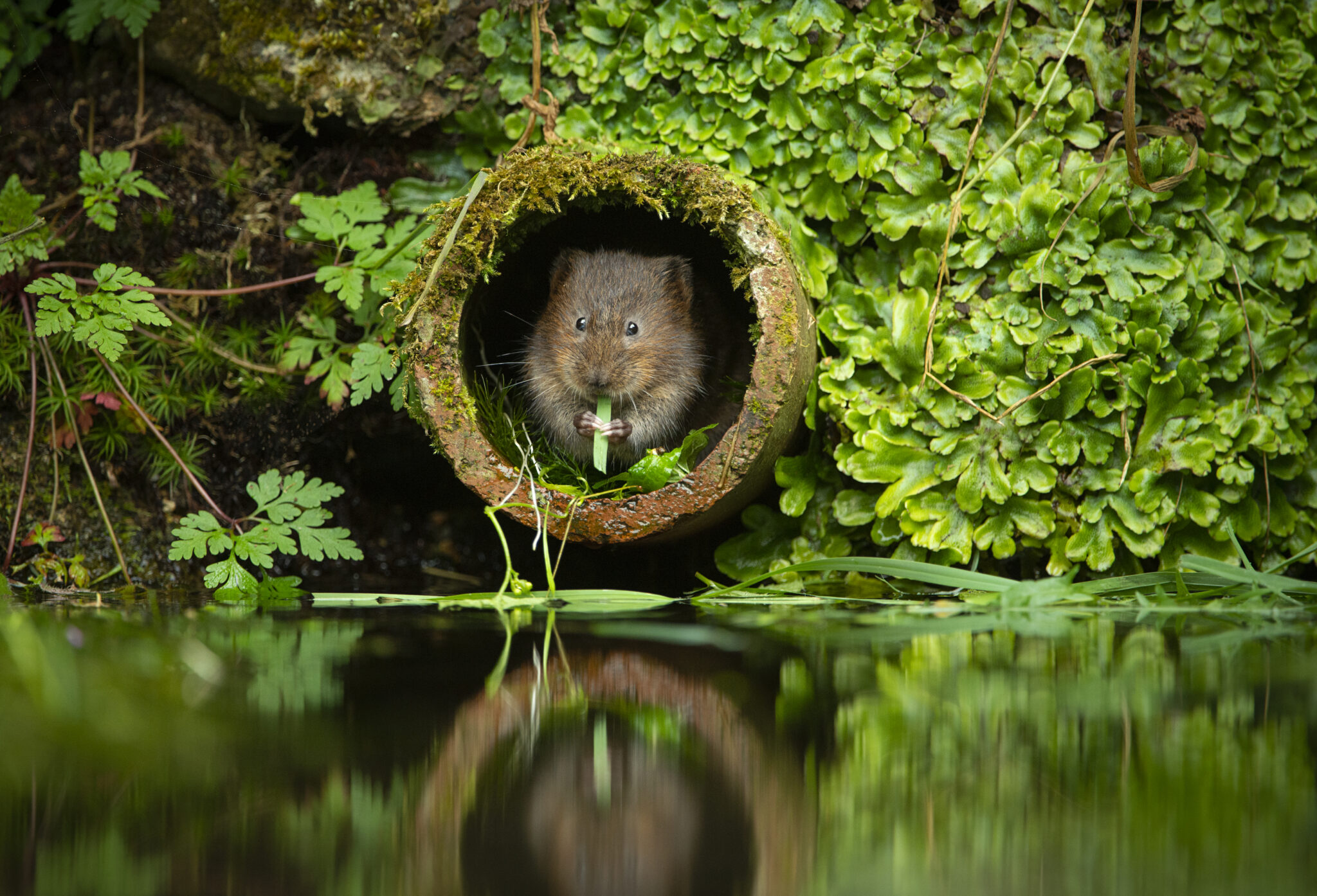
Water Vole, Ben.Andrew (rspb-images.com)
Vision for a nature-rich Devon
Devon’s rural, urban and coastal landscapes are alive with the sights and sounds of wildlife. Mosaics of high-quality habitats form a network across the county allowing species to flourish and adapt to climate change. These healthy natural systems help store carbon and provide clean water, healthy soils, reduced flooding and abundant pollinators. Wherever we go we’re close to nature, which helps us feel happier and healthier.
Overview of Devon’s wildlife
Devon is one of the largest and most varied counties in England. We have an incredible variety of wildlife habitats due to factors that include our varied geology, soils and landscapes, our mild climate, our coastal location and how we’ve managed this environment over thousands of years.
Our wildlife habitats range from the heather moorlands, bogs and mires on Dartmoor and Exmoor down through river valleys with remnants of ancient woodlands to our two coastlines with scrubby coastal grasslands, cliffs, rocky shores, dunes and estuaries. Between the moors and the coast we have heaths, woodlands, ancient trees, ponds, flower-rich meadows and mosaics of wet mires, species-rich rush pastures and wet woodlands.
Connecting all these habitats is an amazing network of hedge and watercourse corridors. Across the county, our gardens, parks and other green spaces also provide hugely important wildlife habitats and are places where we can all connect with nature every day.
Habitats such as blanket bogs, heaths, ancient woodlands, Culm grasslands, sea cliffs, dunes, estuaries, reefs and sea caves are internationally important. A number of globally threatened species, such as the European Eel and Freshwater Pearl Mussel are found in Devon. Species such as the Lundy Cabbage Flea Beetle and Horrid Ground Weaver Spider are not found anywhere else in the world. Devon is also a stronghold for rare species including Otters, Hazel Dormice and Greater and Lesser Horseshoe Bats.
However, this strategy is not just about rare species. Much of our wildlife has declined over the last century and an important national target is to halt the decline in species abundance by 2030.
Devon’s wildlife and natural processes provide food, clean water and fresh air. Habitats stores carbon and control floods. Native species pollinate our crops. Wildlife brings us joy, calming our minds and lifting our spirits. We can’t live without it.
“Nature is critical national infrastructure. When we destroy it, we increase floods, heat deaths, food insecurity and economic instability. When we restore it, we reduce risk, save lives and strengthen the economy.” Professor Nathalie Seddon, National Emergency Briefing.
Major direct habitat losses as a result of development and other land uses are currently largely controlled through legislation and policy. However, most of Devon’s remaining habitats are small and fragmented and many are in poor condition. Our species populations largely continue to decline in number and distribution.
Devon’s wildlife is threatened by a range of pressures including climate change, intensive farming, invasive species, disease, lighting, pesticides, lack of appropriate management, pollution and continued fragmentation due to development.
What a nature-rich Devon looks like
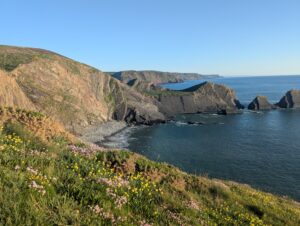
The cliffs, estuaries, marshes, dunes and coastal grasslands of our Coastal Wildbelt provide a continuous mosaic of wildlife habitats. Choughs and White-tailed Sea Eagles have returned and rare bees, spiders and plants are no longer threatened.
The cliffs, estuaries, marshes, dunes and coastal grasslands of our Coastal Wildbelt provide a continuous mosaic of wildlife habitats. Choughs and White-tailed Sea Eagles have returned and rare bees, spiders and plants are no longer threatened.
Examples of Devon Special Species: seahorses, oysters, Puffins, the Celtic Sea Slug, Grey Seal, Wood White Butterfly, Oil Beetles and the Moon Spider (the list is extensive!).
See the Coastal Wildbelt page for more information. High Opportunity Areas are shown on the viewer. See a snippet of the layers below.
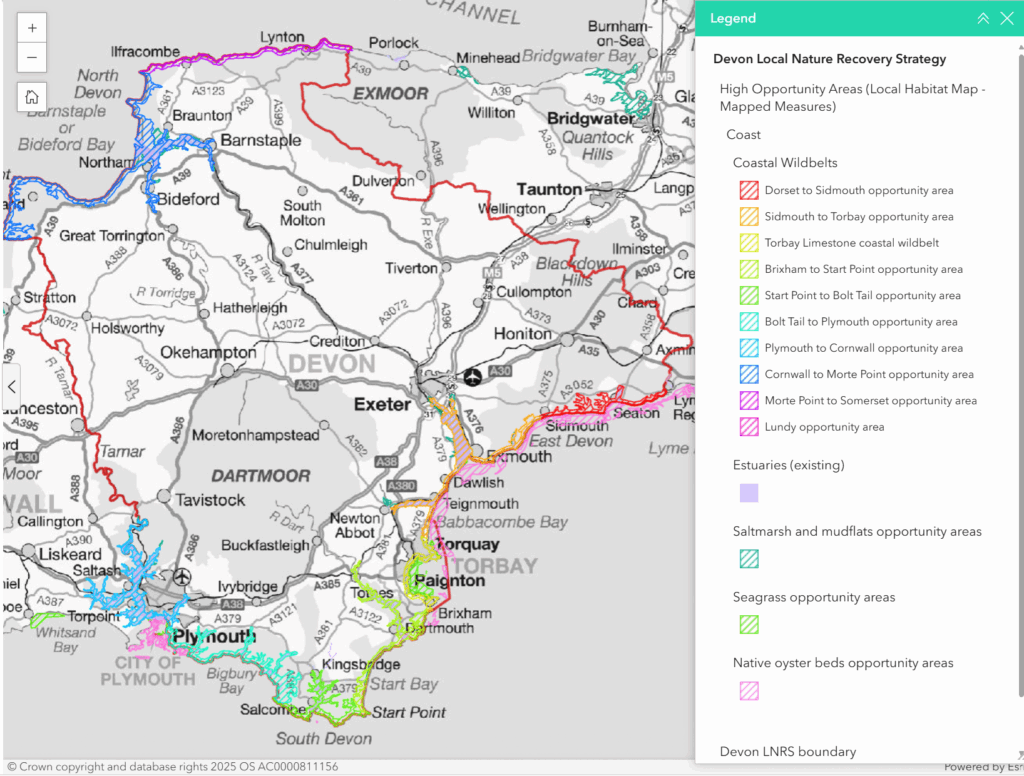
© Crown copyright and database rights 2025 OS AC0000811156
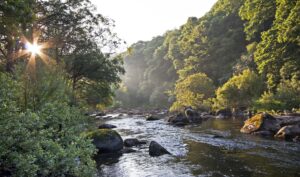
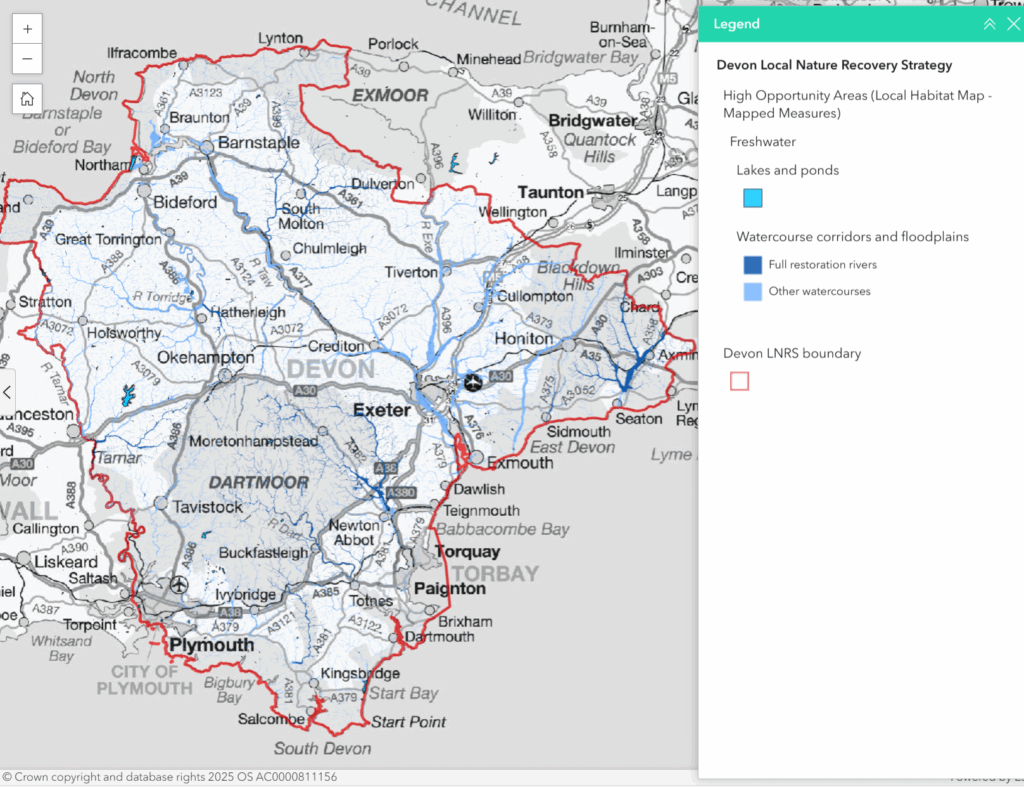
Clean rivers and streams are wildlife-rich veins across Devon, full of leaping Atlantic Salmon, Eels, Water Voles and Otters. Beavers create new wetlands helping to store water and reduce flooding.
Clean rivers and streams are wildlife-rich veins across Devon, full of leaping Atlantic Salmon, Eels, Water Voles and Otters. Beavers create new wetlands helping to store water and reduce flooding.
Examples of Devon Special Species: Otter, Beaver, Water Vole, Atlantic Salmon, Eels, Lesser Horseshoe Bats, Freshwater Pearl Mussel, native crayfish, aquatic lichens, mosses.
See the Watercourse corridors page for more information. High Opportunity Areas are shown on the viewer. See a snippet of the layers below.
© Crown copyright and database rights 2025 OS AC0000811156
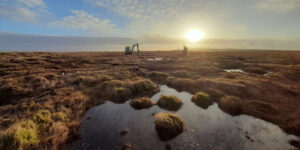
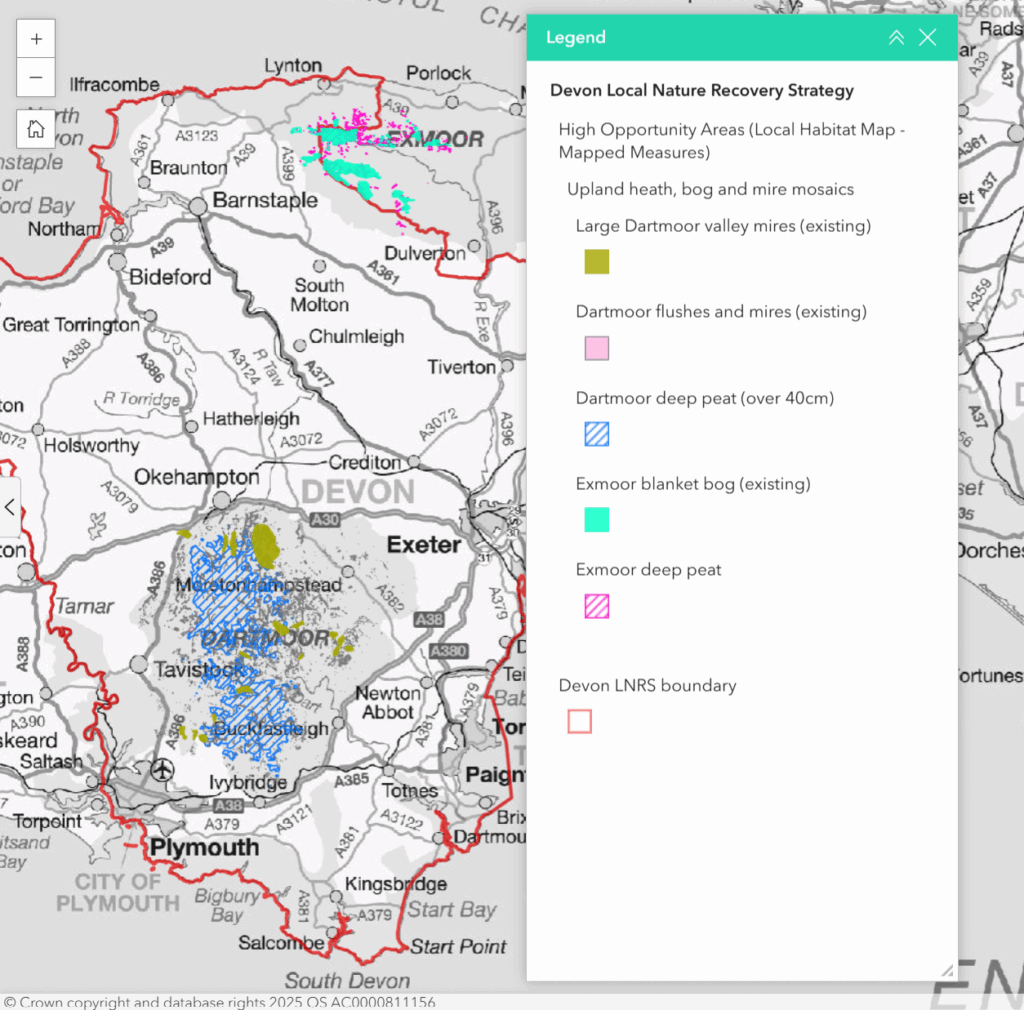
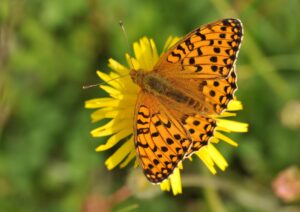
Mosaics of heaths, bogs, mires and flower-rich wet pastures extend across Devon’s acid soils. Bogs and mires bounce with bog-mosses. Purple and yellow heaths echo with clapping Nightjars and calling Cuckoos. Snipe drum in our wetlands and Adders and fritillary butterflies bask in the sun.
Mosaics of heaths, bogs, mires and flower-rich wet pastures extend across Devon’s acid soils. Bogs and mires bounce with bog-mosses. Purple and yellow heaths echo with clapping Nightjars and calling Cuckoos. Snipe drum in our wetlands and Adders and fritillary butterflies bask in the sun.
Examples of Devon Special Species: Dunlin, Curlew, Snipe, Whinchat, Cuckoo, Dartford Warbler, Grasshopper Warbler, Adder, Dartmoor Bog Spiders, Bog Hoverfly, Marsh Fritillary, Pearl-bordered Fritillary, Narrow-bordered Bee Hawk-moth, Southern Damselfly.
See the Heaths, bogs and mires habitats page for more information. High Opportunity Areas are shown on the viewer. See a snippet of the layers below.
© Crown copyright and database rights 2025 OS AC0000811156
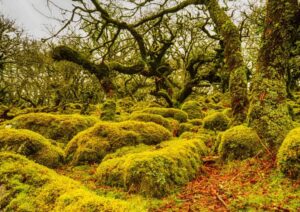
Temperate rainforests and ancient woodlands are rich with mosses, ferns and lichens. Veteran trees support rare invertebrates and provide nesting sites for Pied Flycatchers and roosts for Bechstein’s Bats.
Temperate rainforests and ancient woodlands are rich with mosses, ferns and lichens. Veteran trees support rare invertebrates and provide nesting sites for Pied Flycatchers and roosts for Bechstein’s Bats.
Examples of Devon Special Species: Pied Flycatchers, Lesser Spotted Woodpecker, Blue Ground Beetle, upland rainforest snails, Bechstein’s Bat, Barbastelle Bat, lichens.
See the Broadleaved woodland, Conifer plantation and Wood pasture pages for more information. High Opportunity Areas are shown on the viewer. See a snippet of the layers below.
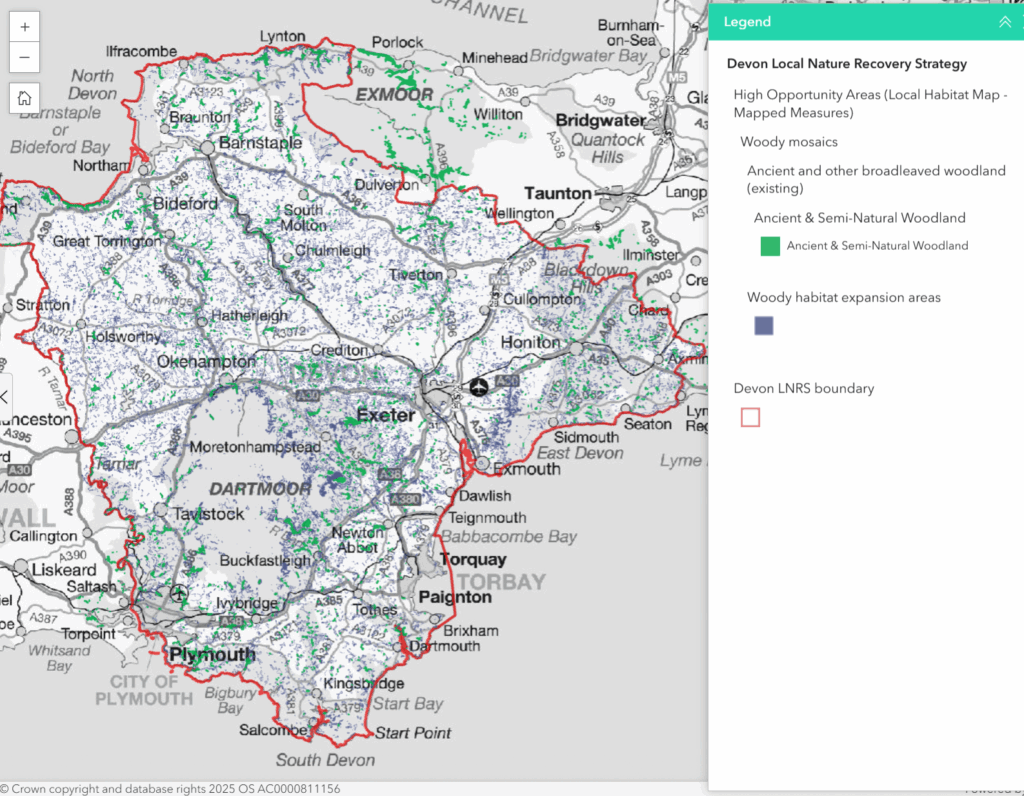
© Crown copyright and database rights 2025 OS AC0000811156
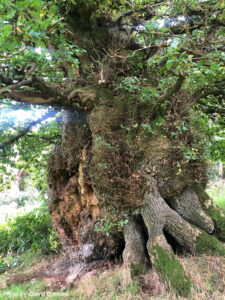
Trees outside woodlands, including orchards, are an integral part of our towns, villages and farmed landscapes. Trees are allowed to grow old and veteran and ancient trees full of deadwood, cavities and wildlife, are celebrated.
Trees outside woodlands, including orchards, are an integral part of our towns, villages and farmed landscapes. Trees are allowed to grow old and veteran and ancient trees full of deadwood, cavities and wildlife, are celebrated.
Example Devon Special Species: Kestrel and Starling nest in cavities. Deadwood flies, Six-spotted Longhorn Beetle, Devon Whitebeam, Plymouth Pear, Lichens on old trees in open spaces.
See the Trees outside woodlands and Ancient and veteran trees pages for more information.
Trees and ancient woodlands are found across Devon and so actions are needed everywhere. There are no High Opportunity Areas mapped.

Across Devon’s rural, urban and coastal areas, flower-rich grasslands provide colour and buzz with insects. Bats and birds feed overhead and Harvest Mice nest in tussocks.
Across Devon’s rural, urban and coastal areas, flower-rich grasslands provide colour and buzz with insects. Bats and birds feed overhead and Harvest Mice nest in tussocks.
Examples of Devon Special Species: Harvest Mouse, Greater and Lesser Horseshoe Bats, House Martin, Skylark, Yellowhammer and other farmland birds, Green-winged Orchid, Greater Butterfly Orchid.
See the Wildlife-rich grasslands page for more information. High Opportunity Areas are shown on the viewer. See a snippet of the layers below.
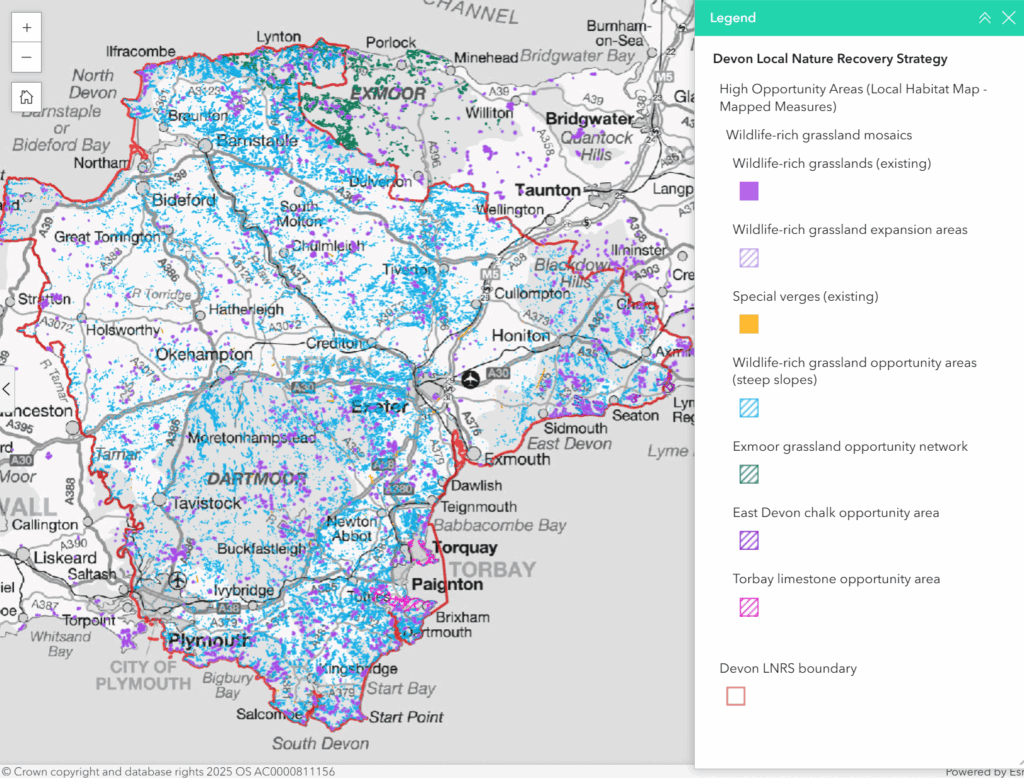
© Crown copyright and database rights 2025 OS AC0000811156
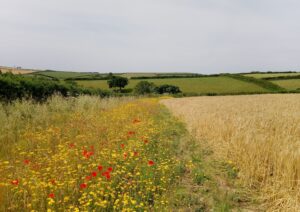
The arable and grass fields across Devon’s lowland agricultural landscape are rich in plants and full of invertebrates, seeds and small mammals. Skylarks and Yellowhammers sing. Kestrels and Red Kites are a common sight in our skies.
The arable and grass fields across Devon’s lowland agricultural landscape are rich in plants and full of invertebrates, seeds and small mammals. Skylarks and Yellowhammers sing. Kestrels and Red Kites are a common sight in our skies.
Examples of Devon Special Species: Arable plants, Skylarks, Cirl Buntings, Yellowhammers and other farmland birds. Hazel Dormice, Harvest Mice, Brown Hairstreak Butterfly, Lesser Horseshoe Bats.
See the Arable and grass fields, Hedge corridors and relevant species pages for more details, including Lowland farmland birds.
The example map below shows LNRS Species Opportunity Areas for arable plants, Greater Horseshoe Bats and Cirl Buntings.
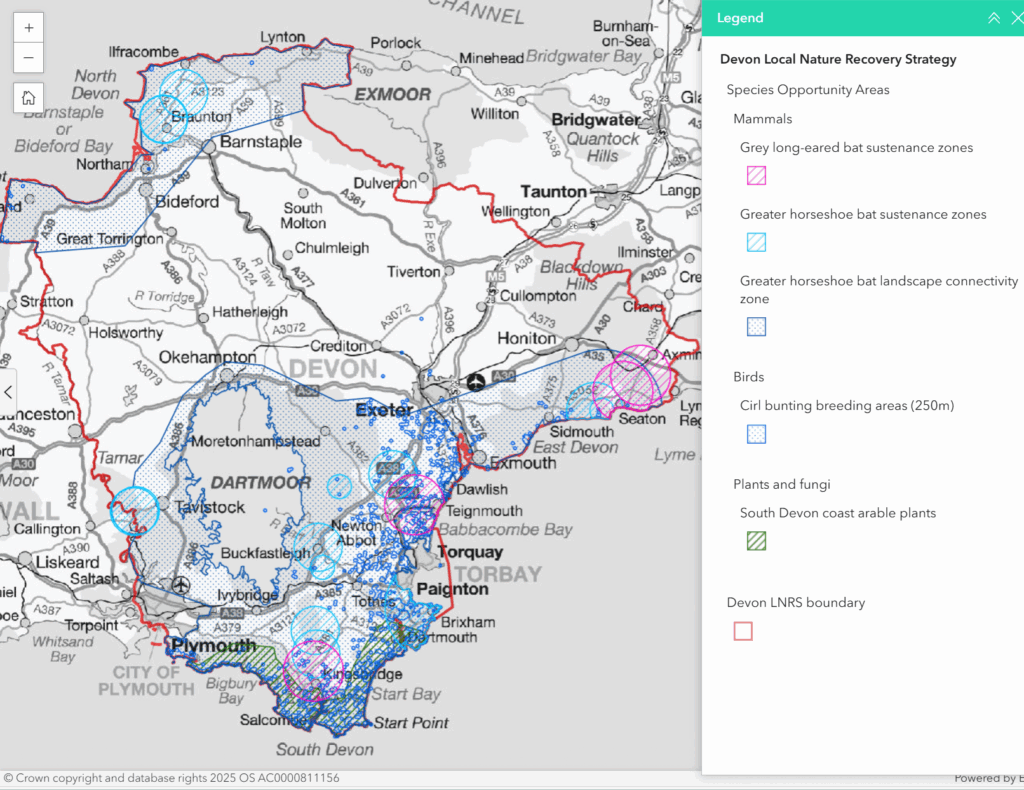
© Crown copyright and database rights 2025 OS AC0000811156
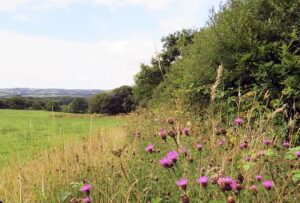
Devon’s hedges are wide and dense with flower-rich margins, banks and scattered trees. This incredible network provides dark insect-rich flightlines for bats. Hazel Dormice and Cirl Buntings nest in the shrubs and Brown Hairstreaks fly in the tree tops.
Devon’s hedges are wide and dense with flower-rich margins, banks and scattered trees. This incredible network provides dark insect-rich flightlines for bats. Hazel Dormice and Cirl Buntings nest in the shrubs and Brown Hairstreaks fly in the tree tops.
Examples of Devon Special Species: Hazel Dormouse, Hedgehog, Greater Horseshoe Bat, Linnet, Cirl Bunting, Yellowhammer, Brown Hairstreak butterfly, Devon Whitebeam.
Actions are needed across Devon and so no Habitat Opportunity Areas can be mapped.
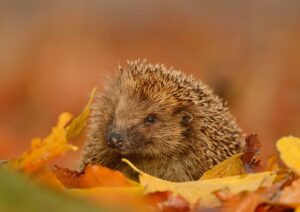
Our cities, towns and villages are insect-rich networks of flowers, trees, orchards, scrub, log piles and ponds. Bats roost in our buildings and Hedgehogs freely roam our parks and gardens. House Sparrows chatter in hedges and parties of Swifts screech overhead. We can all connect with nature where we live.
Our cities, towns and villages are insect-rich networks of flowers, trees, orchards, scrub, log piles and ponds. Bats roost in our buildings and Hedgehogs freely roam our parks and gardens. House Sparrows chatter in hedges and parties of Swifts screech overhead. We can all connect with nature where we live.
Examples of Devon Special Species: Hedgehogs, Toad, Serotine bats, Starling, Swift, House Sparrow, House Martin, Spotted Flycatcher.
Actions are needed across Devon and so no Habitat Opportunity Areas can be mapped.
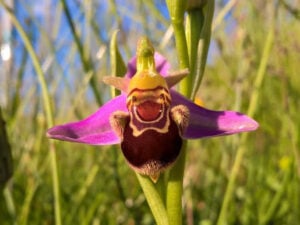
Devon’s tourism, recreation and other amenity land such as golf courses, caravan parks, railway lines and road verges are managed for nature. Copses, scrub, flowers, long grass and wetlands are full of wildlife and provide important opportunities to connect with nature.
Devon’s tourism, recreation and other amenity land such as golf courses, caravan parks, railway lines and road verges are managed for nature. Copses, scrub, flowers, long grass and wetlands are full of wildlife and provide important opportunities to connect with nature.
Examples of Devon Special Species: Hedgehogs, Toad, Lesser Horseshoe Bats, Serotine bats, Starling, Swift, House Sparrow, House Martin, Spotted Flycatcher.
Actions are needed across Devon and so no Habitat Opportunity Areas can be mapped.
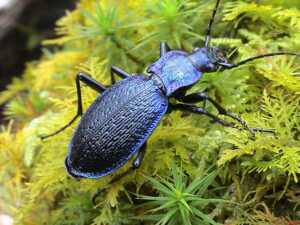
Devon is rich with microhabitats such as dead and decaying wood, seepages, dung, cracks in trees and patches of bare ground, which give species the critical specialist niches they need to survive.
Devon is rich with microhabitats such as dead and decaying wood, seepages, dung, cracks in trees and patches of bare ground, which give species the critical specialist niches they need to survive.
Many species, especially invertebrates, require small, sometimes tiny, patches of specialized habitat known as microhabitats. Examples include springs and seepages, decaying wood, gaps in walls, bare ground, eroding riverbanks and even dung pats. These microhabitats are found everywhere (including our gardens) but are often overlooked and so easily destroyed. It is critical that they are recognised, protected and kept in good condition.
See the individual Habitat and Species pages for details.
Microhabitats are needed across Devon and there are no High Opportunity Areas mapped specifically for them.
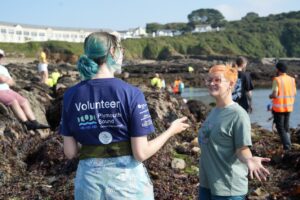
Habitats are managed and restored for wider benefits. Examples include to capture carbon, reduce flooding, improve air and water quality, protect and enhance Devon’s historic environment and landscapes and to ensure that we can all connect with nature. to improve our health and wellbeing.
Habitats are managed and restored for wider benefits. Examples include to capture carbon, reduce flooding, improve air and water quality, protect and enhance Devon’s historic environment and landscapes and to ensure that we can all connect with nature. to improve our health and wellbeing.
See Water quality and flood risk , Carbon sequestration, Air quality and Connecting people and nature for more information.
The snippets below show (a) where wildlife habitats can most benefit water quality and flooding and (b) 500m zones around community centres and schools where accessible wildlife could benefit communities. See the Viewer for details.
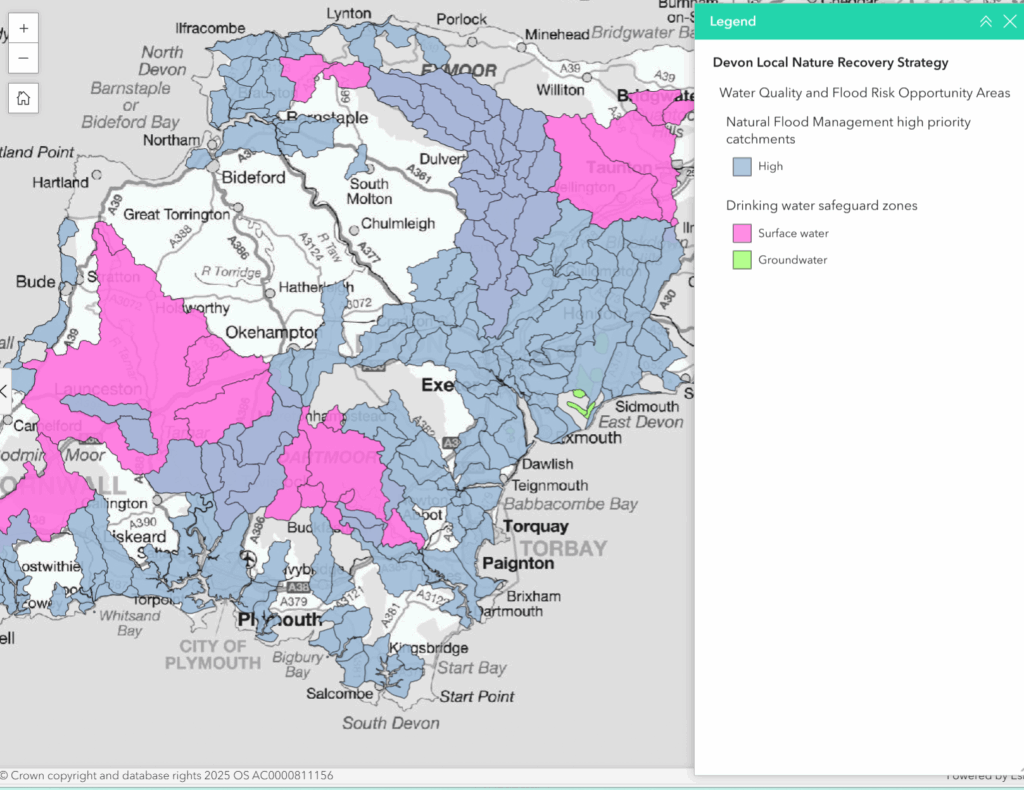
© Crown copyright and database rights 2025 OS AC0000811156
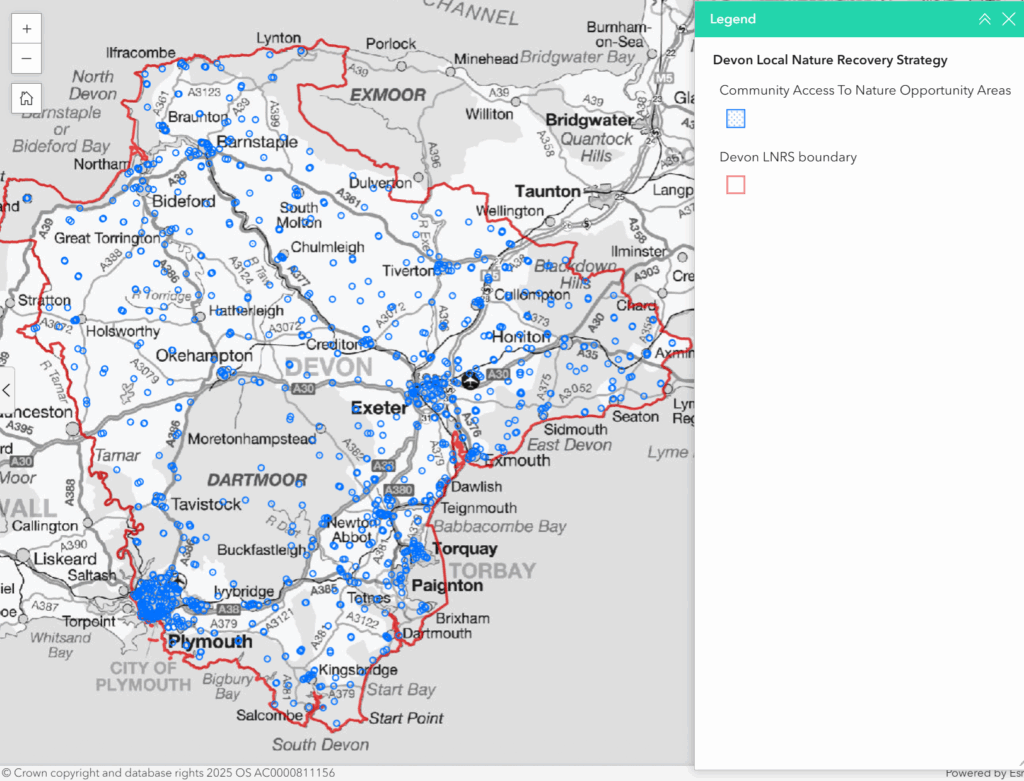
© Crown copyright and database rights 2025 OS AC0000811156
High Opportunity Areas
Nature recovery is needed everywhere. However the purpose of this strategy is to help prioritise action and to map (as far as is possible) where actions are most needed to achieve a nature-rich Devon. In Devon these mapped areas have been called High Opportunity Areas.
The map below shows Devon’s High Opportunity Areas, the areas of particular opportunity for managing and creating wildlife habitats. This map is illustrative only. Please see the Viewer to see the detailed layers, including opportunity areas for species and wider benefits (flooding, water quality and connecting people and nature).
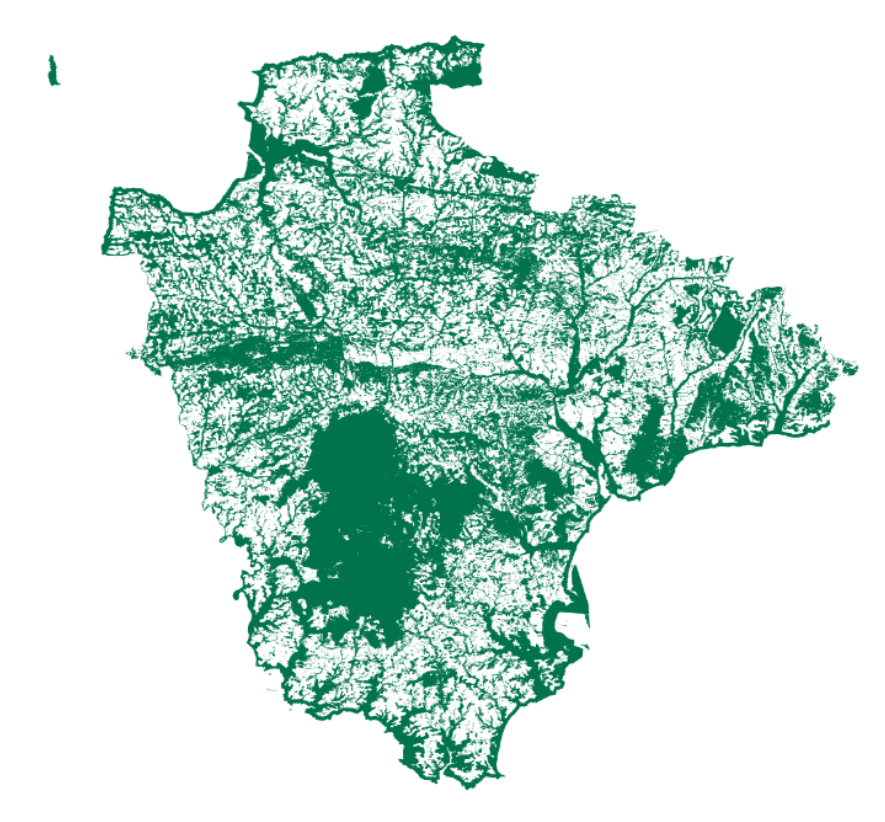
© Crown copyright and database rights 2025 OS AC0000811156
Actions needed across Devon
For detailed actions relating to habitat management and creation please see the Habitat and Species pages. Key cross-cutting actions are summarised below.
Make space for wildlife everywhere: provide shelter, nesting sites and food
Make space for wildlife everywhere: provide shelter, nesting sites and food
Devon’s landscapes have to provide us with so many things – food, energy, minerals, buildings, parks and gardens, roads, business parks and recreational areas to name just a few. Many of our more widespread species can co-exist with these land uses as long as space is made for them.
Everywhere in Devon can play its part in nature’s recovery and in doing so help us all to reconnect with wildlife.
Actions:
Create habitats for wildlife wherever possible, and at any scale, to provide shelter, nesting sites and food.
These habitats can include:
- Patches of scrub and bramble, trees
- More nectar-rich flowers through the year
- Mosaics of long and short grass
- Piles of deadwood, stones and old walls
- Ponds
- Spaces for bats and birds to nest in buildings and other structures.
Minimise pollution, pesticides, lighting and litter.
Delight in the unruly!
See other boxes in this section and the Habitats and Species pages for detailed actions.
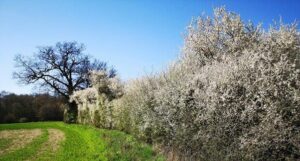
Delight in the unruly!
Delight in the unruly!
Nature doesn’t favour the straight, the neat or the tidy. It’s at its most diverse in the chaotic tangle of a bushy untrimmed hedge, in the uncut lawn or churchyard, in that patch of ‘weeds’ behind the shed, in those rotting logs, or the pile of organic debris beside a ditch or stream.
Instead of seeing this as neglect we can embrace these areas with their wild beauty and incredible value for wildlife, and so for us. If we can achieve this cultural change, we’ll never again have to ask, ‘Why have all the sparrows gone?’.
Actions:
- Relax the management of our landscapes as much as possible, allowing natural processes to take place.
- Design the unruly into more formal landscapes such as parks and gardens, for example by mowing lines around areas of long grass.
- Promote and discuss the unruly as much as possible until it’s embraced by everyone.
Reduce emissions and adapt to climate change
Reduce emissions and adapt to climate change
In 2019 organisations came together to declare a Devon climate and ecological emergency, taking heed of the Intergovernmental Panel on Climate Change’s stark warnings. There is a commitment to help Devon reach net-zero by 2050, reverse the associated declines to wildlife and prepare communities for climate impacts.
“There’s now a small but very real risk of 4°C by the end of the century. The prospects of three and four degrees centigrade of warming are absolutely dire” Professor Kevin Anderson, National Emergency Briefing.
Weather patterns will continue to change with increasing variation and extremes over the coming years. Understanding vulnerabilities, impacts and opportunities for Devon’s species and habitats are critical to setting nature on a climate smart pathway for the years ahead.
Climate change poses a significant threat to many of Devon’s habitats and species, particularly those that are sensitive to changes in seasons, rainfall and temperature and those are at the southern-most extremities of their range.
Climate change is happening faster than most species and habitats are able to naturally evolve and adapt. Some specific threats are highlighted on the species and habitats pages but a few examples include:
- Devon’s blanket bogs, mires and Culm grasslands are very vulnerable to drying out in hotter, drier summers.
- As sea levels rise our inter-tidal habitats are threatened unless they have the space to move inland.
- Hibernating species are vulnerable as warmer winters cause them to emerge earlier or more frequently than normal, at a time when there is little food available. This could affect rare species such as the Hazel Dormouse and Greater Horseshoe Bat.
- An increase in problematic invasive non-native species.
Climate change will lead to significant changes in our species and habitats. Some species which are on the edge of their range are likely to be lost. However others will gain. Species that typically have a more southern distribution such as Nathusius’ Pipistrelle Bat and Little Egret are now established in Devon
Useful information on the potential impacts of climate change on individual habitats and species can be found in the Natural England/RSPB Climate Change Adaptation Manual (2020).
The creation of wildlife habitats plays a critical role in absorbing and storing carbon, and so reducing climate change.
Actions:
- Carry out the actions in this strategy to ensure that we have better, bigger, more and joined up wildlife habitats. This will:
- Provide habitats and species with increased resilience to climate change and allow species to adapt and move as needed.
- Help absorb and store carbon helping to reduce climate change. See the Carbon sequestration page for more details.
- Help us adapt to climate change for example by providing shade for people and livestock and storing water to reduce flooding.
- Develop and share a Climate Change and Wildlife Knowledge Base for Devon using expert advice and national models. Use this to adapt and evolve the actions needed to create, manage and monitor future healthy habitats and natural systems.
- A simple example of how actions need to change is in the choice of species for new woody habitats, see Broadleaved woodland.
- Take forward the actions in the Devon Carbon Plan.
Links:
Natural England Climate Change Adaptation Manual – NE751
Natural England National biodiversity climate change vulnerability model – NERR054
National Biodiversity Climate Change Vulnerability Assessment (England) – data.gov.uk
2025, National Emergency Briefing
Centre for Climate and Environmental Resilience
The Met Office climate data portal
Devon Climate Emergency and Carbon Plan. See this website for more information and links on climate change and work in Devon.
For more information on wildlife and climate change see the Climate Change and Devon’s Natural Environment Evidence Review produced in 2019 for the Devon Climate Partnership and Devon Local Nature Partnership.
Look after Devon’s soils
Look after Devon’s soils
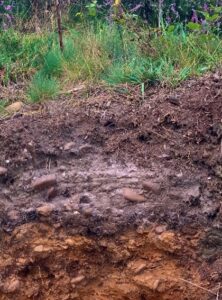
Devon’s soils are an integral part of all wildlife habitats. They also contain a vast and under-explored reservoir of wildlife including earthworms, insect larvae, springtails and fungi.
When soil health deteriorates so does the habitat that it supports. When soil structure deteriorates it can run-off into our rivers silting up fish spawning beds and other habitats.
Actions:
Maintain and restore all soils by ensuring they get sufficient organic matter and minimizing soil disturbance and impacts from chemicals.
See Rocks and soils for more detailed actions.
Grazing
Grazing
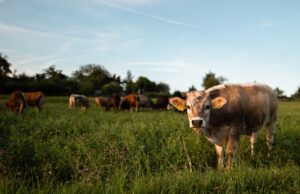
Grazing by cattle, ponies or sheep is essential to maintain habitats like flower-rich grasslands, heaths and mires.
Undergrazing can lead to loss of open habitats with scrub and woodland dominating rather than forming part of a mosaic. However too much grazing can also lead to significant changes in vegetation cover and loss of wildlife.
In the right place, reducing grazing animals on wildlife-poor habitats such as intensively-managed pasture can be highly beneficial to wildlife.
Grazing can also create important microhabitats such as dung and patches of bare ground.
Actions:
Graze habitats to achieve desired wildlife outcomes considering factors such as the type of livestock, stocking rates and grazing periods.
Control invasive species
Control invasive species
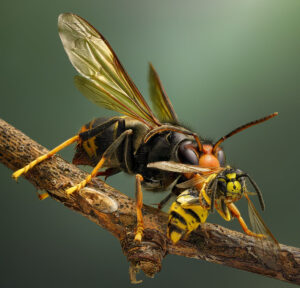
Approximately 10-15% of non-native species are considered invasive and harm the environment, the economy and our health. Examples in Devon include Grey Squirrels, American Signal Crayfish, American Mink and Japanese Knotweed. Some species such the Yellow-legged Asian Hornet aren’t yet established in the county but are a serious threat.
Actions: Control invasive non-native species and prevent the establishment of new ones.
See the Invasive non-native species page for more details.

Minimise pollution and biocides
Minimise pollution and biocides
Pressures created by people from human waste, roads, agriculture (topsoil, fertilisers, pesticides, manure, antibiotics) and even dog flea treatments are continuing to pollute our freshwaters and intertidal areas.
Biocides (including herbicides, fungicides and insecticides) can harm non-target species in lots of ways. They reduce insect populations which are a critical food source for other wildlife such as bats, birds and small mammals. They also accumulate in the bodies of organisms and have severe effects on predators at the top of the food chain (birds of prey and mammals).
Actions:
- Reduce all sources of pollution.
- Minimise use of biocides and adopt an Integrated Pest Management (IPM) approach to control problem species. See the actions on the Rocks and Soils page for information on IPM.
See Watercourse corridors, Water quality and flood risk, Air quality and Rocks and Soils pages for more information and links.
Minimise light pollution
Minimise light pollution
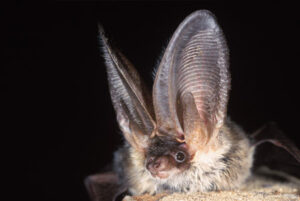
Light pollution can cause serious harm to wildlife including disturbing natural cycles and creating barriers in the landscape for light-sensitive species such as bats and moths.
Actions: Minimise light pollution particularly avoiding light spill onto wildlife habitats. Use warm amber lighting.
See Devon Local Nature Partnership Dark Skies pages for information and useful links.
Minimise recreational disturbance and litter
Minimise recreational disturbance and litter
Disturbance
Disturbance to wildlife from recreational activities is a significant issue across most habitats. Examples include disturbance to rare lichens and plants, to ground nesting birds on our heaths and to wintering birds on our estuaries. Recreational activities can also cause soils to compact which in turn affects the habitats they support.
Action: Reduce disturbance to wildlife including by avoiding sensitive wildlife areas and controlling dogs.
See habitats and species pages for more information including Estuarine birds and Intertidal Mammals
Litter
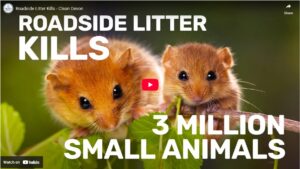
Keep Britain Tidy estimates that 2 million pieces of rubbish are dropped daily in the UK, all of which can be avoided. Littering from vehicles is thought to kill over 3 million small animals each year trapped in bottles and cans.
Plastics and other litter causes serious harm in our seas. Microplastics can cause a range of health problems in seals and other wildlife including intestinal injuries and blockages.
Dog poo contains pathogens and insecticides from food and flea or worming treatments and is toxic to wildlife.
Actions:
- Always bin litter and litter pick. Report full litter bins and fly tipping on public land to local authorities.
- Bag and bin dog poo.
- Expand projects to prevent marine littering such as ghost gear retrieval programmes and port-side disposal facilities.
- Take part in events such as beach cleans and the Great British Spring Clean and join a community campaign, such as Earth Action North Devon.
- Check who you pay to take your rubbish away. We are legally accountable for our rubbish, even if someone else fly-tips it.
Links:
Clean Devon provides useful information on disposing of waste and how to report issues. See their video clip on Litter Kills Wildlife.
DCC community litter pick pack
Recycle Devon provides information to communities on Reduce, Reuse, Recycle
Supporting actions
Knowledge: data, research and monitoring
Knowledge: data, research and monitoring
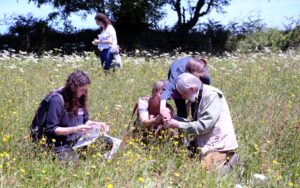
Habitats: Most of the information on the condition of Devon’s habitats comes from SSSI monitoring led by Natural England and from County Wildlife Site monitoring carried out by Devon Biodiversity Records Centre (DBRC) and funded by Devon County Council and Devon Wildlife Trust. This information was used for the Health Checks in the LNRS. However most of our habitats are not regularly monitored and some SSSIs have not been monitored for over ten years.
Species: The majority of the species data used in the LNRS has come from an army of expert volunteers who are involved with Devon recording groups, such as Devon Moth Group and Devon Birds, or who help NGOs, such as Butterfly Conservation. Only a few regular surveys have been funded, for example RSPB Cirl Bunting surveys. Data also comes from individuals submitting records nationally through irecord and from surveys required for development schemes.
Monitoring of both habitats and species needs to evolve in line with climate change.
Records are held by individual organisations, the National Biodiversity Network and DBRC. There are data sharing agreements between most, but not all, of these organisations. Even when data is shared there are often restrictions relating to its use, including for commercial reasons. For example, DBRC sells data to generate an income so it can continue to manage and collect data.
Monitoring the LNRS: Defra is developing a national monitoring framework for LNRSs.
Actions:
Develop a funded, joined-up and efficient LNRS Monitoring Framework to survey, monitor and research habitats and species. Ensure that this involves all stakeholders including ecologists, recording groups, volunteers, land managers and the public.
Ensure that the LNRS Monitoring Framework is ‘climate change proofed’ in line with the Climate Change and Wildlife Knowledge Base (see Climate above). Current criteria for monitoring habitats and species will need to be revised.
As part of the Monitoring Framework develop a Devon-wide citizen science monitoring project for a number of easily recognisable flagship species such as Kingfisher, Kestrel, Yellowhammer, Toad, Hedgehog and Peacock butterfly (list to be agreed)
Increase links between those delivering actions and research institutions such as Exeter University and Rothamsted Research.
Set up a county-wide network for species recorders in order to share learning including the use of new technology and systems.
Develop a funded business model for DBRC that allows a more joined-up and accessible system for wildlife data in Devon that is fully embedded into national systems. This requires significant changes at both national and local levels.
Links:
iRecord and inaturalist
Sharing knowledge
Sharing knowledge
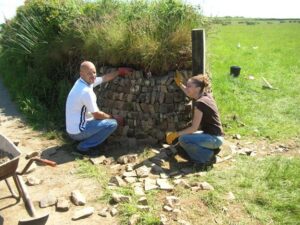
There is already lots of knowledge sharing happening across Devon through farm groups, community networks, events and access to information on websites. However there is huge room for improvement across all sectors.
Actions:
Develop a joined-up Devon land management network and advisory service (farming, forestry and green spaces) that:
- Builds on and helps to support existing networks such as farmer clusters and facilitation groups, Landscape Recovery Projects and Moor Meadows.
- Shares learning from farmers, foresters, other land managers and ecological monitoring and research.
- Promotes best practice in managing and restoring habitats.
- Connect people such as graziers and local seed suppliers with land managers.
- Promotes available funding.
- Works with Defra to develop flexible agri-environment schemes that lead to nature restoration and viable farm businesses.
Continue to share knowledge and ideas through networks such as the Devon LNP Wild About Devon community network.
Develop and share a Climate Change and Wildlife Knowledge Base for Devon. Use this to adapt and evolve the actions needed to create and manage future healthy habitats and natural systems. See Climate above.
Links:
A review of Devon Farm Advice was carried out by Ash Future in 2022 for the Devon Local Nature Partnership and Climate Partnership. This has a list of more detailed recommendations.
See links in Climate above.
Get involved!
Get involved!
The huge benefits of being outside and connecting with nature are now well known. They include improved health and wellbeing, improved educational outcomes and greater connection to where we live and to our local community.
Getting involved in action to help the natural environment is therefore a win-win for us and for nature.
There are lots of opportunities across Devon to get involved in volunteering, citizen’s science, bioblitzes and species recording groups.
Actions:
- Provide opportunities for individuals and communities to get involved in nature conservation activities.
- Ensure that wildlife-rich greenspaces in our towns and villages are accessible for everyone.
- Get involved! See links below.
- See the Connecting people and nature page for more related actions.
Links:
The species pages on this website have links to recording groups who provide training opportunities and are always looking for new members.
See the Connecting people and nature page for more links including to the Network for Environmental Educators in Devon, Naturally Healthy initiative, Wild about Devon community network and Devon Connect.
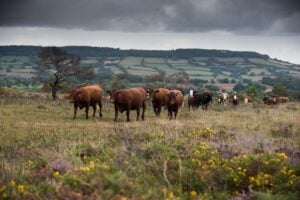
Spending power: be a conscious consumer
Spending power: be a conscious consumer
The choices we make every day, especially what we buy, can have both negative and positive impacts on the environment, locally and globally.
Being informed about the environmental impacts of our choices can feel overwhelming. Friends of the Earth provides some top tips for small everyday changes. A few examples include
- Eat less (and better) meat and dairy and less (and better) fish. Support Devon’s farmers who are sustainably grazing our heaths and moors and managing our farmed landscape for wildlife. Ask more questions about where food comes from and how its produced.
- Use sustainable timber to help fund the sustainable management of Devon’s woodlands.
- Avoid products containing palm oil.
- Buy less stuff and buy from sustainable businesses
- Reduce food waste and plastic pollution, recycle and compost waste
- Bank and invest ethically
Live sustainably: how to be a conscious consumer | Friends of the Earth
Key landscapes for Devon Special Species
The boxes below give a summary of the Devon Special Species that can be found in some key landscapes. These include our Protected Landscapes (National Parks and National Landscapes), Coastal Wildbelt and other areas such as the Teign Valley and Bovey Basin, which support a wealth of Devon Special Species. The lists are not intended to be comprehensive.

Widespread species
Widespread species
Devon Special Species found across Devon in suitable habitat.
*= Species Opportunity Area mapped on the Viewer.
Mammals: Otter, Hedgehog, Hazel Dormouse, Harvest Mouse, Barbastelle bat, Serotine bat, Lesser Horseshoe Bat, Grey Seal
Birds: Farmland birds (other than Cirl Bunting), birds of towns and villages
Fish: Migratory fish (other than Allis Shad)
Reptiles and amphibians: Toad, Great Crested Newt, Adder
Moths and butterflies: Small Pearl-bordered Fritillary, Brown Hairstreak butterfly
Molluscs: Spiny Cockle
Fungi and lichens: Fungi and lichens of veteran trees, woodlands and ancient grasslands.
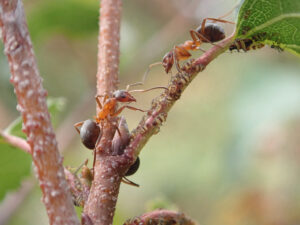
Bovey Basin
Bovey Basin
Habitats: Heathland.
Devon Special Species:
*= Species Opportunity Area mapped on the Viewer.
Mammals: *Greater Horseshoe Bat, *Grey Long-eared Bat, Bechstein’s Bat
Birds: Cirl Bunting, Woodlark
Reptiles and amphibians: Great Crested Newt
Moths and butterflies: *Pearl-bordered Fritillary, *High Brown Fritillary, heathland moths
Bees, wasps and ants: Heath Potter Wasp, Narrow-headed Ant.
Dragonflies: Southern Damselfly
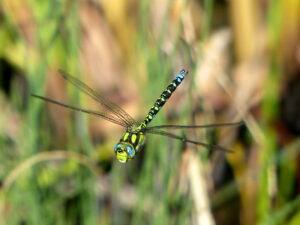
Blackdown Hills National Landscape
Blackdown Hills National Landscape
Habitats: Mosaic of species-rich rush pasture, wet heath, wet woodland. Lowland acid grassland, heath.
Devon Special Species:
*= Species Opportunity Area mapped on the Viewer.
Mammals: *Beaver catchment, *Water Vole, *Greater Horseshoe Bat, *Grey Long-eared Bat, *Bechstein’s Bat
Birds: *Pied Flycatcher, *Willow Tit
Moths and butterflies: *Marsh Fritillary,
Flies: Wet woodland flies, valley mire flies
Dragonflies: Southern Damselfly (re-introduction failed)
Flowering plants: Lesser Butterfly-orchid, Great Sundew
Lichens: Wet woodland lichens
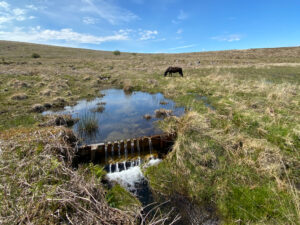
Dartmoor National Park and the South West Dartmoor Downs
Dartmoor National Park and the South West Dartmoor Downs
Habitats: Bogs, valley mires, heaths, acid grasslands, species-rich rush pastures, ancient woodlands and wood pasture, wildlife-rich grasslands.
Devon Special Species:
*= Species Opportunity Area mapped on the Viewer.
Mammals: *Beaver, *Water Vole, *Greater Horseshoe Bat, *Grey Long-eared Bat, Pine Marten
Birds: Heath, moor and rough grassland birds (*Dunlin, *Curlew, *Snipe, *Whinchat, Cuckoo, Tree Pipit, Dartford Warbler, Kestrel), woody habitat birds (*Pied Flycatcher, *Willow Tit, Lesser Spotted Woodpecker, *Wood Warbler, Lesser Redpoll, Nightjar), Cirl Bunting
Moths and butterflies: *Marsh Fritillary, *Narrow-bordered Bee Hawk-moth, *Pearl-bordered Fritillary, *High Brown Fritillary, *Heath Fritillary, moths of Dartmoor broadleaved woods
Bees, ants and wasps: Billberry Bumblebee
True flies: *Bog Hoverfly, valley mire flies, *Devon Globetail Hoverfly , wet woodland flies
Beetles: Dung beetles, Blue Ground Beetle
Dragonflies: Southern Damselfly, Scarce Blue-tailed Damselfly
Spiders and harvestmen: Dartmoor bog spiders
Molluscs: Upland rainforest snails
Crustacean: Fairy Shrimp
Flowering plants and ferns: Great Sundew, Lesser Butterfly-orchid, Greater Butterfly-orchid, Frog Orchid, Wood Bitter-vetch, Deptford Pink, Forked Spleenwort, Toadflax-leaved St John’s-wort, Heath Lobelia. South West Dartmoor Down Specialist plants (Chamomile, Cornish Eyebright, Marsh Clubmoss),
Lichens: Dartmoor granite lichens, upland rainforest lichens, deadwood lichens, veteran tree lichens, wet woodland lichens, lichens of mines and quarries
Bryophytes: Many-leaved Pocket-moss
East Devon National Landscape
East Devon National Landscape
Habitats: Heaths, coastal habitats, lowland acid grassland, calcareous grassland.
Devon Special Species:
*= Species Opportunity Area mapped on the Viewer.
Mammals: *Greater Horseshoe Bat, *Grey Long-eared Bat, *Bechstein’s Bat
Birds: Cirl Bunting, Woodlark, Willow Tit, Tree Pipit, Nightjar, Lesser Redpoll
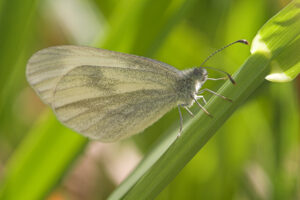
Moths and butterflies: *Wood White Butterfly, heathland moths
Bees, wasps and ants: Heath Potter Wasp
Dragonflies: Southern Damselfly
Flowering plants: Heath Lobelia
See Dorset to Sidmouth Coastal Wildbelt and Sidmouth to Torbay Coastal Wildbelt.
Exmoor National Park
Exmoor National Park
Habitats: Bogs, valley mires, heaths, species-rich rush pastures, ancient woodlands and wood pastures, maritime cliffs and slopes, rocky shores.
Devon Special Species:
*= Species Opportunity Area mapped on the Viewer.
Mammals: *Beaver, *Grey Long-eared Bat
Birds: Heath, moor and rough grassland birds (Snipe, *Whinchat, Lesser Redpoll, Tree Pipit, Dartford Warbler, Grasshopper Warbler, Kestrel), woody habitat birds (*Pied Flycatcher, *Willow Tit, *Wood Warbler, Lesser Redpoll), *cliff nesting sea birds
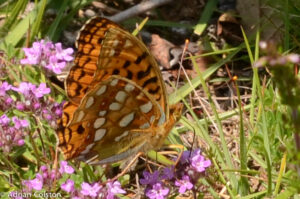
Moths and butterflies: *High Brown Fritillary
Bees, ants and wasps: Billberry Bumblebee
Beetles: Six-spotted Longhorn Beetle
Flowering plants and ferns: Rare whitebeams
Lichens: Upland rainforest lichens, deadwood lichens, veteran tree lichens, wet woodland lichens
Bryophytes: Dumortier’s Liverwort (Watersmeet SSSI)
See Morte Point to Somerset Coastal Wildbelt
North Devon Biosphere and Culm Measures
North Devon Biosphere and Culm Measures
Habitats: Maritime cliff and slope, rocky shore, sand dunes and other coastal habitats. Culm mosaic (species-rich rush pasture, wet heath, wet woodland).
Devon Special Species:
*= Species Opportunity Area mapped on the Viewer.
Mammals: *Beaver catchment, *Water Vole, *Greater Horseshoe Bat
Birds: Heath, moor and rough grassland birds (Snipe, *Whinchat, Lesser Redpoll, Tree Pipit, Grasshopper Warbler, Dartford Warbler, Kestrel), Cirl Bunting, woody habitat birds (*Pied Flycatcher, *Willow Tit, *Wood Warbler, Lesser Redpoll), *cliff nesting sea birds
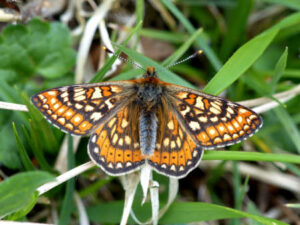
Moths and butterflies: *High Brown Fritillary, *Marsh Fritillary, *Narrow-bordered Bee Hawk-moth, *Wood White Butterfly
Bees, ants and wasps: Brown-banded Carder Bumblebee, Moss Carder Bumblebee, Billberry Bumblebee
True flies: wet woodland flies, *Devon Globetail Hoverfly, Leucophora sponsa (Halsdon)
Crustaceans: Fairy Shrimp
Flowering plants: Lesser Butterfly-orchid, rare whitebeams including the Devon Whitebeam
Lichens: Upland rainforest lichens, quarry lichens (Meeth)
Bryophytes: Dumortier’s Liverwort (Watersmeet SSSI)
See Cornwall to Morte Point and Morte Point to Somerset Coastal Wildbelt for coastal species.
North Devon National Landscape
North Devon National Landscape
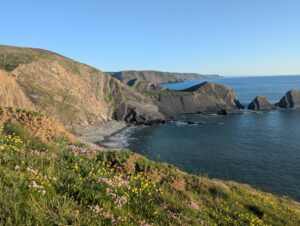
Habitats: Maritime cliff and slope, rocky shore, sand dunes and other coastal habitats, Culm mosaic, ancient woodlands.
Devon Special Species:
*= Species Opportunity Area mapped on the Viewer.
Mammals: Otter, *Beaver catchment, *Greater Horseshoe Bat, Barbastelle bat, Serotine bat, Lesser Horseshoe Bat
Birds: Farmland birds including Cirl Bunting
Reptiles and amphibians: Great Crested Newt, Toad
Moths and butterflies: Small Pearl-bordered Fritillary
Bees, ants and wasps: Brown-banded Carder Bumblebee, Moss Carder Bumblebee
See Cornwall to Morte Point Coastal Wildbelt for coastal species.

Plymouth
Plymouth
Habitats: Coastal habitats, calcareous grasslands, greenspaces and quarries.
Devon Special Species:
*= Species Opportunity Area mapped on the Viewer.
Mammals: *Greater Horseshoe Bat, *Grey Long-eared Bat, Beaver catchment
Spiders: Plymouth arachnids (Horrid Ground-weaver and Hedgehog Harvestman)
Flowering plants: Field Eryngo, Plymouth Pear, Deptford Pink
See Plymouth Coastal Wildbelt.
South Devon National Landscape
South Devon National Landscape
Habitats: Coastal habitats, watercourses, arable.
Devon Special Species:
*= Species Opportunity Area mapped on the Viewer.
Mammals: *Water Vole, *Greater Horseshoe Bat, *Grey Long-eared Bat
Birds: Cirl Bunting
Reptiles and amphibians: Great Crested Newt
Flowering plants: Arable plants
See Torbay to Start Point, Start Point to Bolt Tail and Bolt Tail to Plymouth Coastal Wildbelts.
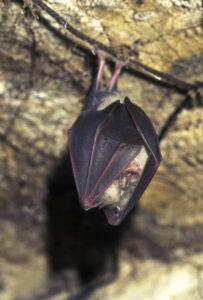
Tamar Valley National Landscape
Tamar Valley National Landscape
Habitats: Orchards. Mines. Small area of heath/acid grassland.
Devon Special Species:
*= Species Opportunity Area mapped on the Viewer.
Mammals: *Greater Horseshoe Bat sustenance zone, *Beaver catchments
Reptiles and amphibians: Great Crested Newt
Moths and butterflies: *Pearl-bordered Fritillary, *High Brown Fritillary
Flowering plants: Possibly South West Dartmoor Down Specialist plants (Chamomile, Cornish Eyebright, Marsh Clubmoss)
Lichens: Lichens of mines and quarries
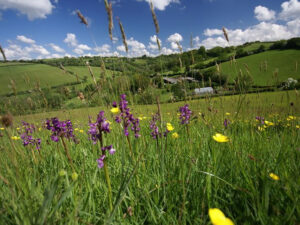
Teign Valley and Haldon
Teign Valley and Haldon
Habitats: Heath, Species-rich rush pastures, rocky gorge, ancient woodlands, arable.
Devon Special Species:
*= Species Opportunity Area mapped on the Viewer.
Mammals: *Beaver, *Water Vole, *Greater Horseshoe Bat, *Grey Long-eared Bat
Birds: Cirl Bunting, woody habitat birds (*Pied Flycatcher, *Wood Warbler), Nightjar, Dartford Warbler
Moths and butterflies: *Pearl-bordered Fritillary, *High Brown Fritillary, moths of Dartmoor broadleaved woods
Spiders and harvestmen: Teign Gorge rock spiders
Molluscs: Upland rainforest snails
Flowering plants and ferns: Lesser Butterfly-orchid, Greater Butterfly-orchid, Forked Spleenwort, Toadflax-leaved St John’s-wort, arable plants (Narrow-fruited Cornsalad)
Devon Special Species in the Coastal Wildbelts
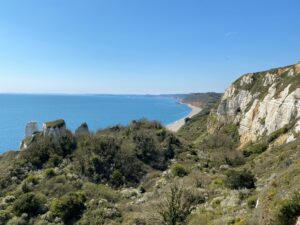
Dorset to Sidmouth
Dorset to Sidmouth
*= Species Opportunity Area mapped on the Viewer.
Mammals: *Greater Horseshoe Bat, *Bechstein’s Bat, *Grey Long-eared Bat
Bees: Broad-faced Furrow Bee, Buff-banded Mining Bee
Flies: Spanish Snout Cranefly, Least Cigar-gall Fly, Cryptonevra consilimis and the east coast undercliffs fly group
Moths: White Spot Moth, Devonshire Wainscot, Morris’s Wainscot, Everlasting-pea Blister Moth, Wood White and the east coast moth group.
Beetles and crickets: Cliff Tiger Beetle, Scaly Cricket
Crustaceans: Fairy Shrimp
Dragonflies: Norfolk Hawker (Seaton marshes)
Flowering plants: Nottingham Catchfly, Early Gentian, White Horehound
Lichens and bryophytes: Maritime lichens, Solm’s Screwmoss
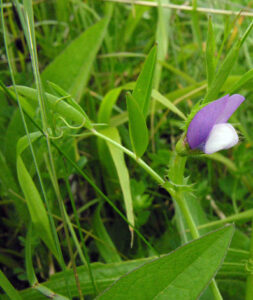
Sidmouth to Torbay
Sidmouth to Torbay
*= Species Opportunity Area mapped on the Viewer.
Mammals: *Greater Horseshoe Bat, *Bechstein’s Bat, *Grey Long-eared Bat
Birds: Cliff nesting seabirds (Sandy Park), Cirl Bunting
Flies: Variable Meadow Fly
Moths: Devonshire Wainscot, Everlasting-pea Blister Moth and the coastal moth group
Flowering plants: Bithynian Vetch (Exmouth and Sandy Park)
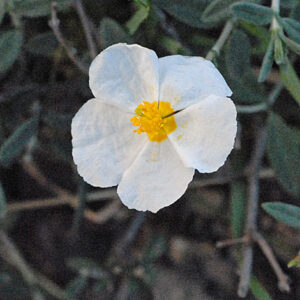
Torbay
Torbay
*= Species Opportunity Area mapped on the Viewer.
Birds: Cliff nesting seabirds, *Cirl Bunting
Moths: Torbay limestone moths
Beetles: Roundhead Roughneck Rove Beetle
Moths: Goldilocks Case-bearer, White-headed Detritus and the limestone moth group, Devonshire Wainscot, Beautiful Gothic and the coastal moth group.
Plants: Torbay limestone specialists plants – Goldilocks Aster, Small Restharrow, Honewort, Small Hare’s-ear, White Rock-rose, Whitebeams
Maritime lichens
Bryophytes: Rabbit Moss, Levier’s Beardless-moss
Fungi

Brixham to Start Point
Brixham to Start Point
*= Species Opportunity Area mapped on the Viewer.
Birds: *Cirl Bunting
Bees
Flies: Variable Meadow Fly
Beetles: Lizard Weevils
Moths: Devonshire Wainscot, Beautiful Gothic and other coastal group moths.
Crustaceans and myriapods: False Flat-backed Millipede
Dragonflies: Norfolk Hawker (Slapton)
Plants: Rare arable plants, Strapwort (Slapton)
Maritime lichens
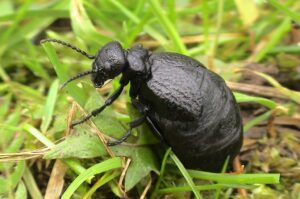
Start Point to Bolt Tail
Start Point to Bolt Tail
*= Species Opportunity Area mapped on the Viewer.
Birds: Cirl Bunting
Bees: Six-banded Nomad Bee, Long-horned Bee
Flies: Devon Red-legged Robberfly, Variable Meadow Fly
Spiders: Moon Spider and other Prawle cliff spiders
Beetles: Oil Beetle, Lizard Weevil
Moths: Devonshire Wainscot, Beautiful Gothic and other coastal group moths.
Plants: Rare arable plants, Slender Bird’s-foot-trefoil
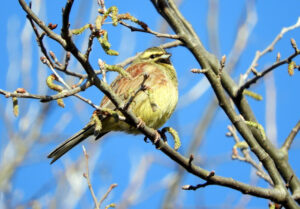
Bolt Tail to Plymouth
Bolt Tail to Plymouth
*= Species Opportunity Area mapped on the Viewer.
Birds: Cirl Bunting
Beetles: Lizard Weevil
Flies: Variable Meadow Fly
Moths: Devonshire Wainscot, Beautiful Gothic and moths in the coast group.
Flowering plants: Shoredock, rare arable plants, Slender Bird’s-foot-trefoil, Dwarf Spikerush (Avon estuary)
Bryophytes of south Devon wooded creeks: Awl-leaved Ditrichum, Turner’s Threadwort
Plymouth
Plymouth
*= Species Opportunity Area mapped on the Viewer.
Fish: Allis Shad
Flowering plants: Triangular Club-rush
Bryophytes of south Devon wooded creeks
Cornwall to Morte Point
Cornwall to Morte Point
*= Species Opportunity Area mapped on the Viewer.
Mammals: *Greater Horseshoe Bat
Birds: *Cirl Bunting
Bees: Brown-banded Carder Bumblebee, Moss Carder Bumblebee
Flies: North Devon sand dune flies group.
Beetles: Lizard Weevil, Click Beetle
Moths: Devonshire Wainscot, Scarce Blackneck and other coastal moths, sand dune moth group
Spiders: Yellow-striped Bear Spider
Molluscs: Sandbowl Snail
Flowering plants: Sand dune plants
Lichens: Southern oceanic and maritime lichens
Bryophytes: Cordate Beardmoss
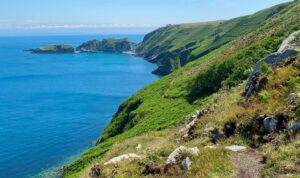
Lundy
Lundy
Birds: Cliff nesting seabirds
Beetles: Lundy Cabbage Beetle
Plants: Lundy Cabbage
Lichens: Maritime lichens

Morte Point to Somerset
Morte Point to Somerset
Birds: Cliff nesting seabirds
Moths: Devonshire Wainscot, Scarce Blackneck and moths in the coast group.
Molluscs: Celtic Sea Slug
Plants: Whitebeams
Lichens: Maritime lichens